Data Analyst Declines to Analyze Data, Part 1: Home Isolation, Medicare Fraud, and The Flu.

I want to begin by acknowledging that the headline to this article is quite snarky. While I try to write about these issues of medical misinformation with some degree of charity towards those I disagree with (and often fail at that), writing titles to posts doesn’t allow for quite so much nuance; I honestly find it to be the most challenging thing about blogging.

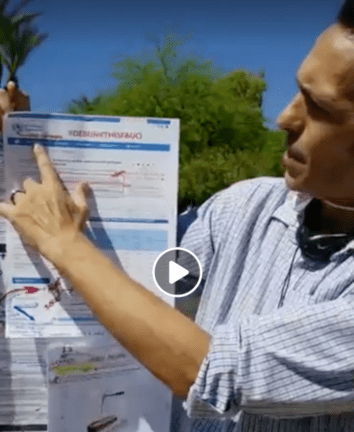
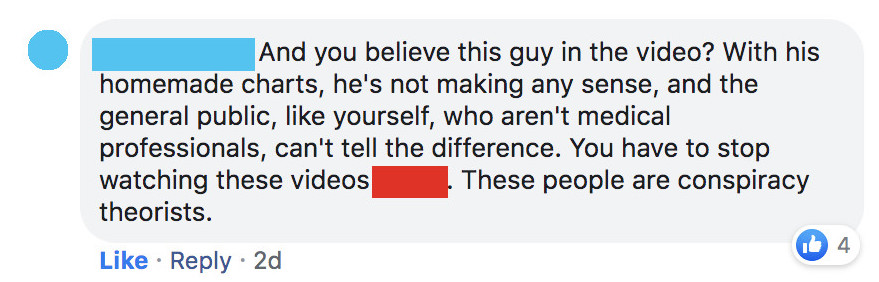
Here is a video that was recently shared on my friend’s Facebook timeline. It is mercifully short (less than 5 minutes) and I have included the link for those who would like to watch it in it’s entirety. My friend is an Emergency Physician in New York state, and she was probably on shift when this was shared to her wall. Later on she did leave her own comments, and I have chosen to include some of them, and snippets of our conversation afterward, in this blog post. Let me tell you why.

This was about the guy in the video, not about me.
I’m pretty sure.

I tend to believe that while the people generating these conspiracy theory videos are motivated by desire for some combination of fame, power, or fortune (and this video may well be an exception to that) the people who are sharing them widely on social media and forming opinions based on them are more victims than accomplices. They are being given false information exactly calculated to appeal to their fears, their political leanings, and their preconceptions, and they are deciding to place their trust in these so-called experts because they themselves do not have the background or knowledge base to parse the information on their own. Without a background in statistics, medicine, epidemiology, etc. they feel they have no choice but to trust one “expert” or the other, and all too naturally quiet their own discernment and choose the one that reinforces their own views. The problem is that while one group of experts have devoted their lives to rigorously studying disease and the human body so that they can help those who are suffering, the other group of “experts” are actually only experts in engendering this sort of trust, and not in the areas of knowledge they claim to understand; they are essentially false information experts.
Because of this, I do try to approach these topics with gentleness, recognizing that it is easy to be deceived and hard to sort truth from fiction. I have that privilege because right now the COVID-19 pandemic has really impacted my life quite minimally, compared to the rest of the world. Katie is still homeschooling and I am still going into work. We haven’t hit a surge yet and so while I have seen COVID-19 patients, and we have had some deaths due to the virus in Waco, I am not being called upon, at this time, to work extended hospitalist or emergency room shifts trying to care for patients in an overwhelmed hospital with physically and emotionally exhausted staff and colleagues.

But my friend is working under exactly those circumstances, and if she’s a bit more adamant than I am about how hurtful, how dangerous, and how dehumanizing these types of nonsense and lies are to not only the victims of this terrible virus, but also to the healthcare workers fighting it… well, I think she’s perfectly entitled. Please trust me, if she found these falsehoods shared on her Facebook wall by friends or family members when she came home from a shift where multiple patients died or were admitted to the ICU due to COVID-19, she could be considerably more vociferous if she chose.


I’d like to devote a separate essay to the the main point of his video, which to him constitutes “100% proof” of fraud and a major international conspiracy lead by WHO and the CDC, and apparently involving doctors and healthcare workers across the globe. This revolves mainly around CPT codes, and the “two CPT codes” being used for COVID-19 in order to cook the books “right in front of your eyes.” We are going to go into this in more detail, hopefully sometime in the next 2 days, but first I want to discuss the other issues he raises in the video.

Home Isolation

At the 1:46 mark of the video, Mr. McCarthy says, “Here’s a document from the CDC dated July 2020 (Note: this means that the article is due to be published in July, not that this article is from the future, as helpful as those would be if we could get our hands on them) that clearly states…”

“In addition, our findings suggest that home isolation of persons with suspected COVID-19 might not be a good control strategy (McCarthy: Oh there’s a shocker!). Family members usually do not have personal protective equipment and lack professional training, which easily leads to familial cluster infections.”

He concludes, “meaning it’s making it worse, not better folks!”

This is a direct quote from the study below (image links to full article on CDC website).

His point here seems to be that having people who are actually suspected of having the virus stay medically isolated at home is actually worsening the pandemic. Which is… pretty nuts. We are not even discussing broad based social/physical distancing measures and shelter in place orders here, but actual management of suspected cases. It’s hard to imagine in what way, or compared to what strategy, having these patients isolate at home would make things worse. Would he prefer for patients with suspected COVID-19 just go back to work, despite their cough and fever, and wait for their test results? Does he think that patients wouldn’t be in their homes exposing their families at all if not for doctor’s orders? He doesn’t say, but the implication, in the context of the rest of the video, is that having patients who are actually ill keep themselves at home and away from the general public is yet another tool of the COVID-19 conspiracy… As opposed to being a common-sense step we already take for pretty much every other contagious illness.

It’s hard to know whether Mr. McCarthy is simply confused in thinking that the article’s point is that home isolation is too draconian, or if he is intentionally drawing the wrong conclusion in order to deceive his listeners. Sadly, I think it must be the latter, because the very next sentence of the article reads as follows:

During the outbreak, the government of China strove to the fullest extent possible to isolate all patients with suspected COVID-19 by actions such as constructing mobile cabin hospitals in Wuhan, which ensured that all patients with suspected disease were cared for by professional medical staff and that virus transmission was effectively cut off.

So the opinion of this articles authors is that having suspected COVID-19 patients isolate at home is not nearly extreme enough to prevent spread of this virus, and that patients should be kept in mobile hospitals instead. Considering that his very next point is that hospitals are manipulating the COVID-19 data to make money, we must concluded that his omission of the very next sentence and his substituting his own conclusion, which is the exact opposite of that drawn by the study’s authors, is actually intentional.

Hospitals are miscategorizing people as COVID-19 patients because of the CARES Act.

This claim, which is implicit throughout the video, is explicitly stated at the 2:56 mark:

“All they have to do is use the right code! Why aren’t they using it? Because the average COVID-19 case for medicare or medicaid is between $13,000 and $100,000 right now folks. So by flipping this number to this number (pointing back to the CPT codes), the hospitals are making a tremendous amount of money off of medicare and medicaid… It’s absolutely fraud.”

Now, there’s a lot wrong and just plain silly with his take here. There’s the fact that our healthcare costs in this country are so inflated (largely because of the hospital-insurance company arms race) that those numbers, which he means to be a ‘they are charging how much!?’ moment… really aren’t all that shocking (also, that’s a pretty big range there). There’s the fact that using one COVID-19 code vs. another based on whether a test was positive isn’t going to affect billing or epidemiology data (we are going to go into this in more detail in the next blog post). And there’s the fact that this really does seem like the type of information that, like the last example, actually proves the opposite of his point if it proves anything at all. Many patients with COVID-19 are incredibly, unbelievably sick and require high levels of support and prolonged hospital stays (we have been closely following the story of a man here in town, a friend’s brother, who has only just returned home after over a month in the hospital, including an extended ICU stay), and quoting numbers about the exorbitant expenses associated the disease really shows two things; we need to move away from a for-profit model of healthcare in this country, and this is a very, very bad bug.

But unlike nonsensical theories of 5G towers reprogramming our DNA or defeating COVID-19 by doing a cellular health detox cleanse, most Physicians are not so quick to dismiss the idea that some in hospital administration and corporate medicine might see government provision for COVID-19 treatment, such as that provided in the CARES Act, as an opportunity to profit; or at least to make up for lost revenue from cancelling elective surgeries and decreased admissions leading up to any COVID-19 surge. I have known hospital and clinic administrators I trust implicitly, and I have known hospital administrators who have lied directly to my face; but most probably fall into a very broad category of people who just have different values and convictions around what medicine is supposed to be than I and most other Physicians hold to. At the end of the day, I tend to think it’s a bad idea in general to have the practice of medicine driven by, in so much as it is driven by, people who have studied and been hired to increase profits and market shares rather than people who have taken an oath to do no harm and to aid the suffering. It would be somewhat naive to expect that dynamic to disappear entirely in a pandemic.

But let me be clear; if a handful, or even a large number, of unethical hospital administrators are actually trying to commit fraud to gain access to additional payments related to COVID-19, either by attempting to influence clinician decision making or by actually modifying medical records, those people should be convicted. But even if this were the case, I do not believe for a moment that such activity has any way of significantly changing the hard data we are seeing, for a few reasons.
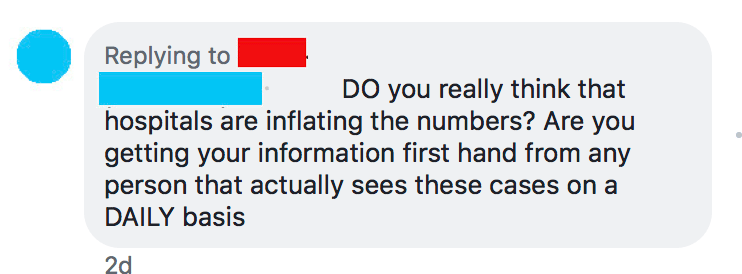
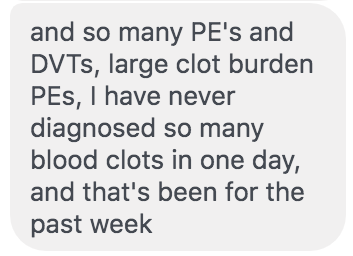
First and most importantly, the numbers we are seeing do match the experiences of doctors and nurses on the ground. Doctors have a good gauge for what a bad flu season looks like or when a viral GI bug is going around, and generally have a bead what is happening with the health of their communities. It is absurd to believe that doctors and nurses who are suddenly fighting for their own and their patients’ lives against this horrible virus have all been wrapped into some big conspiracy to profit hospital administrators and stock holders. That’s why the ‘hospital administrator cooking the books’ (note to self: new idea for a Les Mis parody song) idea tends to be a final redoubt for conspiracy theorists once they have been confronted by actual doctors and nurses, who in the cultural atmosphere since COVID-19 they no longer feel they can get away with calling liars and conspirators directly to their faces.

But it also doesn’t make any sense to equate medicare or medicaid fraud related to COVID-19 to an inflation of the epidemiology data, because even if EVERY hospital administrator were in on it, they would still have very limited influence on that data. They would not, for instance, be driving to community based and free standing labs to convince lab techs to report positive tests, so they would have a better COVID-19 paper trail if those patients showed up in their ER’s later. They are not going to unaffiliated, clinics and underserved healthcare centers and convincing Physicians, NP’s and PA’s to fudge their evaluations to make COVID-19 look more prevalent. They are not telling ICU and Emergency Room doctors when a patient’s respiratory status is sufficiently dire to require a ventilator (I have actually heard of such cases in the past, and those administrators were promptly reported for practicing medicine without a license), and at any rate if they were they would be ignored. They are certainly not killing people; it is the virus that is doing that.

Just like with pharmaceutical companies, insurers, drug reps, home medical equipment companies, and so, so many other players in the healthcare arena, Physicians have complicated and often antagonistic relationships with hospital administrators. But even if you believed that every single hospital administrator were corrupt and currently working overtime to try to game the COVID-19 situation, there are just so many other people involved in tracking this data. There are epidemiologists and infectious disease doctors, the local public health department, the coroner’s office, local and state government officials of all political influences, and many, many people evaluating this data from every possible angle to see what we might be missing, or what patterns might help us be prepared for what comes next. And finally there are the people living through this pandemic; the doctors and nurses and respiratory therapists, yes, but also the patients, those living and those deceased, and their friends and family and loved ones. These are the people who are robbed of their dignity and their opportunity to grieve and process in peace when people like Daniel McCarthy erroneously claim that COVID-19 is being blown out of proportion to make money for a fairly small group of businessmen.

The flu kills more people anyway.

It’s hard to know exactly what point he’s trying to make by touching on influenza death and hospitalization data toward the end of the video. My hope is that he’s merely pointing out the importance of having reliable data. If so, I would agree with him, although from the rest of the video I don’t think I would trust him to recognize it once we had it. Unfortunately, however, I think he is simply reviving the ‘it’s just another flu’ rallying cry that we’ve heard consistently for months from those ignoring the realities of the COVID-19 situation; if that wasn’t his intent, my apologies to Mr. McCarthy; it’s a good thing for us to talk about here at some point anyway.

I’m honestly so sick to death of this one. It is the end of April and I am sure that this has been explained to Mr. McCarthy several times by now, so I can only assume he has chosen to perpetuate the lie that COVID-19 is ‘basically just like the flu’ because it fits with his narrative, and not out of actual ignorance. I hope I am wrong about that. I won’t go into extensive detail (I have included a link to an article below), but essentially the flu is a partially vaccine-preventable virus that demonstrates seasonal prevalence and has a high rate of mutation. Because of this, epidemiologists have to try to predict which strains of seasonal flu are likely to be prevalent in the coming flu season so that vaccines can be prepared. Some years these are more effective (and more widely accepted) than in other years, and some years the seasonal flu strains are more dangerous or more widespread than other years. This means that seasonal influenza has the potential to be very, very bad in any given year; but also that there is a high degree of variability. 

In addition to flu vaccines, there are several mitigating factors that help keep the flu from overwhelming our hospitals and healthcare infrastructures every Winter. First, flu season is fairly long; usually above 3 months, with a high degree of chronologic and geographic distribution. This means while hospitals are sometimes extremely taxed by the flu, it is rare for them to actually be overwhelmed; though there are certain years and certain locations that come very close. If you consolidated the impact of even a light flu season into a 1 month period, affecting every community in the country at roughly the same time, it would absolutely overwhelm our healthcare systems and people would begin to die not just from the flu but also from our inability to provide care for other conditions while battling it; and this is exactly what COVID-19 does threaten to do (and has done) because of it’s much higher degree of infectivity and, likely, higher degree of asymptomatic or minimally symptomatic spread compared with influenza. 

Second, we know the flu is coming. Each year Physician, Nurses, and other healthcare workers make strategic decisions leading up to flu season. When I have taken leave to work internationally, we have always scheduled that time during the late Spring or Summer, when I knew I would be less needed because we wouldn’t be in the midst of fighting the flu. Staffing decisions and other resource organization is made based on the expectation of a surge, even if the exact timing and parameters of that surge are unknown. With COVID-19, there was no preparation time in those regions that were hit earliest, and the rest of us have been scrambling ever since to ensure that our systems are ready for a surge that is unpredictable because there are no decades of past data to help us now what to expect at our hospital or in our region.

Third, we already how to deal with the flu. While influenza seasons and symptom clusters do vary, the syndrome is very recognizable and we generally have a good idea of what to expect with flu cases, and how they interact with other acute and chronic illnesses. As several quotes I’ve read recently have said, “The flu is an old enemy.” Yes, it is a very, very dangerous enemy, but it is definitely ‘the devil we know’ compared to COVID-19. We have years of research and clinical experience to help us. We know which medications have modest therapeutic benefits and which have none, and what strategies to use when patients present for dangerous complications of the flu, such as post-influenza bacterial pneumonia, or when it causes complications in preexisting lung disease. With COVID-19, new data is still emerging continuously about both the strange spectrum of harm that this virus causes, and the possible treatment approaches; those fighting the virus later in the course of this pandemic really do stand a better chance of both diagnosing it accurately and treating it effectively. 

Finally, the flu itself is already bad enough, and dismissing COVID-19 as ‘basically another flu’ just shows how the people spreading these ideas are already in the habit of dismissing incredibly dangerous infectious illnesses. Already COVID-19 has killed more people in the US than almost any flu season, and yet people are still waving it off as ‘another flu’ the way they were weeks ago when it had ‘only’ killed a few thousand. In the coming days the total number of deaths in the US will surpass the 62,000 mark set by the 2017-2018 flu season, the worst we’ve had since I’ve been a Physician. Once this benchmark is passed, will these conspiracy theorists finally abandon the ‘it’s just like another flu’ argument, or would they like to hold on to it until COVID-19 has actually surpassed the numbers set by the Spanish Flu pandemic in 1918?

https://www.sciencealert.com/the-new-coronavirus-isn-t-like-the-flu-but-they-have-one-big-thing-in-common

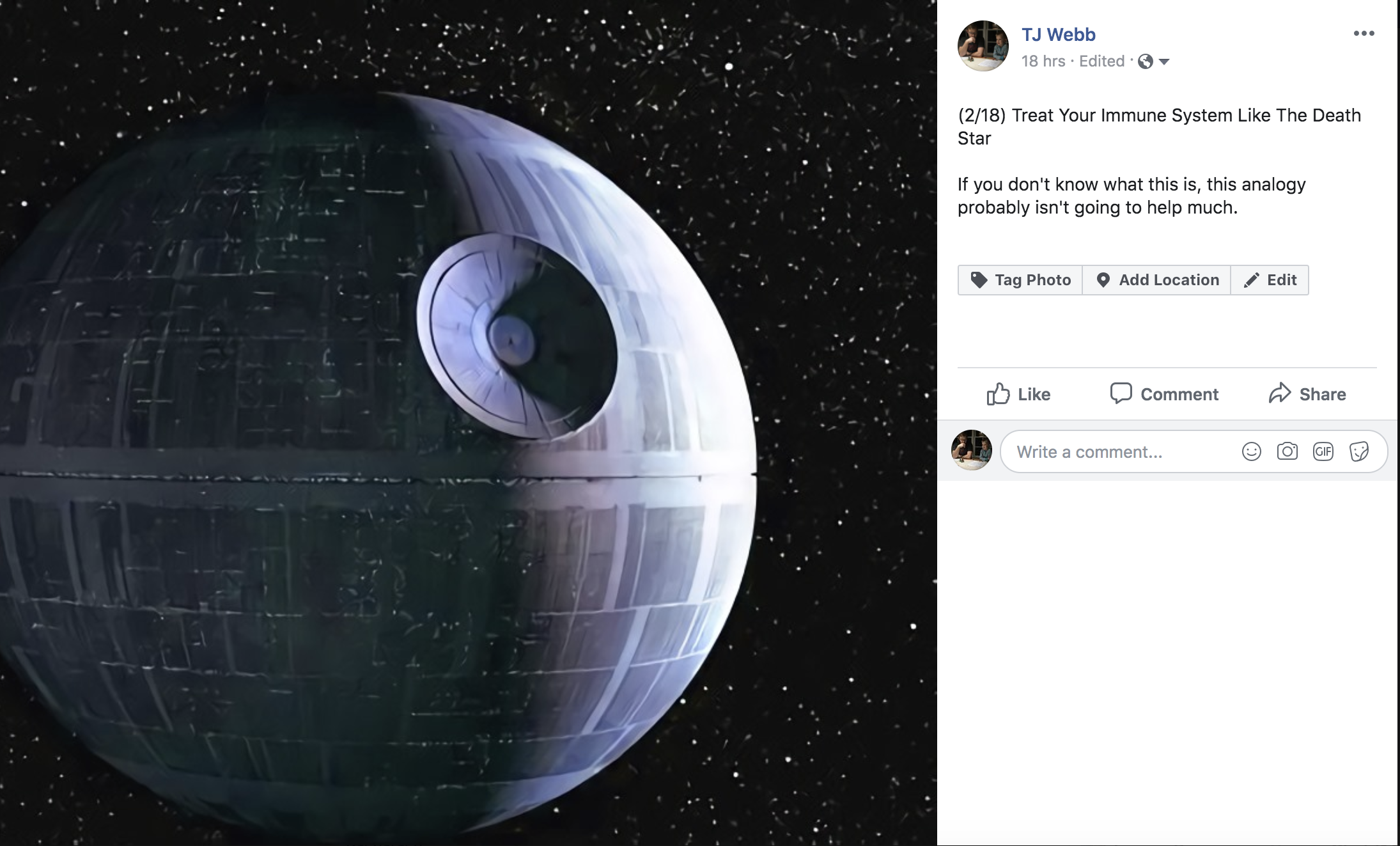
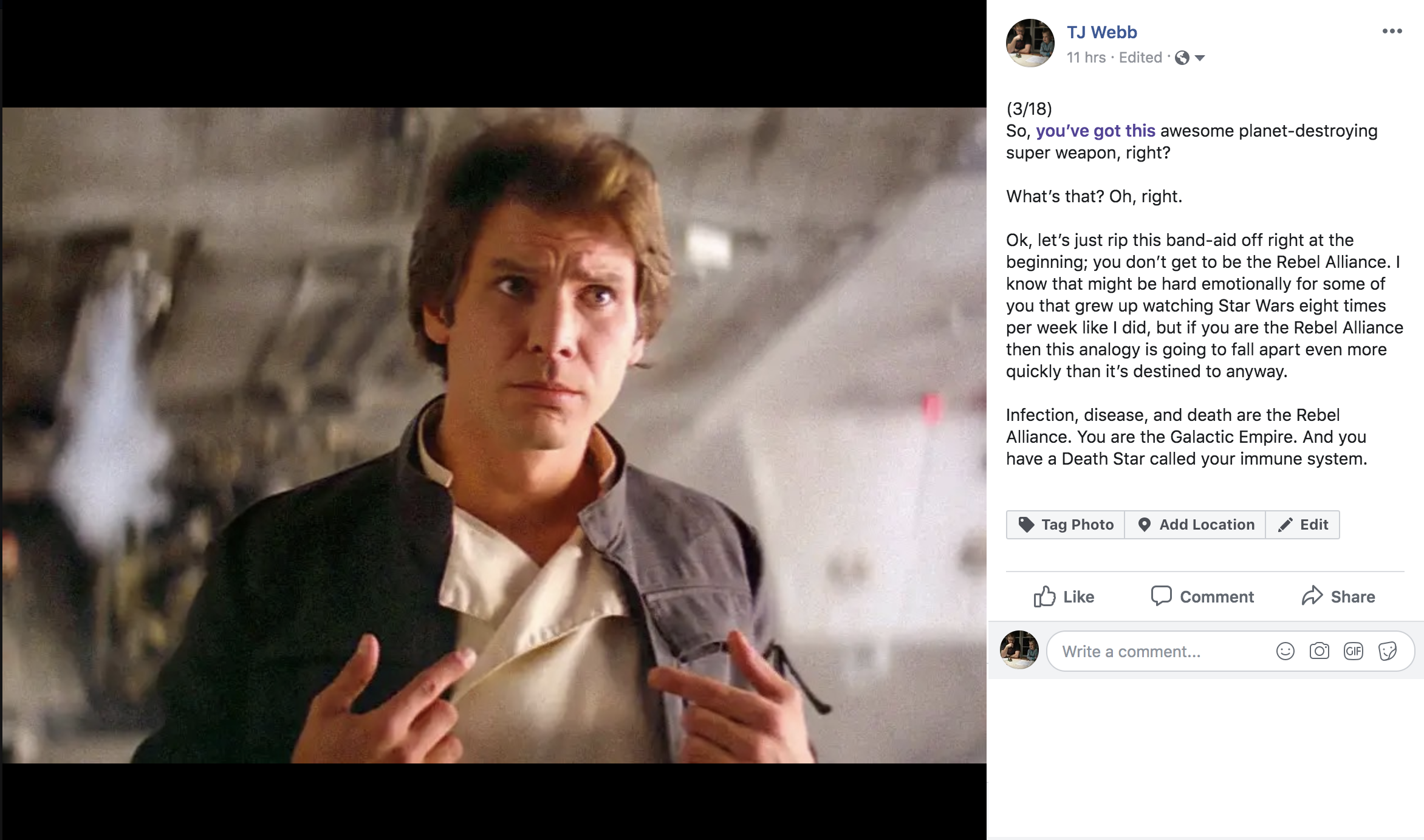
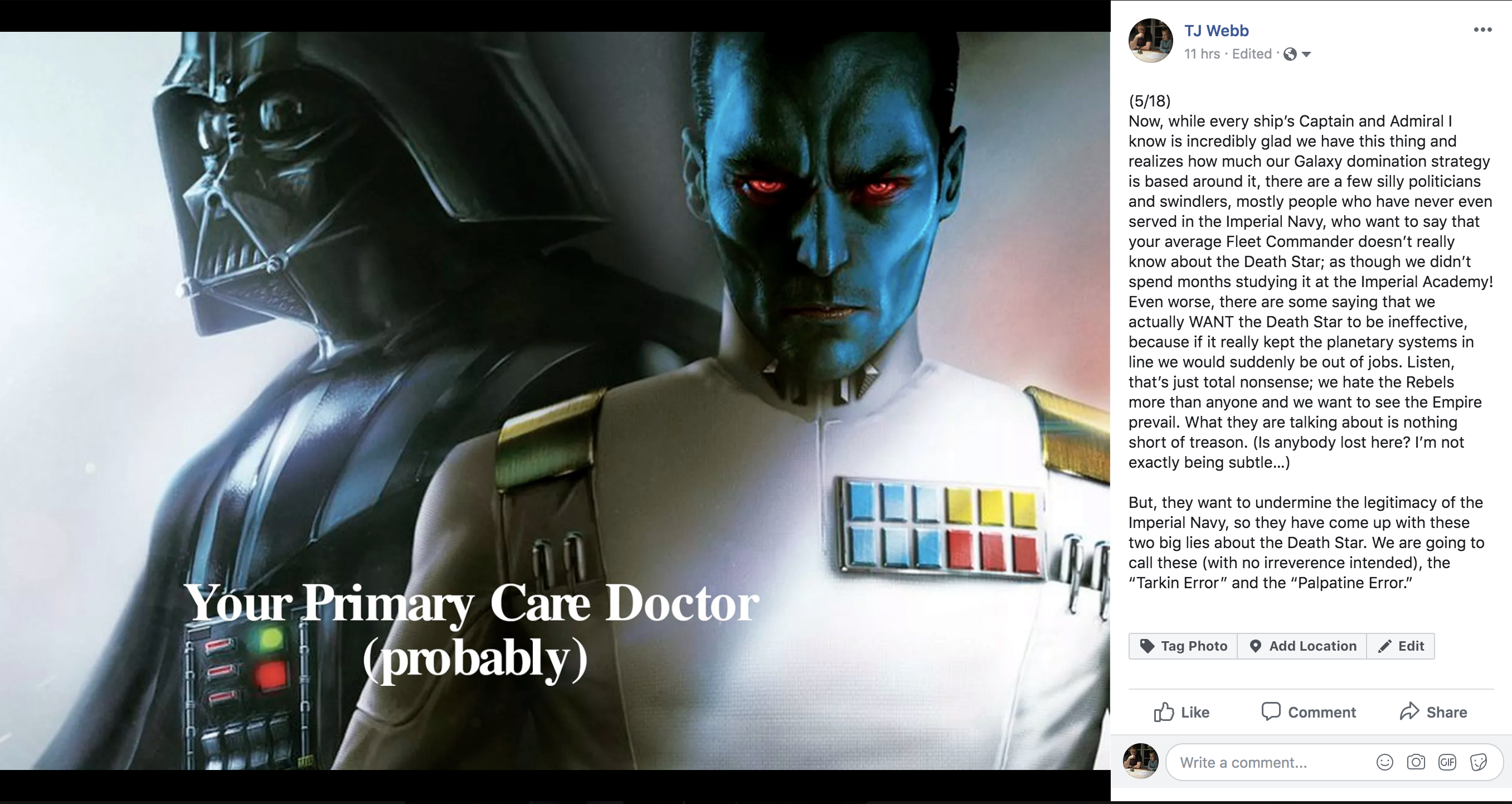
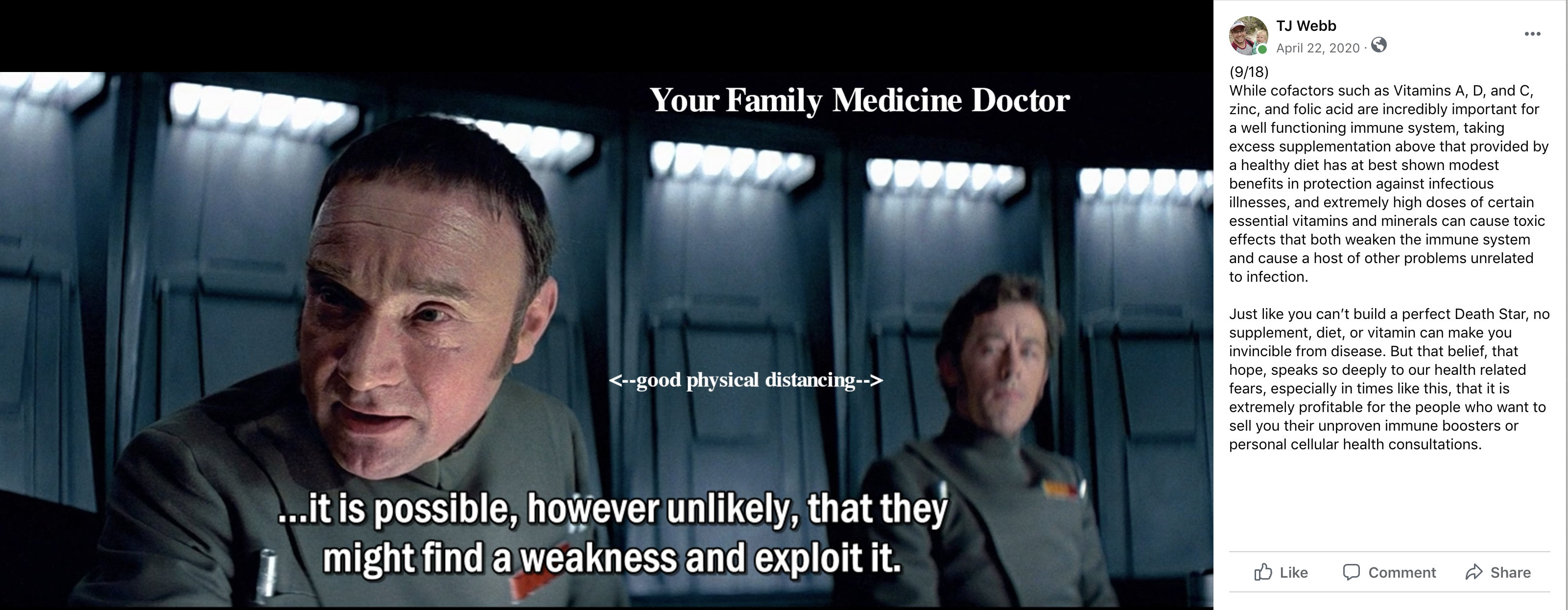
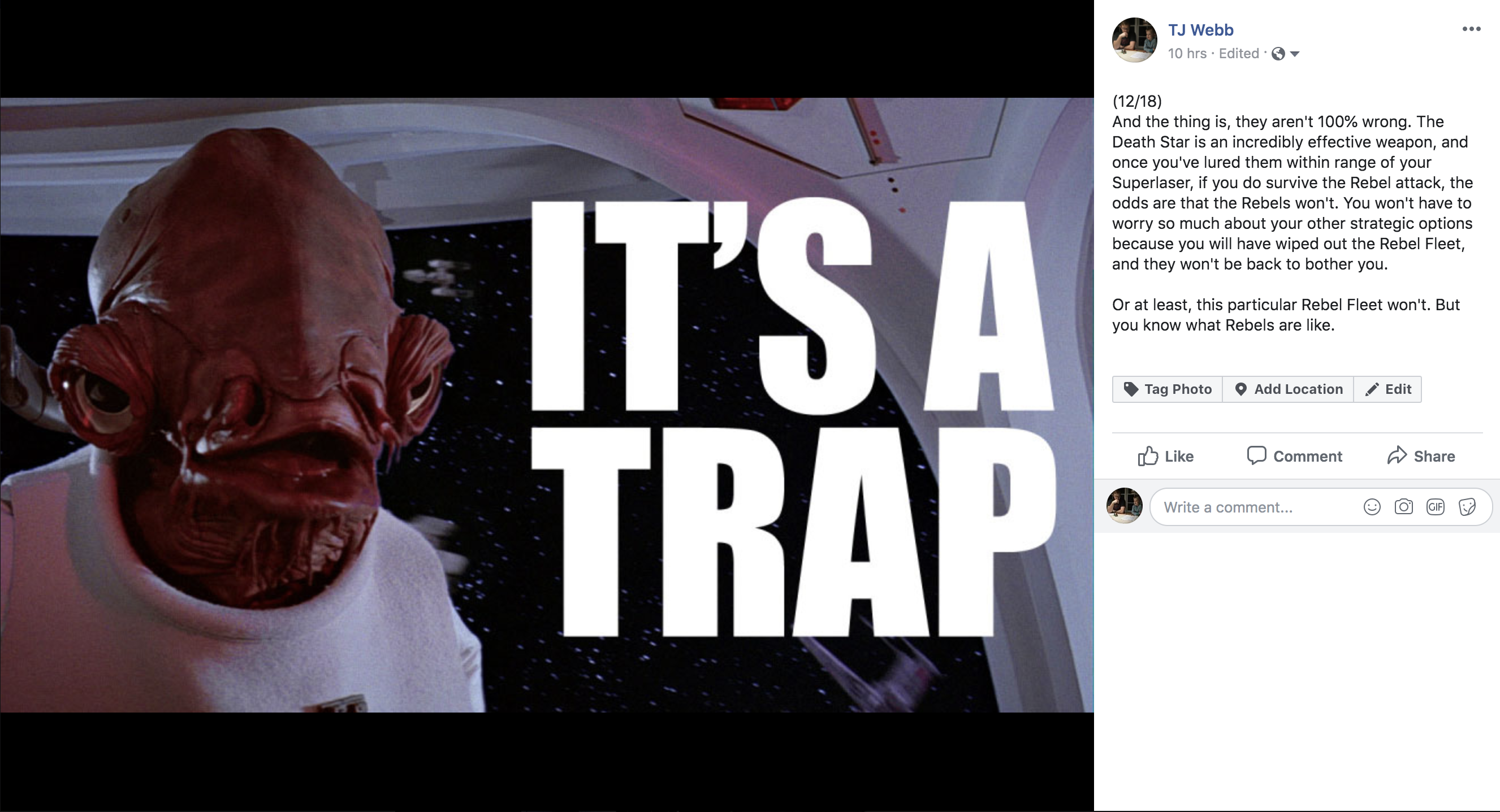
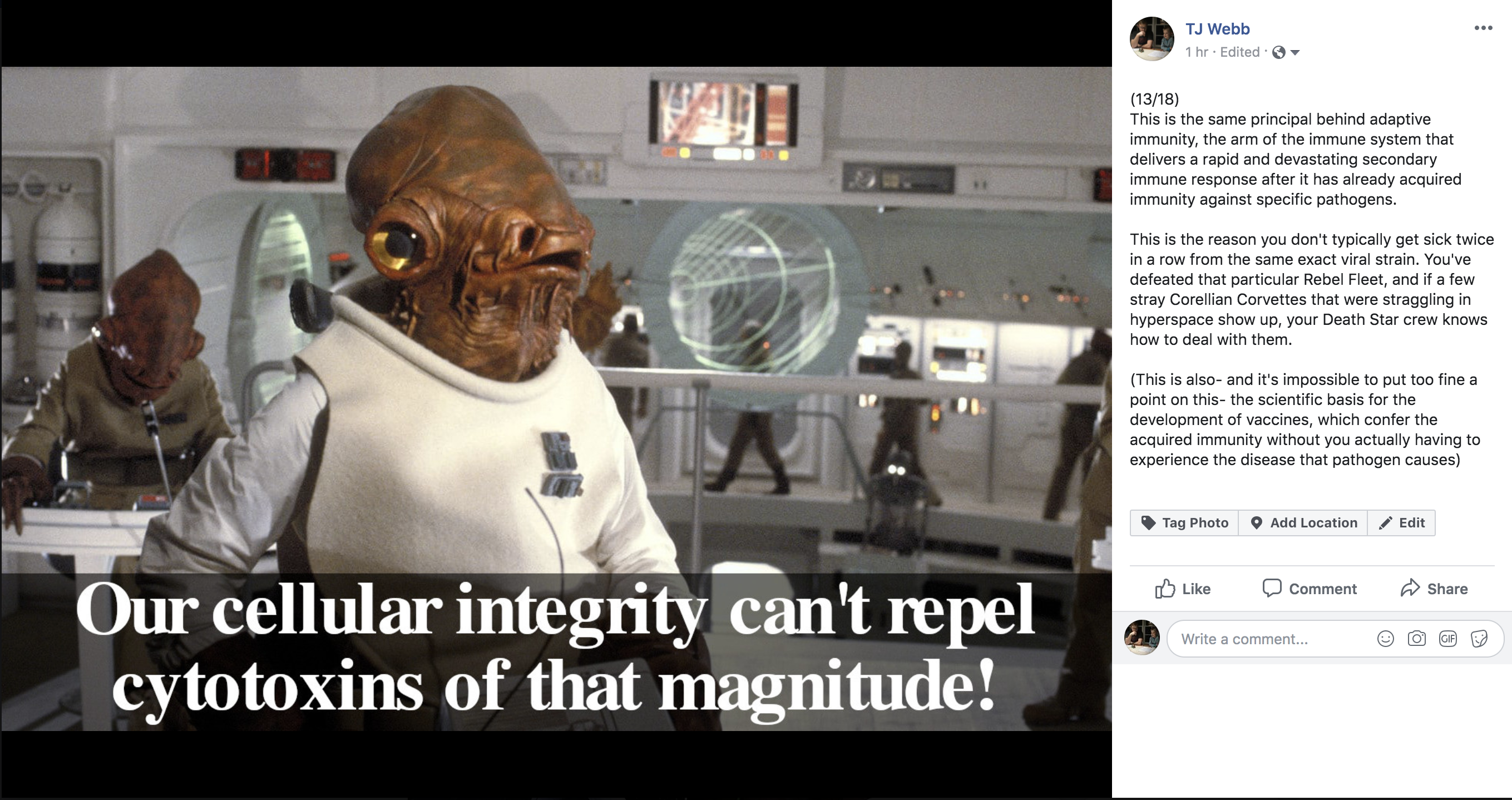
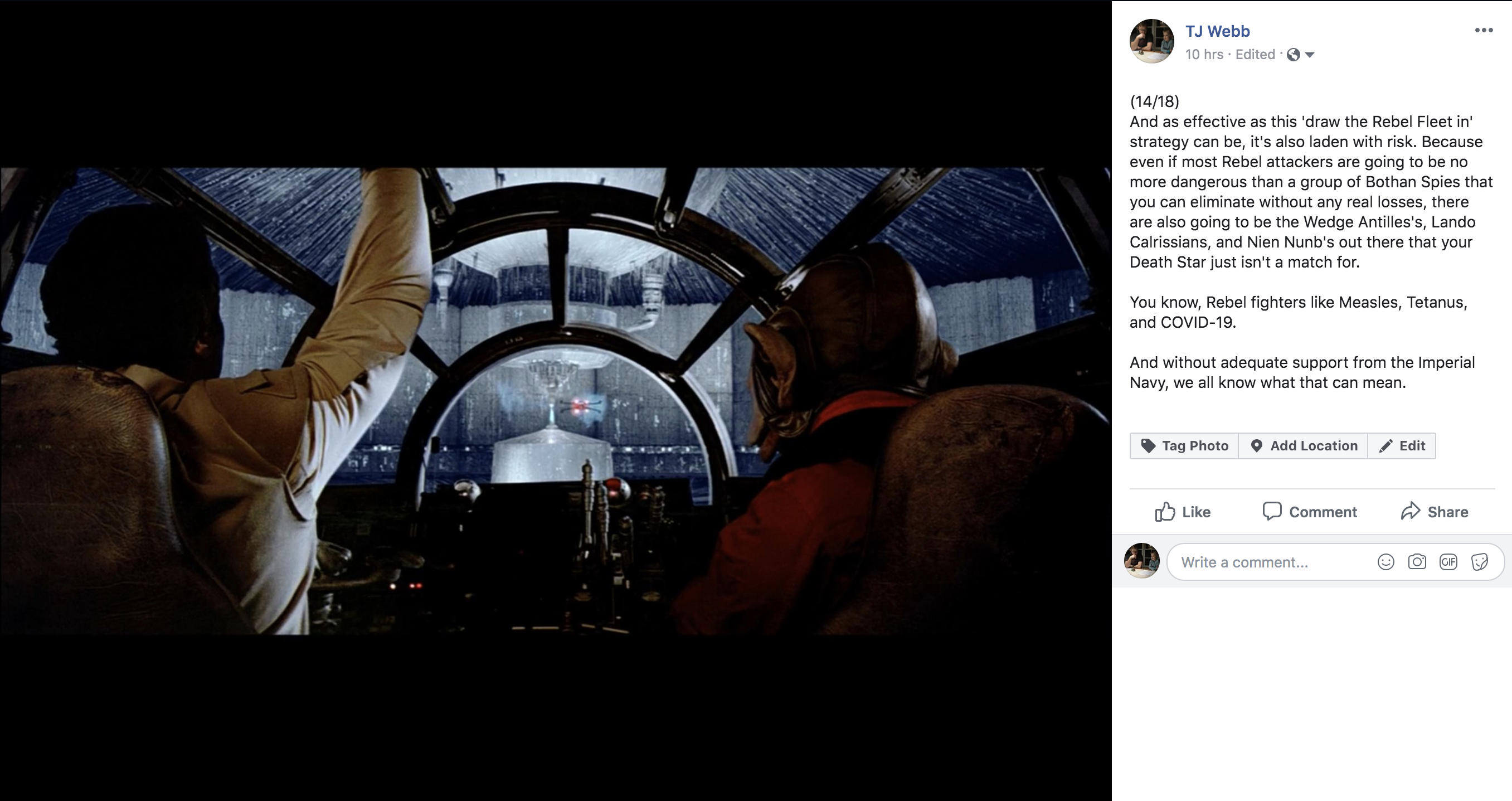
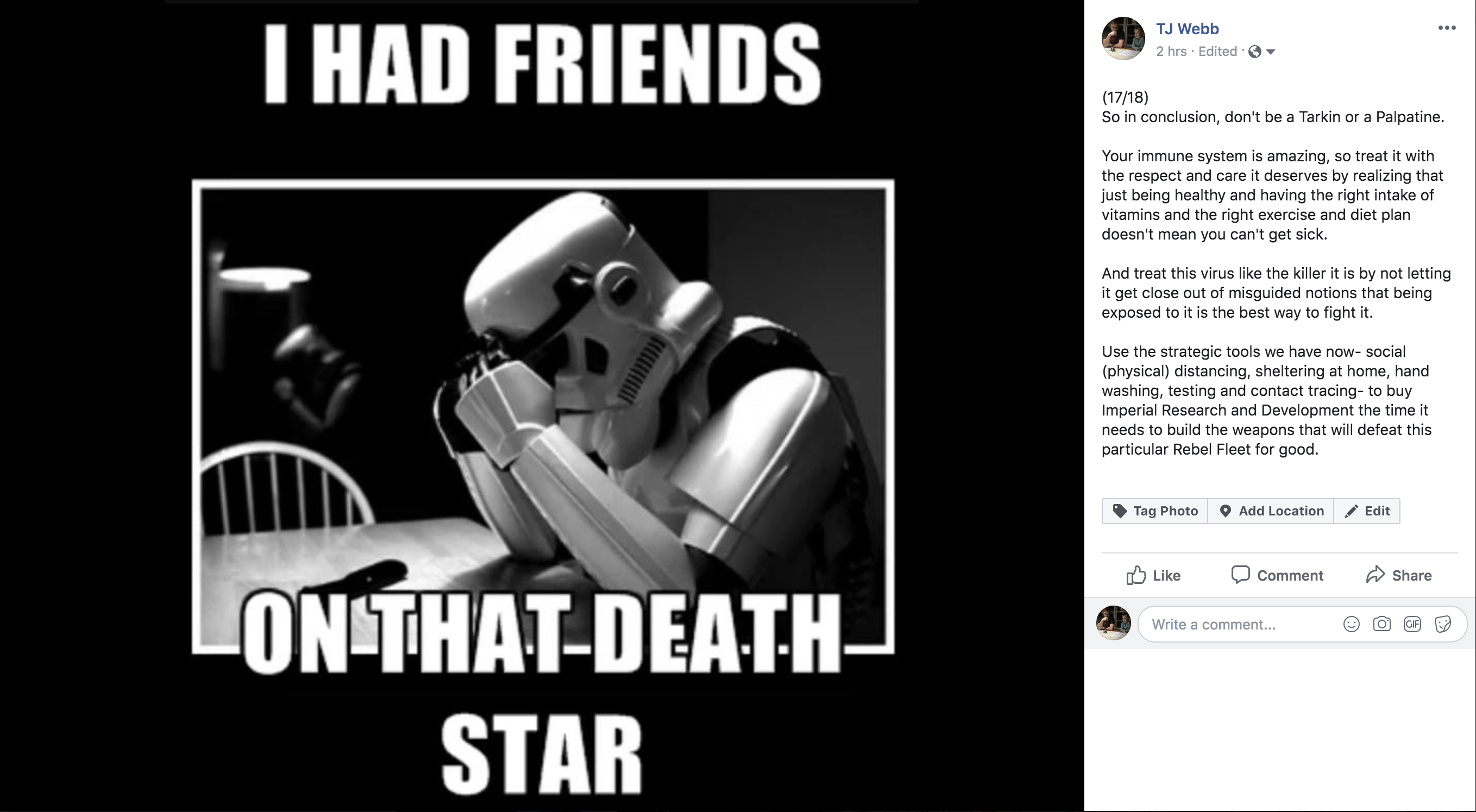
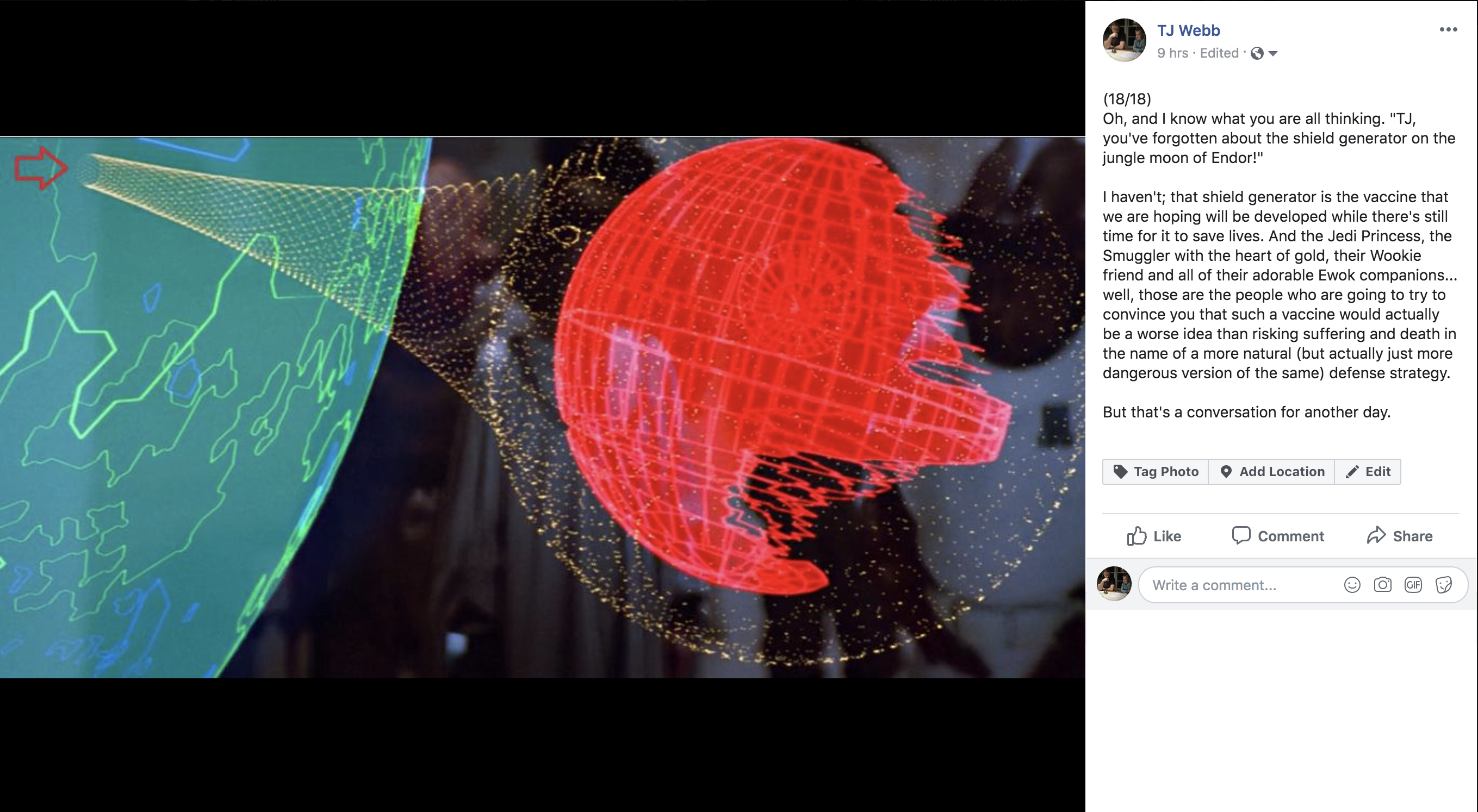
Treat Your Immune System Like The Death Star (A Slideshow)

The amount of medical misinformation out there right now is staggering. Would-be alternative health celebrities see the COVID-19 pandemic as their opportunity to make a name for themselves and increase their fame and fortune, and their videos seem to range from 5 minutes of mostly benign half truths, to one I saw today that was 48 minutes of crazed rantings. As a Physician, I despair of being able to address even a fraction of the misinformation my friends and family are being exposed to right now.

But you have to start somewhere. One of the biggest areas around which falsehood and distortion crops up consistently is the role of your immune system in fighting disease in general, and in protecting you against COVID-19 in particular. And in this area there are two dangerous distortions that seem to crop up again and again. But to address those, I think it’s important that we think of the immune system as a Death Star.


The Church and Medical Misinformation During COVID-19

Preamble 1: This is written to Christians, and intended as a call to my fellow believers in Christ to hold to very high standards of truth telling, particularly as it relates to the COVID-19 pandemic we are currently facing. I do think that the general principles I am espousing here apply to others as well, and all our welcome to read and comment.

Preamble 2: In this post I do talk quite a bit about holistic healing/alternative medicine. This is an area of complexity and nuance, but here I am primarily talking about self-proclaimed alternative health “experts”: modern day snake-oil salesmen who are seeking to use the COVID-19 crisis to create a name for themselves and garner greater fame and fortune. I know many of my friends lean towards ‘holistic’ alternatives or adjuncts to modern evidence-based medicine (modern medicine IS holistic but that’s another soap box entirely). I have FB and real life friends who are into essential oils, I have family that swear by their chiropractor, and I myself have received acupuncture in the past (it was kind of fun, to be honest). Most of them, thankfully, also choose to bring their children to the doctor when they are ill and to vaccinate them to prevent communicable diseases. Most of them have been very, very supportive of healthcare professionals in general and of me personally during this pandemic, and I have seen them both seek out and share good, reliable medical information. In short, I have been quite proud of these crunchy, oily friends of mine. If you are reading this as someone who identifies strongly with holistic or alternative medicine, I would ask you to please consider carefully whether the conspiracy theorists and COVID-19 deniers who are so prolific on the internet right now really represent your movement well and are espousing the same values that you find important in your area of wellness. My hope is that you wouldn’t be deceived by them easily just because they are comfortable using the same terminology that you hold close to your heart; an error we in the Church have all too often made with false teachers of all stripes.


“Finally, brothers and sisters, whatever is true, whatever is noble, whatever is right, whatever is pure, whatever is lovely, whatever is admirable—if anything is excellent or praiseworthy—think about such things.”

“Keep your tongue from evil, and your lips from telling lies.”

When the initial wave of concern over COVID-19 began for our clinic system a few short weeks ago, there seemed no end to the things that needed to be done. We had to rapidly prepare to protect our staff and patients by minimizing transmission risk and eliminating fomites, go through all of our processes with a fine toothed comb and revise or rewrite a fair number, and innovate and implement novel ways to deliver high quality primary care under circumstances where it was no longer safe for our patients to sit in a crowded waiting room as they wait to see their primary care Physician, or even pass each other in the hallways on the way to the lab or radiology. This all in addition to learning how to work-up and treat the virus itself. During those first few weeks many of us worked until the wee hours of the morning each night and through the weekends, all the while continuing to see patients, return phone calls, and refill medications. But as these systems have been put into place and fine-tuned, and as the physical distancing and other epidemiology measures on a community level have effectively limited the spread of the virus in our area, life has thankfully slowed somewhat again.  Many of us that do hospital work are waiting to see whether more doctors will be needed to cover shifts, or if the shelter-in-place orders and distancing measures will be enough to avoid a true, overwhelming surge. In the meantime we read and stay up to date, we see our patients via telemedicine or in outdoor COVID-19 clinics and work hard to make sure they don’t fall through the cracks, and we prepare, personally and professionally, for worst-case scenarios. Throughout all of this we have each continued to ask ourselves what our next responsibility is as Physicians in the midst of this pandemic.

In answer to that last question, I have found myself more and more called on to provide an answer to misinformation around COVID-19, as friends and family have attempted to sort out the unprecedented amount of misunderstanding and abject falsehood that has been circulated over the past month. To be clear, even in the best of times there is already an overwhelming amount of misinformation around health and healthcare. The nuances of human health and disease and the means available to protect the former and fight the latter are unbelievably complex, and because of this it is easy for an individual who hasn’t spent a lifetime studying this area to feel overwhelmed and disempowered. The temptation of easy answers and quick fixes is very real. More to the point, Physicians have historically done a fairly poor job, in my opinion, of helping our patients to feel empowered and knowledgeable to the greatest degree that is possible without them actually entering the medical field themselves. In this context, it is no surprise that during this time of increased health anxiety and uncertainty, and with a myriad of political and economic motivations to obscure the realities around the virus, the amount of misinformation has increased dramatically. Between my day job, extra duties related to the virus, and this small matter of having a wife and four children, I consider it a real privilege when I have the margin to address a video or article that a friend has ‘tagged’ me in asking for my input.

But though there are plenty of unaddressed articles, videos, and memes spreading medical misinformation on my facebook feed this very day, I am writing this afternoon with a slightly different, though related, purpose. I am writing to call the Church to participate in this work with me.

We are called to be a people of the truth; we are not called to be a people of truth and falsehood mingled. When discussing his conversion to Christianity, G.K. Chesterton wrote, “My reason for accepting the religion and not merely the scattered and secular truths out of the religion… I do it because the thing has not merely told this truth or that truth, but has revealed itself as a truth-telling thing.” As followers of Christ, Christians ought also to have a reputation of truth-telling. Truth-telling in love, when the truths are difficult. Truth-telling in courage, when the the truths are spoken to those in places of power. Truth-telling in humility and repentance when those truths reflect poorly on ourselves or our conduct. We cannot afford the damage done to the witness of the Church by our gaining a reputation as unreliable sources of truth. Yes, physical health in general and the COVID-19 pandemic in particular, as devastating as it is, are still ultimately minor issues compared to the eternal importance of the Gospel; but how can the world around us look to us for the Truth of the latter when we have only provided them falsehood about the former? “Whoever can be trusted with very little can also be trusted with much, and whoever is dishonest with very little will also be dishonest with much.”

For this reason, I believe that our willingness as a people of Faith to perpetuate misinformation, particularly when it may truly injure our neighbors, is not a political issue or even an integrity issue, but a spiritual issue. There is no truth, whether philosophical, metaphysical, or scientific, that does not belong to our Creator; there is no Truth that we as Christians should fear, and there is no falsehood, no matter how convenient to our preferred narratives, that does not originate from our Enemy.


What follows is my take, as a Physician, on what a lay person can do when trying to weigh truth and falsehood and judge the reliability of medical information during the COVID-19 pandemic. I want you to know that I realize it is often very, very difficult. As a Physician I have the privilege of years of education and training in thinking about real and reliable truths about our bodies and the diseases that affect us; it is never my place to judge someone for sharing information they find convincing because they do not have those same experiences and have spent their time in other important work. It is my job, I think, to help my fellow believers supplement their God-given discernment with reliable data and professional insight; we are all one Body, but made up of many parts.

1. Understand your source.

Returning to Chesterton, I think it is reasonable to ask whether the author of the article or the self-purported expert we are listening to has a track record of providing reliable medical information; have they proven themselves to be a ‘truth-telling thing (er, person)’. Many of the people generating widely shared false information are political partisans who have no medical or other scientific background; are they sharing the perspective of actual experts, or are they merely creating false narratives and opinions out of thin air? If the source is not a politician but instead claims to be an expert, what is their education and background? So often we give our trust to people whose primary credentials are an attractive and disarming physical presence and a high verbal IQ but who do not have even the basic science background to understand the frameworks they are tearing down. I have seen youtube videos captioned ‘so and so DESTROYS the COVID-19 pandemic myth’ or ‘Dr. X crushes the CDC and WHO conspiracy’, etc., only to find that not a single intelligible sentence of valid scientific information was uttered during the entire 15 minute video. These are the ‘used car salesmen’ (no offense to actual used car salesmen; I am very pleased with my 2012 Honda Odyssey) of medical information, and their true area of expertise is in pretending to be experts.

Please understand what I am not saying; I am not saying that you must have a certain degree or a certain prerequisite combination of education or work experience in order to have a valid take on the pandemic. But often these videos are made by people putting themselves forward as experts without the credentials to support that claim; the first piece of misinformation is imbedded in their own self presentation. An example is a video a friend recently asked for input on, from a doctor putting himself forward as an expert on the immune system. It turns out that he was not an immunologist or a microbiologist, but a disgraced chiropractor turned “cellular detox diet” specialist. Again, this does not negate what he has to say; but it is a vital piece of context for weighing the claims he goes on to make.

This research is sometimes hard. These people are often incredible at building legitimate sounding resumes for themselves and at using terminology on their websites and bios that smacks of authenticity and scientific rigor. Moreover, there are also those who do have impressive credentials yet have strayed from any integrity in their work and have become deeply unreliable sources of healthcare information in their pursuit of fame or fortune (a fellow MD friend and I often joke, darkly, how easy it would be to make tons of money as a Physician, if it weren’t for these pesky morals). But even if you cannot establish someone’s reliability with a few minutes on google alone, conducting such research will help to answer a few basic questions that should set the tone for the information itself. Is there a direct link between the reach of this person’s social media influence and their opportunities for attainment of power and profit, such as a political office being at stake or a website that sells services or goods directly? Such a relationship would be fairly rare in medicine or academic science. Are the claims this person makes the types of things that would fall within their area of knowledge based on their education and work experience? Are they setting themselves up as experts in areas, such as clinical medicine, immunology, or epidemiology, where they seem to have had little to no experience? Finally, do they have a history of fraudulent claims, moral turpitude, or failed (or successful) scams in the past?

This step is sometimes a bit tedious, but I believe vitally important, especially when some of these videos are made by people who have spent a lifetime mastering the art of convincing others with their looks, manners, and likability. When it comes to medical misinformation, these are the wolves in sheep’s’ clothing of the moment.

2. Do your research.

This second point is so similar to the first that I won’t spent much time on it. Though understanding whether the source is reliable is important, I firmly believe that the content of the argument is more important still. When considering any degree of medical information shared on social media, or even mainstream media, pause to reflect on the main themes and content of the article or video. What was the driving point? What information contradicts that which is already widely available? What data seems shocking or seems to rely heavily on the existence of widespread conspiracies? For that matter, do those conspiracies depend on the sudden cooperation of diverse and often opposed sectors of society, such as the sudden cooperation of politically unaligned nations or the widespread collusion of large groups of healthcare professionals? What part of the information is benign and widely accepted already, and is it being presented as such? Or is there a claim that commonly accepted facts are denied by or unknown to ‘the powers that be’ (the CDC, the medical establishment, etc), and does that seem very likely? What would the major implications be if this video were true, and who would stand to profit by its widespread acceptance if it were false?

This list could go on, and in another time we would have only these important critical thinking questions to guide us to the informational content itself. But we live in a technological age and the odds are that if we are seeing a video, or at least a popular video, it has been critiqued or fact checked already. Read these critiques; seek them out. This alternative perspective, even if it comes from a source you normally don’t subscribe to personally (I know people who despise certain fact checking websites), may be enough to give you the ‘aha!’ moment you need to reach conclusions on the information for yourself. And if you believe the information and think it is worth sharing, then understanding the arguments against it will only strengthen your position.

3. Be honest with yourself about your political leanings.

I’ll keep this one brief because I don’t particularly want to be dragged into a specific political debate, at least at this time. As people of faith who are committed to the truth, we will find ourselves politically homeless a fair amount of the time, and holding onto important caveats and a sense of tension even in our areas of agreement with political movements. When the truth conflicts with the narratives of the political groups with which we most closely align, our choice is clear. Before sharing information from questionable sources, that our research tells us is not reliable, we have to check our politics; we have to be very honest with ourselves regarding whether our impulse to perpetuate the information stems from a real belief in its veracity or from a mere desire for it to be true. I have heard fellow Christians tell me “all politicians lie” (generally to excuse untruths from one group or individual), and then have seen them blindly re-post the lies that come from their own side. I may very well have been guilty of this myself. If we believe that politicians are not reliable sources of information in general (and we can debate later if some are worse than others to an almost unprecedented degree), it means that we will sometimes choose for reasons of discernment not to pass along information that, were it true, would be extremely convenient to our party or candidate. In contrast, if we find ourselves always repeating the party line and reinforcing the narratives of those in positions of power, I fear that we are in danger of rendering unto Caesar something that never belonged to him.

4. Beware of easy answers.

“Reality, in fact, is usually something you could not have guessed. That is one of the reasons I believe Christianity. It is a religion you could not have guessed. If it offered us just the kind of universe we had always expected, I should feel we were making it up. But, in fact, it is not the sort of thing anyone would have made up. It has just that queer twist about it that real things have. So let us leave behind all these boys’ philosophies–these over simple answers. The problem is not simple and the answer is not going to be simple either.”
C.S. Lewis wrote this when discussing the reality of Christianity and the complaint heard so often that ‘religion ought to be simple.’ But I think this quote is informative for us in this discussion of medical misinformation. Alternative health popularizers like the ones we are seeing in video after video right now have long mastered the art of combining oversimplified ‘common sense’ arguments with the right kind of complex medical vocabulary (some real, some fake), to appeal at once to both our desire that healthcare should be fully comprehensible and explicable to us and our desire to know we are hearing form an expert. They are experts in tickling the ears, in confirming our biases and ingratiating themselves to a public that is anxious over health and disease. For someone who has actually studied both the real concepts they are distorting and the real vocabulary they are misusing, these arguments are as transparent as they are ridiculous; but they are not trying to convince me, they are specifically trying to convince people who don’t have medical training.

That said, you don’t have to spend your life studying pathophysiology and be intimately familiar with medical terminology to spot these patterns for yourself and know when to be wary. These false arguments tend to fall along a few common themes, and once you learn to spot them you will be a big step closer to at least being able to ask the right questions.

  • The real solution is easy but they don’t want you to know that.

This one has come up a lot recently as people advocating against social/physical distancing measures (for political or financial purposes) are pushing the idea that other simple measures would actually prevent getting sick from COVID-19. Typically these are oriented around the immune system, and the idea that having a healthy immune system would actually prevent the disease entirely. Aside from being untrue, this is extremely problematic for two big reasons. First, I think we should recognize the degree of victim blaming involved in this line of reasoning; if these 41,000 people who have died from COVID-19 in the US had just taken enough Vitamin C or eaten a healthier diet they wouldn’t have died. Certainly the interaction between health and lifestyle, including limitations in choices and socio-economic vulnerabilities, is complex. But there is not a set of choices that can make someone immune to illness in general, and in the case of infectious diseases specifically there is not a combination of lifestyle and nutrition that can make a person invincible (even Chris Trager got the Flu on Parks and Rec). Second, just consider the sheer number of people who would have to be in on such a conspiracy. Millions of doctors, nurses, and public health experts, many of whom have themselves become ill or lost friends and loved ones. The idea that all of these people are interested in covering up that a certain number of milligrams of Vitamin C or a certain number of hours of sunlight exposure could have alleviated all of this suffering is not only incredibly naive, but also unbelievably calloused.

  • Germs are good for you.

This is an argument that crops up when discussing any infectious disease, but it is particularly popular now. Many alternative health and particularly detox and microbiome style wellness salesmen are all too quick to tell you that viruses, bacteria, and fungi are important for us; that without them we wouldn’t have functioning immune systems. And they are right. But like so many of their arguments, they have taken just one piece of the incredibly complex story of human health and disease and have extrapolated it to illogical and harmful proportions. I have written about this more extensively recently, but they are essentially failing to make two important points. First, the difference between a microbe (any bacteria, virus, or fungi, etc) and a pathogen, which is a microbe known to cause human disease; it is absolutely not true that because ‘germs are good for us’, therefore infectious diseases are good for us. This virus can definitely kill you. And second, the role of an acute infection in establishing a secondary immune response. Yes, exposure to a pathogen does generally cause some degree of enhanced natural immunity against that same pathogen later (this is the entire principal upon which vaccines are based); but it is not necessary to allow yourself to get ill or indeed become as sick as possible in order to build that robust secondary immune response, and sometimes the risk is much greater than the reward. “Whatever doesn’t kill you makes you stronger” still implies that dying is at least on the table.

I won’t rehash all the points I wrote about last week, but instead will share a quick story. When we lived in Denver we were visiting with a friend after church who showed us a fairly deep cut to his finger, near the joint, which he had received that morning. My wife, an RN, asked what he had used to clean the wound. He explained that he had NOT cleaned the wound because his body needed the germs to build an immune response, and that soap and water would prevent his body from fighting off the infection ‘naturally’. Katie attempted to persuade him otherwise and explain the roll of his immune system and ways he could help his body prevent an infection, but he wasn’t convinced. Two weeks later we saw him again, this time with a large bandage over his finger. We asked about this and he explained how his finger had become infected and he had to go to the emergency room, undergo and incision and drainage procedure to remove the pus, and then take antibiotics. He went into glorious detail about the procedure and the appearance of the infection and even showed us pictures. He did all of this without any sign of chagrin, and to this day neither of us is sure whether he had forgotten the first conversation entirely or if he is just the world’s most humble man.

And while what happened to my friend is funny in retrospect, because his finger fully recovered, it is certainly not funny when someone contracts a deadly illness because they are misled into thinking it’s actually better for their health.

  • The doctors don’t understand (or indeed know about) the immune system.

I’m always amazed when this one makes the rounds because it’s just such an incredibly goofy thing to say. We could spend paragraphs discussing the thousands of hours spent in medical school understanding every aspect of the human body and the huge swaths of microbiology, biochemistry, pathophysiology, infectious disease, anatomy, and pharmacology coursework that were devoted to understanding our fearfully and wonderfully made defenses against infection. I promise you we spent so much time studying the immune system that we dreamed of angry macrophages and inflammatory cytokines. So why such a silly and nonsensical lie? They are setting up a false dichotomy between your own immune system (which they would like to sell you products and services to augment) and the “big-pharma model of medicine”, a red herring of their own invention, which only believes in harsh chemicals. They have to reduce modern medicine and the scientific discoveries of the human body to just this one aspect in people’s minds so that they can claim for themselves the parts of it which seem to sell best. Whether the hucksters making such claims have actually studied the immune system in an intellectually honest and scientifically rigorous way themselves, however, is a question that perfectly justifies speculation.

I explore the rest further in the next section, but a few more, briefly:

  • The doctors want you to stay sick.

This is 100% a lie. Don’t be fooled by ‘common sense’ arguments that suddenly call for millions of well-meaning people to act nefariously.

  • The doctors are being controlled by big pharma.

Don’t be fooled by arguments that require passionate, notoriously difficult to control, and (let’s face it) often egoistic people to suddenly be submissive. Physicians are one of the primary reasons that pharmaceutical and insurance companies don’t yet control all of healthcare.

  • The doctors mean well but have been tricked.

Don’t be fooled by arguments that require very smart people to suddenly be easy to dupe.

5. Ask your brothers and sisters in Christ.

One of the many false narratives that Christians seem to believe at an alarming rate is that the medical field is somehow opposed to the Church. It is easy to point to controversial areas of medicine, or even the general principles of understanding illness and health as primarily physical phenomenon, to say that modern medicine is at it’s core agnostic or secular, and thus antagonistic to the Faith. This is an incredibly profitable narrative for televangelists and healing charlatans who would like you to believe that pursuing any means of healing aside from the overtly miraculous is a sign of lack of faith, and who exploit our fears and insecurities around health to sew mistrust in Physicians and other health professionals for their own profit. Perhaps a step down from the overt chicanery of these false prophets, we also see a strange marriage between Evangelical Christianity and unproven and sometimes even dangerous alternative health measures, which are marketed, sometimes, with a heavy mix of pseudo-Christian spirituality.

But if this is true, what then do we do with the millions of doctors, nurses, scientists, epidemiologists, and others within the healthcare sector that are faithful followers of Jesus Christ? I think the first temptation, too often, is to treat them like they are ‘one of the good ones’; as though a Christian Physician you know personally may be a reliable source of health information, but the medical field, in general, is not. I think this is incredibly problematic. As someone whose 20’s and 30’s were devoted to medical training, I have known hundreds (maybe thousands) of doctors personally. My older children who grew up during my residency thought that “Dr.” was just a gender-neutral way to say “Mr.” or “Mrs.”.  Because of where I have trained, many of these have been believers; but just as many that I have trusted and respected have not. Yes, I have certainly met doctors I would not trust with my own care or that of my family, but these have been remarkably, surprisingly few compared to the number of doctors I have known and worked with. In general I can say that Physicians as a group have self-selected for (and certainly this has been reinforced by training) both their desire to see people well and their commitment to scientific accuracy. To be clear, some of these doctors I disagree with vehemently on issues within medicine and the associated underlying moral and societal values. Nevertheless, and regardless of the cultural misrepresentations, your doctor wants you to be healthy and is, in general, a good and reliable source of information about health and disease. If they aren’t, you should get a new doctor immediately.

As we touched on earlier, a second and similar way to treat Christian Physicians and healthcare workers is as well-meaning but ultimately misled pseudo-experts with only a narrow scope of understanding regarding the human body. This is the view pushed by many in alternative health businesses; doctors are generally altruistic or noble, but they have had the wool pulled over their eyes, their education is controlled by Big Pharma and hospital administrators, and really all they are learning is essentially spreadsheet after spreadsheet of ‘if the patient has this, give them one of these drugs (and here are the prices; pick the most expensive one)’. Medical schools and residencies exist to train doctors to create profits for drug companies. Now, this is an incredibly silly idea and we could devote as much time as we wanted to this. I could explain that I never met a drug rep until after residency, because they generally aren’t allowed to interact with medical students or residents, and have never made a medical decision based on the advice of a drug rep in my life (except for Burton “Gus” Guster, of course). I could (and should, at some point) explain the very complex and often antagonistic relationship between systems within medicine that prioritize profits over people, including pharmaceutical companies, and the physicians, nurses, and clinical staff who exhaust themselves to help their patients find something like justice and equity in their healthcare. But these are areas I am passionate about, and I’m afraid this one section would eclipse the rest of the essay entirely.

Instead, I’m willing to bet that if took a step back and consulted even your own experiences with doctors you know personally, you would realize that their knowledge, education, and personal characteristics does not seem to match this narrative. If you have physicians in your family,, or in your church or Sunday school class, or have attended high school or college with them, or have friends who are doctors- in short, if you do know believing medical experts that you would ask for input on these videos and articles being circulated- ask yourself if they are a reliable source of information even aside from their medical background. Are they the type of people who are easily duped? Do they hold to questionable morals or a low view of the truth? Do they seem to possess discernment? Essentially, are they the type of people you would trust outside of a pandemic to answer questions unrelated to viruses and immunology and epidemiological data? If they are not, I would humbly suggest that you do not turn to them now, regardless of how closely the information you need clarified matches their field of work. But if they are, I would recommend showing them the courtesy to believe that they have applied at least that same degree of critical and independent thinking and that same spiritual discernment to the endeavor that has taken up the majority of their adult lives; namely the study of human health and disease.

Finally, my advice when framing these questions: be specific. When I am asked by a friend or acquaintance to address a viral video or a healthcare related article or meme, I try to be as thorough and complete as possible (I do find that after a few thousand words of my ramblings, they usually don’t ask a second time…). This can be time consuming, but I believe it is important work, and I personally have no problem being asked a general “would you give your input on this.” Not all healthcare professionals have the inclination to be quite so verbose, and of course many of us want for the time to do so now more than ever. If you ask for an opinion on a 20 minute video or a 2000 word article, let them know what your specific question is, or what about the content you found either particularly compelling, surprising, or questionable. If you are only looking for a ‘yes this is trustworthy’ or ‘no this isn’t trustworthy’ and are willing to take their word for it without a long explanation, let them know that as well.

6. Repent (or at least, redact).

I hesitate to make this last point because there is no way to express this without sounding somewhat judgmental. I hope it is clear that I intend to hold myself to this same standard as well, and hope that when (not if) I also fall into the ‘fake news’ trap and share misleading or unreliable information, I have the courage to follow my own advice.

What do you do when you have found information available on the internet and outside of your own area of expertise to be convincing and have passed it along, and through the (hopefully) kind input of friends have later discovered it to be untrue? I think there are a few good options. The simplest is to take it down; to delete the post so that others will not either follow you into believing the false information, or else in disbelieving it themselves begin to associate you with it. I think this is the minimum standard we should expect regarding our interactions with falsehood. However, I think an even better idea is what I have seen a family member do consistently in recent years; whenever she has shared a fake article or untrue information, she has then edited her post to clarify that the information is not reliable and why. Rather than distancing herself from those mistakes she embraces them, and in doing so helps protect others against the same errors. I believe that even better than Christians being known for never spreading false information (which is surely not the case now) would be us being known for the integrity and humility to publicly repent of error and embrace truth; in fact I can think of no more Christian way to deal with such a situation.

There is one thing we cannot do. Once we are aware of the falsehoods in something we have shared or promoted, we cannot choose to cling to it because we like the way it sounds or want people to believe that it is true. I have seen this done far too often; when it has been shown clearly that a source is unreliable or has even told outright lies, I have seen friends choose to continue to endorse and share it. There are myriad reasons, from liking a few of the points that weren’t exactly dishonest to wanting people to accept the overall message even if the content isn’t reliable. As people who believe that truth is authored by our Father and that we have an enemy who is only the father of lies, we cannot be comfortable with the mingling of the two. We cannot say, “yes, 7 of his 12 points were deliberately dishonest, and maybe or 3 or 4 were fairly dangers, but I really liked the other 5 and he’s just such an engaging speaker.” We must hold to higher standards of veracity than this. If we really want to promote those other ideas we should be incredibly, unmistakably clear that the rest of the content is not trustworthy… But better still, we should do the difficult work of finding a more consistently reliable source, and say of the first only that “he is a liar and the truth is not in him.”


I will conclude with the words of our Lord from Matthew 10:16: “Behold, I send you out as sheep in the midst of wolves. Therefore be wise as serpents and harmless as doves.” This pandemic is unlike anything we have seen in our lifetimes, and it is already the number one cause of death in the United States. We are living in an era of human history when reliable, true information is really capable of saving lives and when false information endangers our friends, loved ones, and neighbors. As we seek to obey the command of our Savior, let us reflect that we may never again in our lifetimes see such a moment as this, when these two concepts are so closely linked and refusal to be as wise as serpents can lead so directly to a failure to be as harmless as doves.

Handsome Chiropractor is more concerned about masks and gloves than about COVID-19

My name is TJ Webb, and I do NOT endorse this message.

As might be expected, there are a great many videos and articles about health surfacing right now during the pandemic; it’s a topic that is firmly on all our minds, even more so than usual. Unfortunately this means there is a lot of misinformation out there. I am actually really grateful when friends and family ask for my input on health information; I think informing our communities and using our education and experience to aid in the challenging work of discernment in this area is really important work, and one of the roles we need to engage in as Physicians. That said, there is so much misinformation out there right now, and life is already so busy because of the work of fighting the virus itself, that I have pretty much given up on addressing each article or video point by point in the way I normally would. I tend to be excessively verbose so you could imagine that cutting back is a challenge for me!

First, I would say that a good place to start, really with any of these articles or videos, is to ask whether the source is a reliable source of truth, a frequent source of falsehood and misinformation, or something in between. I don’t mean that we could write someone off because they have been mistaken (even brazenly mistaken) in the past, but simply that it is helpful to know their track record of veracity as a starting place for any new claims. It is important to know if the source has, as Chesterton put it, “revealed itself as a truth-telling thing.”

With that in mind I would encourage you to do some research on Dr. Pompa as a backdrop for understanding his perspective. He is not a medical doctor or a scientist. He has a degree as a Chiropractor. A discussion of alternative medicine in general is outside of the scope of this discussion, but I will say Chiropractory is a widely varied field in terms of adherence to scientific evidence and even basic medical ethics. I have known very good chiropractors who genuinely wanted to help with people’s pain and believed their methodology was superior to (or more often, worked in combination with) traditional approaches such as physical therapy, exercise, etc. My parents see a Chiropractor to this day and he came to all of our new year’s gatherings growing up; I like him very much as a person, and I’d like to think they are mostly like that. There are also, unfortunately, some Chiropractors who have discouraged patients from following the advice of their Physicians and receiving necessary treatments, and convinced them instead that a realignment of their spine can cure everything from diabetes to cancer. I have known some to sell unbelievably expensive and entirely unproven supplements from their offices and branch into other facets of alternative medicine even more dubious. Sorry to digress; all of that is to say, we don’t know what kind of Chiropractor he was, but when he speaks on virology, immunology, and microbiology, we need to understand that he is by no means speaking as an expert, or as someone who has actually trained in those areas of study extensively (though I’ll be the first to admit that I don’t actually know how much microbiology and immunology is taught in Chiropractor school; if a Chiropractor reads this and disagrees with my assessment, please feel free to lend your insight!).

Further, I think it bears pointing out that he is no longer practicing Chiropractory. As best I can tell, his license with the Pennsylvania board of Chiropractors has been on probation since 2014. To be fair, this was due to “moral turpitude” over a civil issue (which you could google if you wish, but I won’t share the details of the case here) and not due to issues related to his practice (this is of course assuming I have the correct Dr. Daniel Pompa, Chiropractor. I am ready to retract this information if someone is better at google than me and it turns out to be a different guy!). He currently works as a “cellular healing” and detox consultant and, as far as I can tell, all around alternative health huckster. His website and blog are absolutely full of dubious claims (though I’ve seen worse) and, of course, are oriented around a (presumably) expensive and unproven service that he can provide. Only Dr. Pompa has the key to unlocking your cellular health!

So, what’s the most we can say about Dr. Pompa so far? We know he trained in a fairly mainstream, regulated alternative medicine field, but is no longer able to practice in that field for legal reasons unrelated to chiropractory itself. We know that he now works in an entirely unregulated field of holistic healing/alternative medicine and puts himself forward as a “cellular healing and detox” specialist, which are not real areas of medicine. We also know that he is a very gifted communicator. He is handsome and well spoken, he dresses well and is likable on video, and most importantly he uses the combination of “common sense” arguments and pseudo-science vocabulary that is what makes alternative medicine seem especially convincing; the terminology all seems like the right type of terminology, but there is nothing here that you could say ‘well that doesn’t make sense’ to (in contrast to what C.S. Lewis says about things that are actually real; “the problem is not simple and the answer is not going to be simple either”).

So, with all of my initial apologies about brevity, I find myself out of time and having not even addressed the video itself. To be fair, I didn’t know that there would be so many cautions to share about Dr. Pompa when I first started to research his career. Honestly, that ought to be enough; he is someone who has made a career out of selling unproven treatments based on empty scientific-sounding vocabulary and personal presence alone, once ‘mainstream alternative medicine’ would no longer allow him to practice, and his video above is convincing, where it is convincing, primarily because of these two factors. But I do believe that it is worth addressing the content of the video itself, and if you’ll give me leave I will attempt to do so in a few hours after my children are in bed!


I’ve watched the video a couple of times and taken down a few quotes, but I’d like to start with a short preamble: It’s really not all that bad. Please understand, I’m not saying it’s true; if I were a fact checker I would have no choice but to categorize it as “fake.” But my standard for misinformation has probably shifted a little during this pandemic, and this video is pretty benign overall. Like so much of the alternative health industry, it is an uneven and patchy mingling of truth and falsehood, so you couldn’t say “everything he said is dead wrong.” This is one of the problems with this industry; people who are in it REALLY believe in it, much of the time, and often have a few scientific facts or principles down but without any supporting context or science education, so they easily believe entire narratives that are built up around those few isolated truths.

I’m also not quite sure why he’s making the video. I suppose that in his line of work fame and notoriety do lead directly to financial success, and we are seeing a lot of people in alternative healthcare trying to use the pandemic to make a name for themselves and be seen as an expert. There’s certainly plenty of evidence of that in the video, from him saying ‘bottom line the experts have missed it’ to ‘this study confirms my point’ and lots of other subtleties of language intended to convey that he is the true expert on health and the poor guys at the CDC and WHO just don’t know any better. So, maybe that’s part of it; that is certainly the name of the game in that industry. But I’d like to overall give him the benefit of the doubt and say he really believes his message and wants to get the information out there; maybe I’ve been duped because he’s just so darn handsome so I’d like to believe him.

The problem is that it just isn’t reliable information. There are a few extremely egregious falsehoods, and we might as we’ll get them out of the way now.

“They’re looking at the death rates just sinking around the virus, saying ok it’s probably more like 0.1% at best, which is basically the same as the regular flu.”
“The bottom line is the experts have missed it.”

-I have no idea where he got this information from. Maybe he heard it somewhere but misinterpreted it? The ‘no more dangerous than the flu’ line seemed to have quieted down for a while as the pandemic spread, but has resurfaced as social distancing and containment measures have proven effective; it’s a very easy thing to say when you don’t have family and friends who are in the ICU or have died from the virus, and in many places there are so few severe cases that it’s easy to believe that COVID-19 “wasn’t actually that big of a deal”, as though the pandemic 1. Hadn’t already killed over a hundred thousand people, and 2. Was already over and done with. This is something public health experts and lay people alike have been saying since the beginning; if the extreme measures we take now actually work, people will say they weren’t necessary. In places where the healthcare system is particularly overwhelmed, the case fatality rate remains above 5%; astronomically higher than seasonal influenza. In places where the healthcare system can cope with patients at a more routine pace, without running short of either Physicians, Nurses, other support staff, or equipment, the rate is much lower; but still on the order of 2%, not 0.1%. This is an incredibly deadly disease, and before anyone buys into the conspiracy that this was all hype pushed on us for this purpose or that, they should open themselves up to the images and stories coming from Washington, New York, Louisiana, Italy, and Spain. I am sure we will soon enough be told that those people were all “trauma actors.”

The biggest question mark in all of this, of course, is the lack of universal testing. Our testing policies so far have been driven by test scarcity, and there has ALWAYS been the assumption that as more testing on asymptomatic or minimally symptomatic patients occurred we would find a large cohort of people who were more or less healthy despite having the virus. But we are still very, very early into having this sort of testing anywhere, and from colleagues in healthcare system that DO have universal testing policies I am hearing that they just aren’t seeing many asymptomatic carriers. So although we will not be able to come to a final estimate of the death rate from this virus until all is said and done, so far it is too early to see the drop in the death rate due to asymptomatic cases that we all have expected.

“But because they are attributing many different conditions to Corona it’s probably even half that.”

-It’s hard to know what he means, but I believe he is referencing the conspiracy theory that someone is either inadvertently or intentionally inflating the death rate for COVID-19 by attributing deaths due to other conditions to the virus. I’ve addressed this in detail a few days ago on another Facebook post; I am happy to share it with you if you would like.

“Now we know it was a narrow group of people that were truly at risk for this virus.”
“You can tell from my past videos that I am not one to have been fearing the virus.”
“People are realizing that it’s not as dangerous as we thought and they want to get the antibodies…. Because if this mutates we could all be at risk.”

-This is a bit revisionist. He is making it sound as though we initially thought that every person had a big risk of ending up hospitalized or dying from COVID-19 and now we know it is only people with certain risk factors such as age, other medical conditions, immunocompromise, etc. This is actually the exact opposite of the true history of our understanding of COVID-19, and it was shocking when reports of death in young healthy people began to come out of Europe and then began to occur in the United States as well. Of course older people with medical problems are at higher risk; that is true for any infectious disease. But this is a virus that is, in fact, dangerous even for people who are young and healthy. We are ALREADY all at risk.

As far as the second quote goes, please do not be fooled; this disease is dangerous enough that TRYING to get the antibodies “naturally”, by intentionally being exposed to the virus, would be incredibly foolish and irresponsible. Vaccines were invented because some diseases are so dangerous that taking a chance on the live, unattenuated pathogen is the same as gambling with your life.

“They put things into place not understanding the risks…”

-I’ve included this because, briefly, I think it illustrates this concept of setting oneself up as an expert that is so common in these videos. The idea here is to convey that the people in charge, the epidemiology experts and virologists and the people who have actually spent years and years studying human disease and microbiology and human immunology, all meant well but just didn’t know or understand what he does. He goes on, as we’ll talk about below, to discuss the hygiene hypotheses of autoimmune disease and the ‘dangers’ of wearing masks, and if you connect the threads it really seems as though the physicians and researchers who have recommend ways to slow the spread of the disease just aren’t familiar with the principles he is referencing, which is of course preposterous. Please note, however, that he is releasing this video NOW instead of 2 or 3 weeks ago; now that the “things they put in place” have actually shown some measure of success, he has the luxury to say that none of it was necessary.

The Hygiene Theory

After this, we finally get into the real meat of his argument. He starts by quoting a study, “having fewer sanitary amenities in childhood is linked to a lower risk of having inflammatory bowel disease.” This is a basic concept of the hygiene hypothesis, that exposure to certain microbes is necessary and decreased exposure leads to multiple disease, including autoimmune disease. This is a valid scientific theory with a good bit of evidence. Like most things in medicine (or for that matter, most things in real life period), it is much more complicated than it is presented here. It would be dangerous, for instance, to presume that because some bacteria, viruses, and fungi are important to our growth, development, digestion, and the functioning of our immune systems, that therefore ALL such microbes are healthy and beneficial and we were wrong to want to protect ourselves from them. Concluding that because exposure to more microbes is linked to decrease in risk of inflammatory bowel disease, we should expose ourselves to ALL bacteria and viruses including the one that causes COVID-19, would be particularly illustrative of the clinging to a few points of medical data without actually understanding them that we talked about before, which is so emblematic of this industry.

“The whole point of all of these studies is that more the viruses, bacteria, and pathogens you are exposed to the healthier your immune system is.”

-I cheated there, because I knew he was going to say that already as I was writing that last paragraph. What he’s done is taken one category of disease and one set of risk factors for those diseases, and conflated them with all of human health in general because the words happen to be the same. Because disease, bacteria, and microbe all appear in both discussions of the hygiene hypothesis of autoimmune disease and in concepts related to infectious disease, he believes that data from one can be used to negate data from the other. It is a basic failure to understand the concepts and even the terminology that is being discussed. To put it more simply; he is stating that because some bacteria are good for us, bacteria can’t be bad for us. He probably doesn’t really believe that, but the implication is that if your immune system is healthy enough then everything that would make others sick will just make you stronger.

The failure here is to distinguish between viruses, bacteria, and fungi in general, and pathogens, which are viruses, bacteria, and fungi (and other fun little guys) that cause diseases in humans. Avoiding pathogens that can make you sick is the most basic way of avoiding dying from some of the most painful and devastating killers in our fallen world. It’s the reason we don’t eat raw pork and why we wash off a cut. It’s a very basic concept that is taught even in high school biology, and it isn’t confusing to anyone in the medical field. It isn’t really confusing to anyone at all, until the obfuscation occurs in videos like this. The alternative health industry, and particularly those sectors of it that are focused on ‘restoring natural immunity’ and establishing healthy gut flora, etc, need to convince you that they are the only ones that really understand these concepts, so they obscure simple ideas, minimize complicated ones, and conflate terminology until they have a version of our complex immune systems and interactions with the world around us that is almost, but not entirely, completely untrue. They would like you to believe that everyone else is confused; that doctors think all bacteria are bad and want to sterilize your microbiome and gut flora with antibiotics and hand sanitizer, and can’t distinguish between the presence or absence of an infectious disease. There was even a video recently where an alternative health partisan claimed that doctors don’t study the immune system in medical school at all, which is obvious nonsense. And in trying to convincing you, they do convince themselves.

“Before this we had the hygiene theory: run from bacteria, kill all the bacteria”
“Let’s not throw a whole decade of research out the window”

-Again, just to be clear, the hygiene hypothesis IS the theory that decreased exposure to microbes increases the risk of certain diseases. And the theory and research around it has been around for decades. I find it concerning that he keeps exactly inverting the concept of the one scientifically valid theory upon which he has built his entire pseudo-medical philosophy, and then calls it a failed theory that we have to abandon. In his defense, it is a misnomer, since avoiding non-pathogenic microbes has nothing to do with hygiene.

“If I was going into a group of people that was at risk I would wear a mask….”
“It wasn’t about killing bacteria and viruses and pathogens, it was about living with them.”

-You might notice, as you watch the video, that he frequently shifts between treating the virus as something to take seriously and something we should live alongside and go ahead and ‘get antibodies’ to as early as possible. We haven’t really beaten this thing yet, so I don’t think that the people making these ‘it isn’t so bad’ videos can be quite so brazen in saying that the virus isn’t dangerous, no matter how much data their audiences are generally willing to ignore… at least, not yet. He is willing to tell you that you should keep your grandmother or immunocompromised friend safe by wearing a mask around them, but at other times in the video he encourages you to touch your face and implies that we need to take this opportunity to get exposed before the virus mutates. In 2-3 months we will see many articles and videos of people telling us that we missed our chance to have “COVID-19 parties” and that this is because big pharma and their pawns, doctors and nurses, want to suppress our natural immunity so they can sell vaccines. But those videos will have to wait until people stop dying from this virus. SARS-CoV-2, at least for the time being, still has to be respected as a pathogen.

“The hygiene philosophy failed. The antibiotic era, hand sanitizers, all of it has FAILED.”

-Let’s be clear; hygiene measures associated with germ theory have saved more human lives than any other intervention in medical history (vaccines and antibiotics are also in the top 5). It is ludicrous to say that hygiene doesn’t save lives. There are places in the world and in the United States where we STILL see the devastating effects and widespread disease and death associated with lack of access to clean water and basic hygiene measures. This is a privileged belief from every standpoint; chronologically, geographically, socio-economically. Living in a hygienic environment with potable water and clean, nutritious food, he has the gall to say that hygiene is a failed concept. He would like us to use the word ‘hygiene’ as a synonym for his red herring of ‘sterile’ and believe that doctors and public health experts want us to never be exposed to the world around us, which is patently false. He then wants to conflate the hundreds of years of excellent hygiene and microbiology work that has been done, which has saved billions of lives, with his own narrative that if they had their way doctors would have us all living in white rooms wearing gloves and afraid to let our kids play in dirt. Why? Because thoroughly undermining generally altruistic physicians and nurses that practice actual evidence-based medicine is very good for the alternative health business.

“The true risk of what we’re calling the new normal.”
“People with masks and gloves”

-Please wear masks. Please treat the virus like it can cause terrible respiratory failure and kill you, because it definitely can. Nobody is recommending you lysol your house daily (but please do it to the kitchen counter if you are cutting raw chicken, because Salmonella is a bacteria that IS a pathogen and can also make you sick). Your kids can play in the mud; they can do it today, if you’ve got some mud in your back yard and nobody has been over to cough on that mud. Wearing masks every day of our lives, not hugging each other, avoiding social gatherings, avoiding dirt and trees, and cleaning everything we touch are not practices that have ever been espoused by Physicians or public health experts. Taking precautions as individuals when we are ill, and as a society right now because a particular, new, deadly virus is currently spreading in our communities and threatening to overwhelm our ability to care for those affected, is something we espouse; and I believe that, regardless of what some people might want us to believe, most of us have the common sense to see the difference.

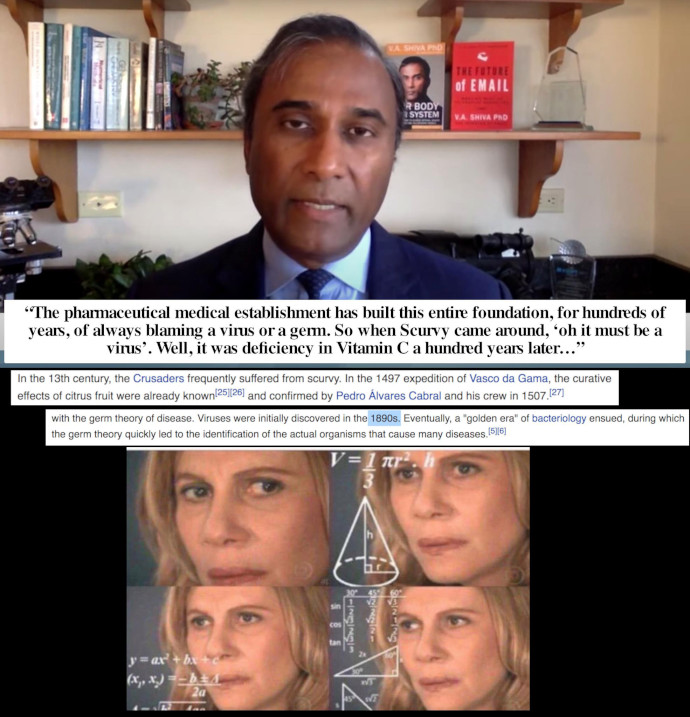
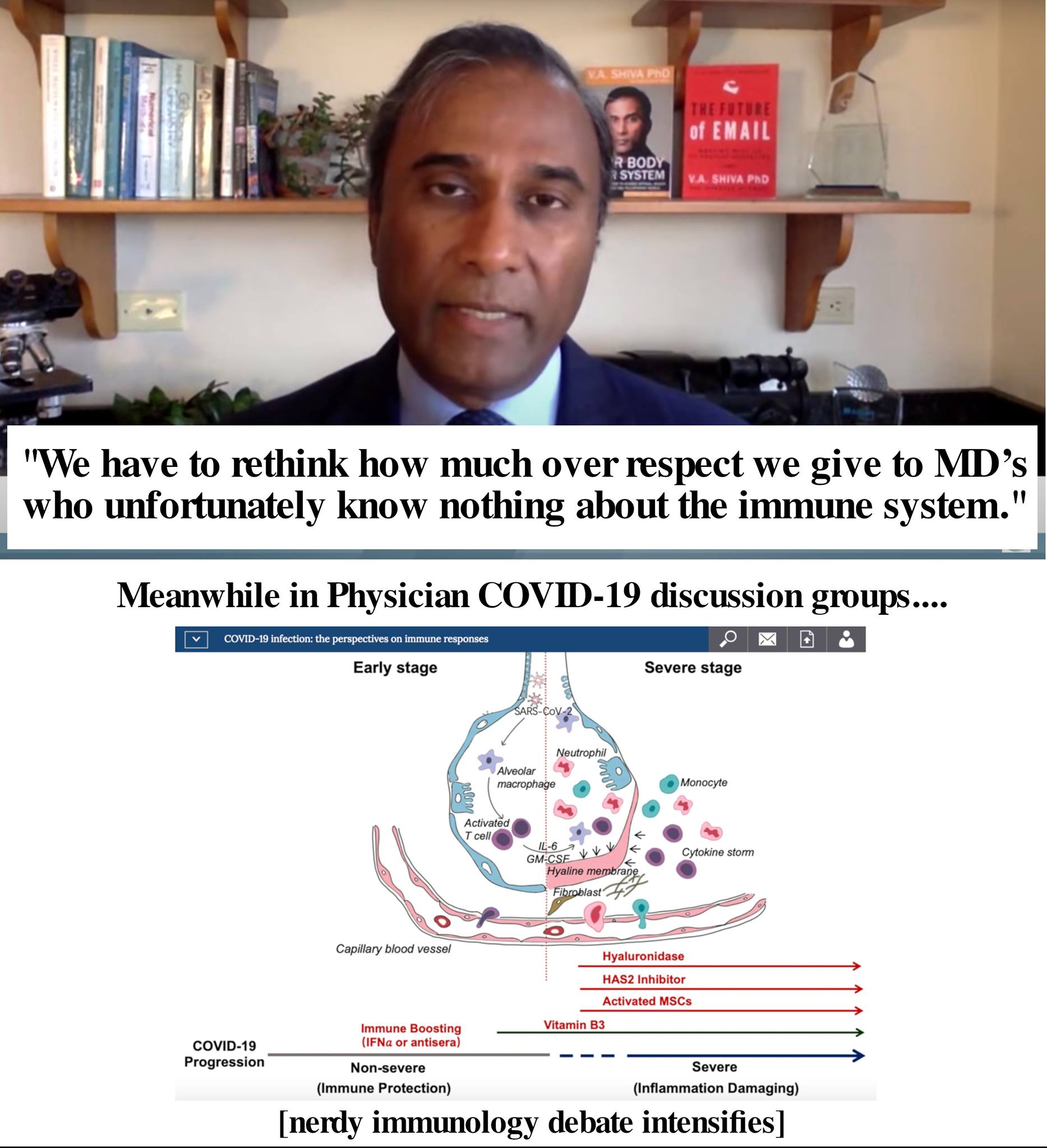
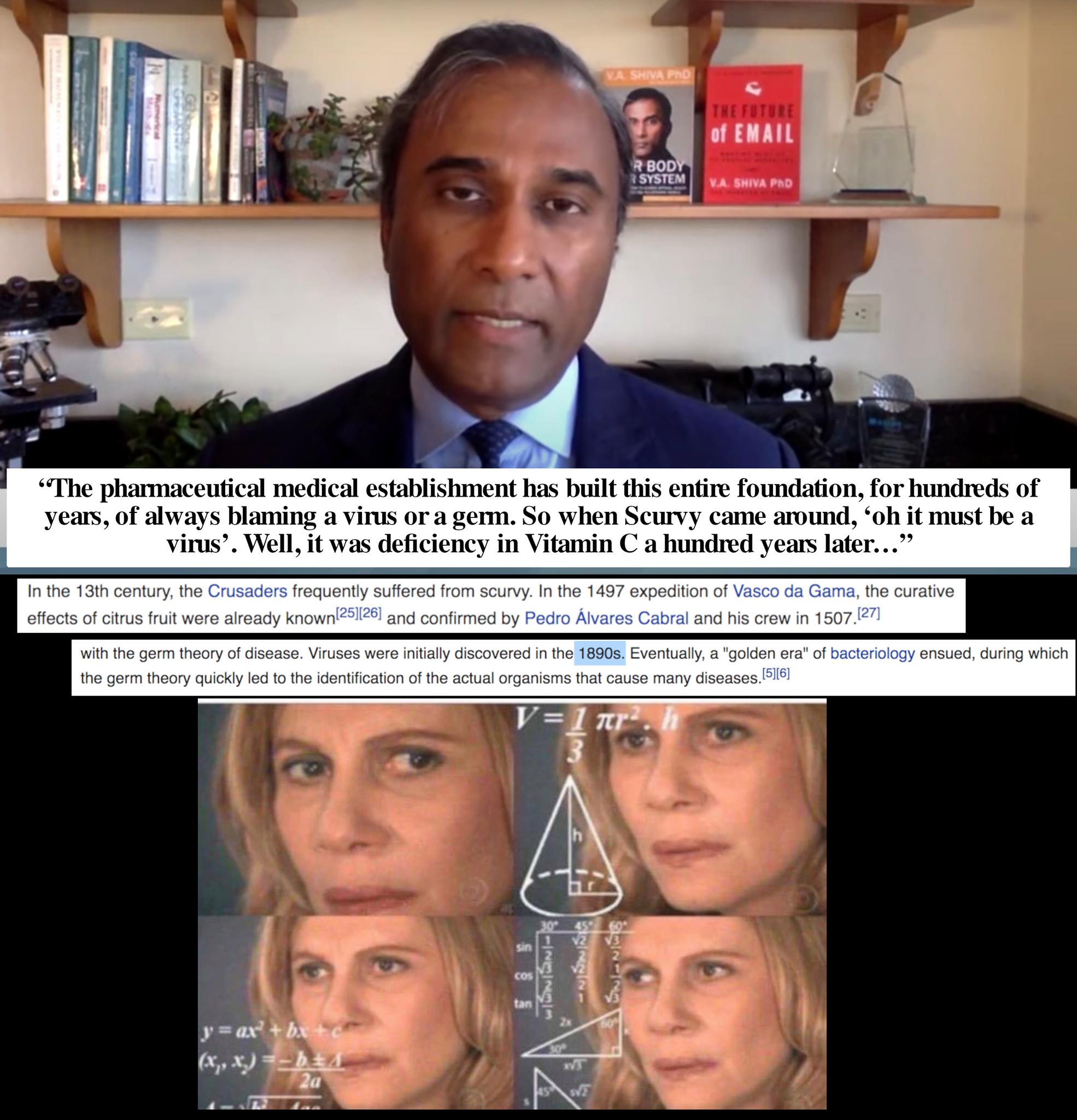
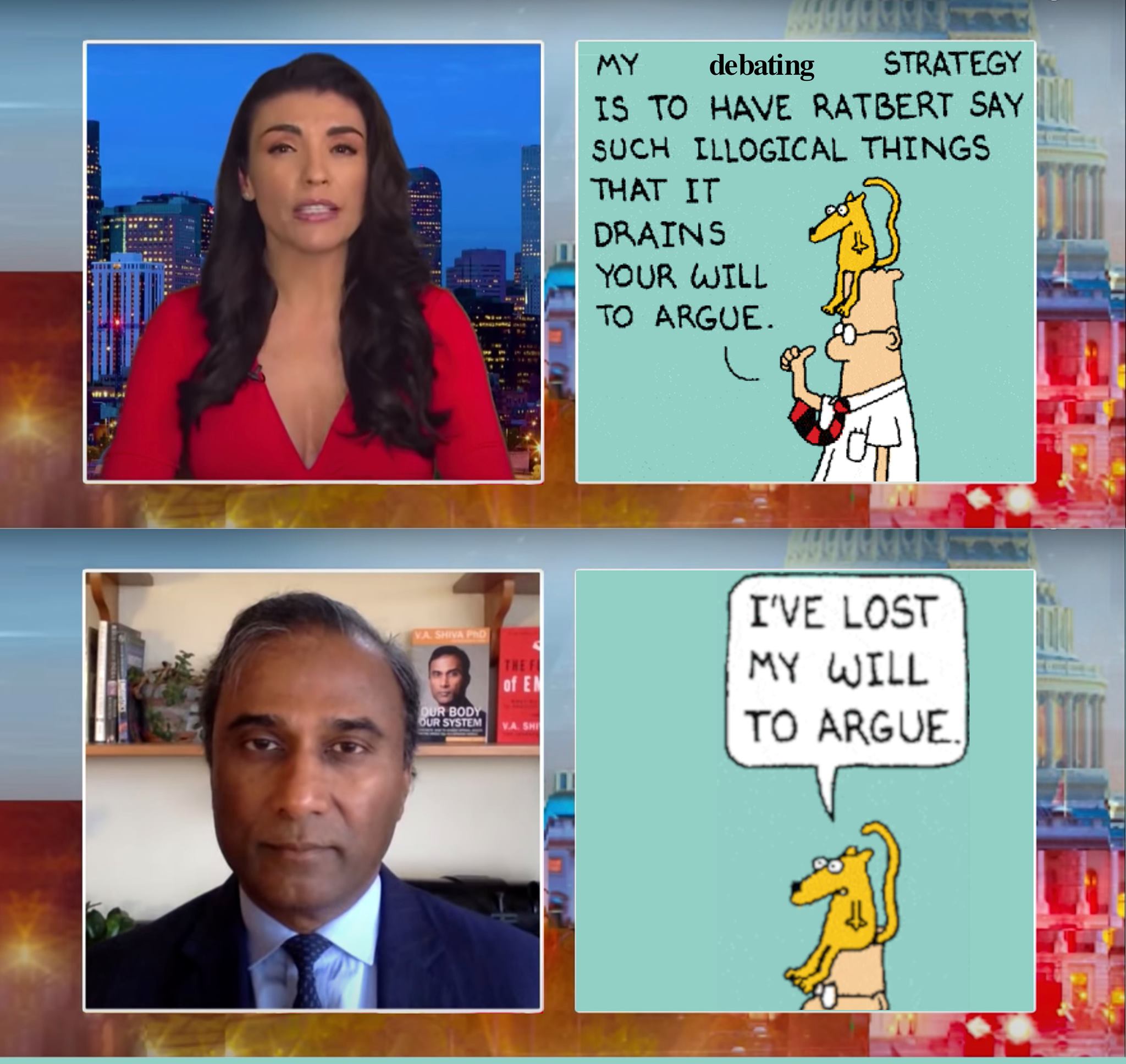
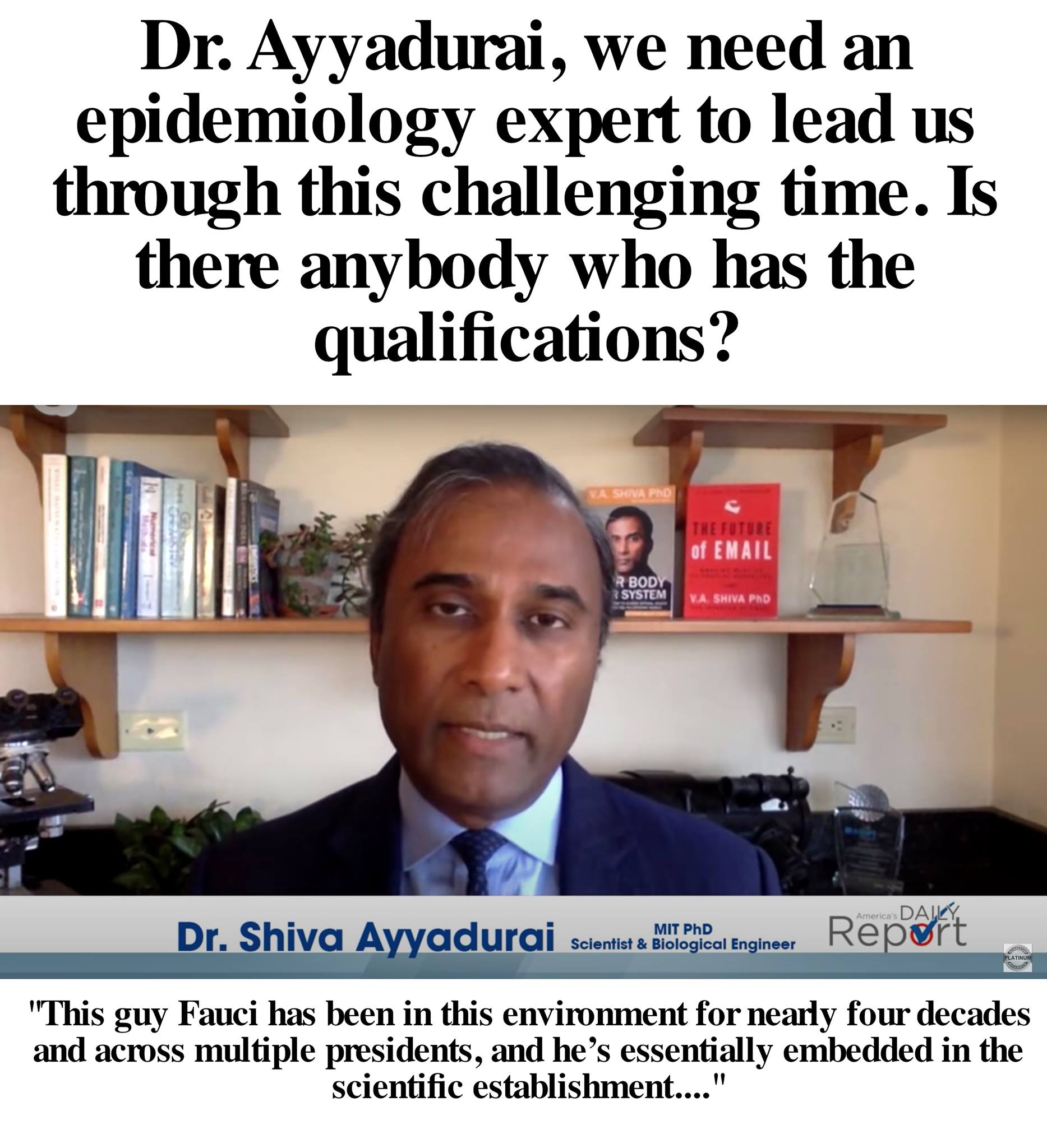
Memes for Dr. Shiva Ayyadurai

I had hoped at some point this week to write a rebuttal to the incredibly deceitful and frankly quite silly “Dr. SHIVA Ayyadurai, MIT PhD Crushes…” youtube video that has been shared so widely by my facebook friends. I still hope I get the chance, but it’s about 16 minutes long and each minute has about 2-3 nonsensical statements, outrageous falsehoods, or outright lies. In the meantime here is a good start from a fact checking website:

https://leadstories.com/hoax-alert/2020/04/fact-check-biological-engineer-did-not-offer-medically-supported-information-in-viral-video.html?fbclid=IwAR2qmsSs0zMGsXtq0Q3QaAjFMgEiVeAjYDoQ-o8EfR8JkmUXmOn-SbNXmRE

So, I haven’t had the chance to write about it yet… but I did make some memes.

What happened to all the deaths that AREN’T from COVID-19?

I’ve seen this meme and the sentiments expressed therein posted around the internet, and from spending some time in ultimately futile arguments with the people sharing them, I am slowly coming to the realization that the “I wonder why” might actually be rhetorical. When I’ve tried to explain “why” so they don’t have to wonder anymore, it seems like maybe they thought they already knew the answer. In fact, shockingly, it seems that rather than a sincere question about medical statistics, they are actually implying that the COVID-19 death rate is being inflated for political or other purposes. So rather than continuing to offer my explanations to people who have sort of already decided they don’t want them, maybe I will offer them to you, who at least might find it a little interesting.

One word to begin with; one possible implication here (which has been stated explicitly elsewhere) is that Physicians are falsely attributing deaths to COVID-19 that are really caused by other diseases, in order to inflate these numbers. You will have to ask the conspiracy theorists for more details. For instance, what agenda are the doctors trying to forward here? If this is an anti-Trump thing, how did the libs manage to convert all of the 60 year old docs I work with that get mad when I turn off Fox News in the doctor’s lounge? If this is to give the current government more emergency powers or something like that, how did they convert the physicians I know who went into medicine to further social justice? We are a pretty diverse group here in doctor land, and if somebody has managed to recruit us all into a nation-wide conspiracy, I’d like to attend that person’s TED Talk. The medical community could use more people like you! The insurance companies, healthcare administrators, and pharmaceutical companies have been callously taking advantage of our compassion, energy, and time for years, and we, our families, and especially our patients are the ones who end up paying for it. So once you are done with your COVID-19 conspiracy please stick around and help us get organized!

To be clear, I have never heard of a doctor lying on a death certificate. It happens all the time on TV shows so it must happen in real life, right? And it probably does, at least sometimes. But if it does, it’s because that individual clinician has failed the integrity test, or more often the cognitive dissonance test, and described the events of the patient’s death in a way that diminishes or obscures their culpability. If that’s the case it really is shameful, and there are failsafes and powerful analytical tools in place (although I honestly believe, not used often enough) to ensure that the events of a patient’s death, especially an unexpected death, are really and thoroughly understood. I will say, most of the Physicians I know are more likely to swing the other way; to take on too much personal responsibility, to assign too much blame to themselves when a patient passes. We carry our dead around with us for years, and very, very often there wasn’t anything that anyone could have done differently. When there was, hopefully we have learned from it; but the pain may last nearly as long as the lesson. But all that to say, the idea of doctors across the nation suddenly embellishing death certificates and medical records to make a virus we HATE seem even more dangerous than it already is seems pretty ridiculous, aside from being just blatantly not true.

Of course, there are people who will be quick, especially when speaking to a Physician personally, to remove this culpability by one degree of separation; maybe it isn’t the doctors themselves but hospital administrators or bureaucrats, or the ‘deep state’ officials at the CDC and WHO, who are falsifying the data. Weary unto death, all I can answer is “fine, maybe.” There’s only so many layers of conspiracy theory I can personally unpack for someone. Listen, you won’t find many people who spend more of their time fighting medical bureaucracy than I do (I’ve written Hamilton rap parodies about it), but please consider the sheer number of people who would have to be in on it; governments across the globe and all across the political spectrum, Trump allies and critics alike, the army of scientists and researchers and analysts at these big organizations, most of whom stand to gain absolutely nothing by falsifying data and who have deep seated personal convictions about the integrity of their work, just like you and I do, and who probably have to be very careful talking about politics around the office because they have diverse and sometimes volatile political leanings, just like your office does. Not to mention the hundreds of thousands of Physicians, Nurse Practitioners, Physician Assistants, Nurses, CNA’s, Respiratory Therapists, and other healthcare workers around the globe who are sharing their personal stories from the hospitals they actually work at every day. I mean, thank you for extending the courtesy to not believe I am personally a dishonest, corrupt conspirator; but pretending that each physician you personally know just happens to be “one of the good ones,” but are ultimately naive and have the wool pulled over our eyes, really isn’t much better.


The real answer to this meme is a lot more straightforward, and quite frankly a lot more worrisome, at least for a Family Medicine Physician like me. You see, these “other” causes of death that this meme is talking about don’t typically cause death all at once, suddenly, all on their own. Most chronic conditions that statisticians point to as “leading causes of death”, like chronic lung disease, diabetes, and even most types of heart disease, won’t cause you to just suddenly die (again, especially certain cardiac conditions are an exception to this). If a person passes away suddenly and has Diabetes listed as a cause of death, you won’t hear their doctor tell the family, “well, you know, sometimes this happens when you have diabetes.” With most chronic diseases, death from that disease is going to be preceded by a sub-acute deterioration and/or an acute exacerbation, often triggered by other acute illnesses, lapses in care, and other factors. In fact, there will usually be multiple cycles of recovery and deterioration before the hospitalization that leads to their passing, depending on the specific medical condition and the patient’s wishes and planning for end of life care as that condition worsens.

In this way, most chronic conditions can, from a mortality standpoint, be thought of as severe medical vulnerabilities; if managed well, it is usually still going to take an event or acute illness of some kind to kill you, but those medical conditions make you that much more vulnerable to those events and illnesses. I have seen older people with congestive heart failure go into acute respiratory distress from pulmonary edema a few hours after eating salty movie theatre popcorn. I have seen poorly controlled diabetics rapidly deteriorate after just a few missed doses of (now unbelievably overpriced) insulin. I have seen cancer patients quickly pass away following a pulmonary embolism, a blood clot that formed in their lungs because the cancer makes their blood hypercoaguable. And of course, we have all seen countless men and women with COPD and CHF pass away from complications of the flu, which a younger person without similar comorbidities might have been able to weather at home. However, unlike other medical vulnerabilities (poverty, lack of transportation, living in a food dessert, marginalized status, etc.), these medical conditions are typically listed in the medical record under distinct diagnostic codes and are listed under the sequence of events in a death certificate. Because of this, it really is possible to track the degree to which these diseases are implicated in death over time. But these diagnostic codes are not mutually exclusive; if a Physician believes that a patient’s Diabetes and Congestive Heart Failure directly contributed to their death from Pneumonia, all of these would be listed both in the patient’s medical chart and in their death certificate. So depending on whether you are examining data for immediate causes of death, contributing causes of death, or underlying causes of death, you are going to get some drastically different data sets. Hypertension and kidney disease, for instance, are much more likely to be contributing factors to death than immediate causes of death.

So, with all of this background information, where are all of the deaths from stroke, heart attacks, and pneumonia? Well, I think there are four likely (and non-mutually-exclusive) answers to this.

1. You might notice that in contravention of the icanhazcheesburger act of 2014, this meme doesn’t actually cite any sources; nor have I seen any data sources that suggest the actual death rate attributable to standard leading causes of death have actually decreased. This may simply be a falsehood, pure and simple. Are you surprised? Welcome to the internet; I’ll help you build a geocities site. I’ve searched for data actually showing that over the last 2 months there has been a drop in all-cause mortality or non-covid-19 related mortality either regionally or nationally, and it just doesn’t seem to exist. If you have it, please send it along; I’d be very happy to sit down and pore over it with you (over zoom). If anything, and here’s where we really get controversial, there’s plenty of evidence that the statistics may actually BE UNDERESTIMATING mortality attributable to COVID-19. But that’s outside the scope of this entirely too long already post.

2. In some ways, we do expect death due to certain conditions to decrease during a pandemic. Social distancing means less travel and thus fewer accidents. Fewer parties and social events generally means fewer deaths from accidental drug overdoses and alcohol. Other more subtle factors are likely at play; less travel also means fewer patients who take a 5 day trip and forget to pack their blood thinner or insulin, and less eating out probably means fewer diet-related episodes of DKA or CHF exacerbations. Of course other causes of death, such as those related to suicide, domestic violence, and child abuse may go up; it’s too early to see all of the ramifications of the drastic measures we have taken to fight this terrible disease. The cost has yet to be counted.

3. The data does show that COVID-19 is “now the leading cause of death in the United States” as one news source put it (google it; I won’t clutter up this post with link after link). Does that mean that deaths from heart disease and chronic lung disease are down? Is that because doctors or administrators or the CDC is “recategorizing” these deaths as COVID-19 deaths? No. A great number of those COVID-19 deaths ARE deaths from heart disease, chronic lung disease, and uncontrolled diabetes, just as a great number of deaths from the flu are ALSO deaths from heart disease, lung disease, and diabetes. These vulnerable patients that have these diseases are the very same people we are trying hardest to defend with social distancing and innovative healthcare delivery and isolating suspected and confirmed COVID-19 patients. Doctors and nurses aren’t ‘wondering why people aren’t dying’ from these diseases anymore; they are seeing them dying from these diseases making them significantly more vulnerable to complications of COVID-19, and desperately trying to protect them. Data that shows the full set of contributing factors will still show these diseases; but you might see the underlying cause of death data be more readily available, because slicing data in a way that minimizes the impact of an actually terribly deadly virus isn’t particularly helpful in the middle of a pandemic. What we want to know is how dangerous is this virus to ALL of our patients, even and especially the ones we worry about already.

4. Finally, regardless of this meme’s failure to give any sort of statistical support, I highly suspect that there are patients who might have been in the hospital right now for their heart failure, their lung disease, or their cancer who aren’t because of the Pandemic. This is due to a lot of factors, but all of them boil down to a necessary but dangerous shift in treatment thresholds and an overwhelmed or potentially overwhelmed medical infrastructure. ER doctors have a higher threshold to admit patients to the hospital because, even more so than at normal times, they are safer from infection at home; the risk-benefit ratio has shifted. Clinic doctors are handling more than ever before over telemedicine and other innovative care options, but that transition in itself is going to mean that things are missed because the routine is disrupted. Where are the hospitalizations and deaths from heart disease and lung disease, from strokes and diabetes? They are there as part of the COVID-19 hospitalizations, certainly; but we are terribly, terribly afraid that they are also at home, with the worsening of their condition going unnoticed, and that by the time this pandemic is over and normal life resumes it will be too late to intervene. All of us are afraid of a second spike in COVID-19 deaths if social distancing measures are discontinued too soon, but we are also concerned about a third spike; a spike of all-cause mortality and morbidity from the disruption this pandemic is causing to our normal modes of treating patients. That’s why we are working around the clock to figure out the best way to take care of the patients under our charge while at the same time preparing for and fighting the battle with COVID-19. Maybe you are tempted to look at this last point and say, ‘see, this means we should open things up and get back to normal life!’ That would be a costly decision in terms of human lives; what good does it do to catch someone’s worsening glycemic control a month early if in doing so you’ve exposed them to a virus that will kill them in 2 weeks? We are having meetings daily and working past midnight to try to figure out how to do both; to care for the chronic diseases and catch the lurking threats early, and yet protect the patient from the known enemy that has already claimed AT LEAST 23,604 lives in the US alone since February 29th. It’s a moving target, but we are still in the middle of this fight, and for the physicians and nurses on the ground politics has nothing to do with it; we are fighting for our patients. That is, for you.

So please, from your facebook friend who also happens to be a doctor, think twice before sharing memes or youtube videos that imply we are all part of some big conspiracy (wittingly or otherwise) to inflate the pandemic and hurt this group or undermine that politician. I promise you we are all far too busy.


Edit: Please forgive typos, I have patient calls to do before bed and won’t re-read this monstrosity.

Edit 2: For anyone who cares, I’ll try to address that youtube video sometime this week. You know the one.

Edit 3: A colleague shared the original article, which would have answered the tweeter’s “I wonder why” if she had bothered to read it. It is written by another MD experiencing the ‘calm before the storm’ of social distancing measures in areas where the peak hasn’t hit yet, just as we are here in Waco. He mainly talks about the concepts I’ve discussed in explanation 4 and 2 above, in that order, and encourages people NOT to delay emergency care for other diseases or conditions out of fear of the virus, which is good advice.

What he does NOT do is imply that someone is alternating cause of death in reports.

You can read it here: https://www.nytimes.com/2020/04/06/well/live/coronavirus-doctors-hospitals-emergency-care-heart-attack-stroke.html?fbclid=IwAR2qO2ip3oihI9-cix00xQaVCPOKjORW4uIcX5GJEJsU9GaUfbJTEI3ore8#click=https://t.co/HOX2Tc5PWt