COVID-19 Questions and (attempts at) Answers, Part 3: Isn’t a surge a good thing? Herd Immunity and the RECOVERY Trial.

I’ve had quite a few questions about COVID-19 put to me by friends and family members recently, and so last week I had intended to begin trying my best to answer them. This plan had to be put on hold when Waco (and various other cities in Texas) issued a requirement to wear a face mask inside of businesses and restaurants, and the whole world sort of lost it’s collective mind. I think things have calmed down now, at least locally, and as I’ve driven to clinic and back and the one or two other places I couldn’t really avoid going, I’ve thankfully seen a noticeable increase in masking, either in compliance with this decision or in response to the efforts of so many to share reliable information on the benefits and safety of wearing a face mask. Thank you all for fighting the crazy amount of misinformation out there. For my take on wearing masks you can read my previous blog post on masking.

Now in 8-bit Color!

Now that we’ve made it through another week without another viral misinformation video, I’m finally taking the time to sit down and write that original post I had planned on. I’ve tried to limit myself to just two paragraphs for each topic (paragraph length unspecified), but given just how many questions


Due to length, I’ve broken this post up into multiple parts.
Warning: These got really ‘mathy’ on me before I realized it was happening.
Part 1: Is the rise in cases just due to more testing?
Part 2: What about antibody testing and asymptomatic cases?

Question #3: Isn’t a surge a good thing since it will give us herd immunity?

The concept of herd immunity, susceptible persons being protected from infectious diseases by a sufficiently high number of people in their community already being immune, was controversial even before the COVID-19 pandemic. I don’t mean it was a controversial area of epidemiology; the science behind it is very well established and pretty straightforward (and if you are going to read about the eradication of smallpox from that link, you should also read about a man called Onesimus, a slave in Boston whose knowledge of West African inoculation saved hundreds or thousands of lives and paved the way for Edward Jenner’s eventual invention of vaccination techniques). I mean it was something that we’ve had to argue about constantly in recent years because the anti-vaccine movement uses herd immunity as one of its many arguments against vaccination, while at the same time undercutting its effectiveness by seeking to decrease the number of people who are immune through being vaccinated. The idea is great in principal; just weather the storm now and then we will all be safe from the virus forever. The problem (one of the problems, for there are numerous) is that we don’t yet know exactly what percentage of the population needs to be immune to confer protection to everyone else. Most estimates have put this number somewhere between 60-70%, but a recent model published in Science estimates it at a much more attainable 43%. These numbers are based on several parameters that tell us both how easy the virus is to spread and whether certain activities, situations, or even individuals are more likely to spread it than others (you can read about the median reproduction value and dispersion factor if you want to dive a bit more into the math of it all). Because these numbers are incredibly hard to definitively determine in the midst of a pandemic, any percentage we arrive at is going to be a best guess; an estimate derived from multiple assumptions that will only be proved wrong if many more people get very sick even after we’ve achieved the required numbers for herd immunity. Herd immunity is a gamble because Virology, during a pandemic, is an applied science; the virus will correct all of our miscalculations and false assumptions for us. (other questions, such as whether immunity to SARS-CoV-2 is indeed long-lasting and whether the virus will mutate in such a way that it causes future outbreaks despite our acquired immunity are also important, but outside the immediate scope of the discussion).

*This is from early in the pandemic, but a great visualization tool

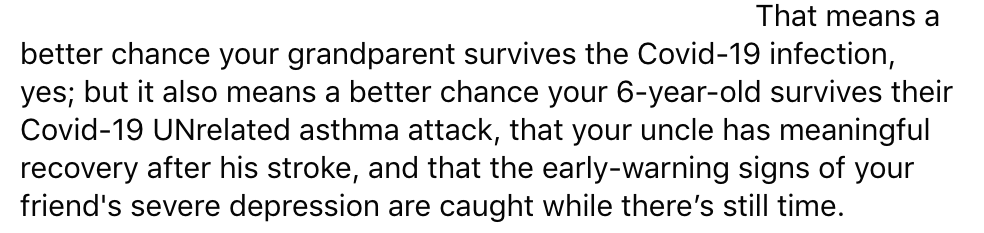
But even more important than the difficulty in calculating the necessary percentage of people being immune to confer protection to everyone else is the question of how dangerous it is to get there in the first place. Let’s talk about measles for one moment. We know that the herd immunity required for measles is somewhere around 93%, which is part of the reason we have seen outbreaks of the disease recently in areas that have a substantial anti-vaccine sub-culture; it isn’t hard to fall below that number. Let’s say there wasn’t a Measles vaccine; that means 93% of people would need to develop immunity by living through the disease. With modern medical advances the case fatality rate for measles is a lot lower than it used to be, but it is still around 2.2%. This means that in a country of 330 million people that had no immunity to measles, 306 million would need to contract the disease to confer herd immunity to everyone else; of those, 6.75 million would die, not to mention the longstanding residual neurological deficits and other health complications in tens of millions more. Without effective vaccination, herd immunity would simply never have been an option for Measles; the cost in human life and suffering would just be too high. But what about COVID-19? We know that SARS-CoV-2 is thankfully less contagious, and we believe less deadly (see the last post for a discussion on this) than measles, but is it enough to make herd immunity a viable option? Let’s apply those same calculations based on the current estimates we have for infection fatality rate. If we accepted a 1% death rate estimate, then to achieve the widely accepted 60% mark for herd immunity we would see 198 million cases and 2 million deaths, while if we accepted the recently released 43% estimate and assumed an even more conservative 0.5% death rate, that would be 709,500 deaths; and neither accounts for the longstanding health deficits or the cost in human suffering of those who survive, or the other deaths and suffering that come with an overwhelmed mid-surge healthcare system. Now, could we devise some clever epidemiology strategy that uses emerging data about the already-immune, super-spreaders, natural resistance, new drug therapies, contact tracing, and protection of the most vulnerable? Of course; assuming that we could get a high degree of buy-in (we can’t even get people to wear masks), that’s exactly what we are all hoping for. But that’s not ‘herd immunity’, and it’s clear that the cost in lives and suffering from a “just get it and get it over with” ‘strategy’ would be astronomical even with our most optimistic estimates. Trust me, I’m tired too; I completely understand the pull towards a roll the dice approach that just gets this over with and lets the chips fall where they may; that approach completely appeals to my intellectual and emotional fatigue. But the longer we can work together to flatten the curve, the more time we create to discover those new therapies, improve our understanding of the virus, and collect high quality data about transmission and vulnerability that can help us develop novel, strategic mitigation approaches (which would probably incorporate something like herd immunity); and we are already seeing the benefits of the work of this kind that we have done so far as a society.


Question #4: What is the RECOVERY Trial?

(Confession: nobody asked about this, but I’m going to write about it anyway)

The RECOVERY Trial is a randomized (poor British researchers spelled it wrong) clinical trial out of Oxford that has shown benefits from using low-dose dexamethasone (a cheap and readily available steroid) for hospitalized COVID-19 patients on oxygen or on a ventilator; you can read a more detailed analysis of the trial from First10EM. This is still in the peer review process but results have been incredibly promising; the study showed a relative decrease in mortality of 20% in hospitalized patients requiring oxygen, and up to a 35% decrease in patients requiring ventilator support. Unlike many of the drug therapies that have been touted up until now, this is based on a randomized trial and not on anecdotal evidence, so it is much more likely that these results will be reproducible when used broadly. Already this has become the standard of care in the hospitals in your city, and if we see these results persist with widespread use it has the potential to save tens or hundreds of thousands of lives. I wanted to write about it for two reasons. First, I want to call on us all now to not let this become the next hydroxychloroquine. The study has established the benefits of this drug therapy only in a specific group of people; hospitalized patients requiring oxygen or ventilator support. They also studied hospitalized patients who were not sick enough to need oxygen, and it showed no benefits whatsoever. There is no reason to infer that this medication is protective in those without severe symptoms or in asymptomatic individuals, and so there is no reason for individuals to ask their doctor for an outpatient prescription or for pharmacies or clinicians to stockpile the medication as we saw done with hydroxychloroquine. We can be thankful that we have at least one helpful medication for our sickest patients without that immediately translating into figuring out a way to get it for ourselves whether it would actually help us or not. And if peer review and follow-up studies and the increased clinical experience that comes with widespread use of dexamethasone ultimately shows that it actually isn’t helpful for COVID-19, that will be tragic; but we should all understand now that that is just how science works, and won’t be part of some big government conspiracy to prevent people from getting the medication, just as it wasn’t with hydroxychloroquine.
But even more importantly, I wanted to talk about the RECOVERY Trial because it illustrates exactly what it looks like to fight this virus by engaging in mitigation and flattening the curve. Since April people have been saying (and we have all been feeling, to some degree or another) that if a certain amount of death and suffering from the virus is inevitable, we might as well just get it over with. We have also heard the slightly more sophisticated position that as long as our hospitals aren’t overwhelmed and we aren’t running out of ventilators and other equipment and resources for sick patients, then we have reduced the danger as much as is helpful and anything more is unnecessary. The RECOVERY Trial is a powerful illustration of why flattening the curve is beneficial even beyond these important goals. If you had a severe case of COVID-19 one month ago and had to be on a ventilator, you would have been treated with hydroxychloroquine and not with dexamethasone; today, you would be treated with dex and not with hydroxychloroquine, and your chance of dying would be 35% less; and that doesn’t even take into account the less quantifiable benefits from all that your doctors have learned about this virus in the meantime. A month from now, with more high quality trials and more clinical experience, who knows what the new standard of care will be and how much better a very sick person’s odds of surviving the virus will be because of it. The reason I wear my PPE with every patient and am a stickler about fomites and transmission, the reason I wear my mask when I’m in public, and the reason I am writing from home instead of a coffee shop today and attended church online this morning, isn’t because I’m afraid of the virus; it’s because when and if (and for me it has always felt more like an ‘if’ than a ‘when’) I get COVID-19, I would rather be treated by doctors and nurses and respiratory therapists who have had ample time to learn how to fight it, who have perfected their approach to ventilator settings and other supportive techniques for this virus specifically, and who have access to medications that have been carefully studied and have been proven to be effective; and because I would like to have that knowledge base and those techniques and medications available if and when I have to treat you.

COVID-19 Questions and (attempts at) Answers, Part 2: What about antibody testing and asymptomatic cases?

I’ve had quite a few questions about COVID-19 put to me by friends and family members recently, and so last week I had intended to begin trying my best to answer them. This plan had to be put on hold when Waco (and various other cities in Texas) issued a requirement to wear a face mask inside of businesses and restaurants, and the whole world sort of lost it’s collective mind. I think things have calmed down now, at least locally, and as I’ve driven to clinic and back and the one or two other places I couldn’t really avoid going, I’ve thankfully seen a noticeable increase in masking, either in compliance with this decision or in response to the efforts of so many to share reliable information on the benefits and safety of wearing a face mask. Thank you all for fighting the crazy amount of misinformation out there. For my take on wearing masks you can read my previous blog post on masking.

Now in 8-bit Color!

Now that we’ve made it through another week without another viral misinformation video, I’m finally taking the time to sit down and write that original post I had planned on. I’ve tried to limit myself to just two paragraphs for each topic (paragraph length unspecified), but given just how many questions


Due to length, I’ve broken this post up into multiple parts.
Warning: These got really ‘mathy’ on me before I realized it was happening.
Part 1: Is the rise in cases just due to more testing?
Part 3: Isn’t a surge a good thing? Herd Immunity and the RECOVERY Trial.

Question #2: Do antibody testing and asymptomatic cases prove the virus isn’t as dangerous as we thought?

Asymptomatic Cases

The short answer here is, yes. And also in a very real sense… No. When antibody testing first began to confirm that a certain percentage of people contracted the virus but never developed symptoms, or had symptoms that were so mild they failed to associate them with the virus (‘weird how my allergies just acted for a couple of days’), it was great news for everyone. What it was not (and I’ve been on this soapbox for a while now) was proof that the ‘experts were wrong’ about how dangerous the virus is. I’ve been reading every model and study and expert opinion about COVID-19 I could keep up with for the past 3 months, and I cannot tell you the number of times that physicians and epidemiologists and researchers have either implied or explicitly stated that the mortality rates we were seeing from the virus didn’t account for asymptomatic and minimally symptomatic cases. I’m no expert, but I’ve typed it more times than I can count myself.
Actually I counted; it’s been 6 times. That’s still a lot.

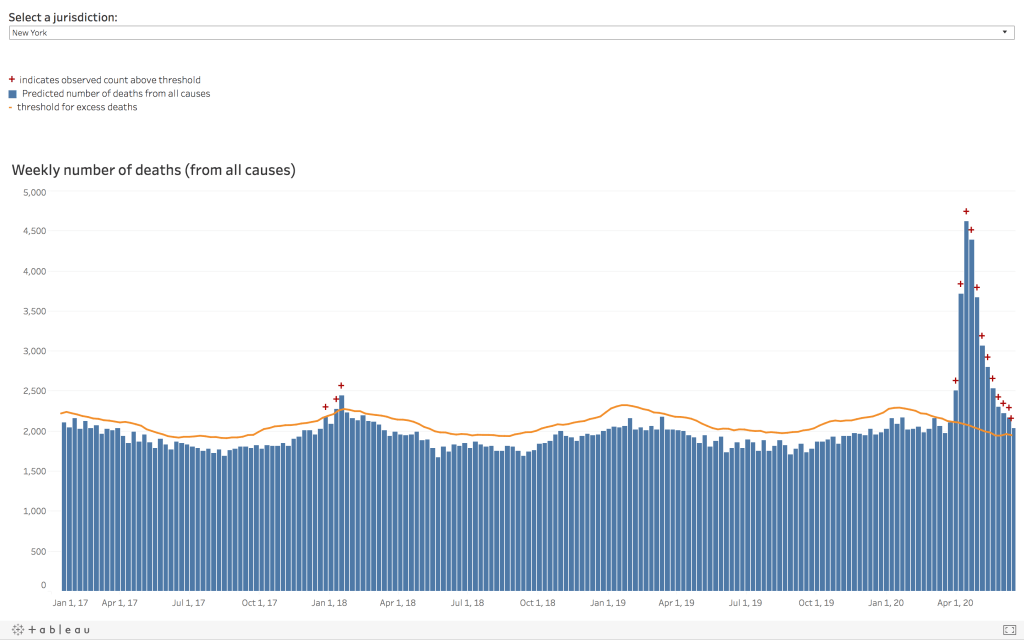
Those scientists anticipated that a certain percentage of the population would contract the virus but never develop significant symptoms, but had to work from the best numbers they had until such testing was actually available. And it’s a very good thing that those assumptions were correct, since the original case fatality rates we were seeing were in the civilization ending range of 8-15% in certain countries. If antibody testing had been developed and found only a negligible amount of asymptomatic and minimally symptomatic cases, it would be devastating news for everyone; not least for the doctors, nurses, epidemiologists, and others who have turned their lives upside down to fight the pandemic. Accounting for asymptomatic and minimally symptomatic cases would clearly yield a much lower death rate, but still firmly in the very, very dangerous range. For instance, large scale antibody testing in New York in April found antibodies in 13.9% of the population (WBUR has an excellent article picking through the wildly varied estimates of asymptomatic cases) , which reduced their overall estimated fatality rate from 6% to 0.5%. Many current estimates place the overall fatality rate between 0.5% and 1.3%. For a virus this contagious, these are still scary numbers. Even here at the end of June, many people are still wanting to compare this to the flu to dismiss the danger, even though these much lower death rate estimates are still 5 to 13 times higher than seasonal influenza’s commonly accepted 0.1% fatality rate, and even though the flu itself regularly threatens to overwhelm our healthcare systems. Please keep in mind that this is at best an apples and oranges comparison. We don’t routinely measure influenza antibodies to determine the percentage of asymptomatic cases, focusing instead on those who are symptomatic, and our death rates for flu are based on a totally separate set of calculations (I talked about this in more detail in my response to the Bakersfield Urgent Care doctors). If you want to compare oranges to oranges we can look at excess mortality for both viruses. Consider the graph below from New York State: the first cluster of red crosses is the peak of the 2017-2018 flu season, the worst flu season I have experienced since starting medical school; the second is COVID-19 during New York’s surge in April.

Not the Flu.

Before we move on from asymptomatic cases, we need to mention two more things. First, while knowing the overall infection fatality rate including data from those who never had significant symptoms is great from an epidemiology standpoint, it doesn’t mean that the case fatality rate for people with symptoms is a ‘fake number’ or falsely elevated. If you develop symptoms and test positive for the virus, and especially if you end up in the hospital, it would be small comfort to know that some people didn’t get sick from it at all. We still need to know what the specific risk is for people with symptoms, and for people with severe symptoms, in order to properly counsel those patients and to inform our medical response. Second, asymptomatic cases are a double edged sword; yes, it means that some people will become immune without actually getting sick themselves, but it also means that some people can spread the virus without ever knowing they’ve had it. We all need to exercise caution even if we don’t have a cough and fever.

I realize this is the same joke from earlier. I just really like it.

Antibody Testing

One of the problems in determining a final overall death rate (besides the fact that we are still in the middle of the pandemic) is the accuracy of antibody testing, since we have to rely on this to tell us how many people had the virus and were either asymptomatic or didn’t get tested for it at the time. And this in turn relies on something called the positive predictive value, how likely it is your ‘positive’ test result has really detected the antibodies, which depends both on how well the antibody tests are designed (and their not being fake, which is apparently a problem now as well), but also on the prevalence, or in this case cumulative incidence, of the virus. The higher the percentage of people who have actually had the virus, the more likely it is that a positive test really represents a true positive and not a laboratory error. It’s a relatively simple concept, but honestly it’s just unintuitive enough that I’ve struggled with it myself for years. Basically, every lab test has some degree of error; sometimes these tests will tell you that you have the antibodies when you don’t, and sometimes it will tell you that you don’t have them when you really do. The more rare the virus has been in your area, the more likely that your ‘positive’ test was the result of such an error instead of actually having the antibodies. Carry this to the logical conclusion; if you brought an antibody testing system back in time to last Summer when nobody had SARS-CoV-2 antibodies, or for that matter back to Medieval England, you would still have some tests turn positive; but they would clearly all be from laboratory error because the prevalence of the disease then would have been 0%. When doing these tests, we cannot ignore the importance of how common or rare the virus has been in the region where we are testing.

Still less useful than bringing Sony Walkman

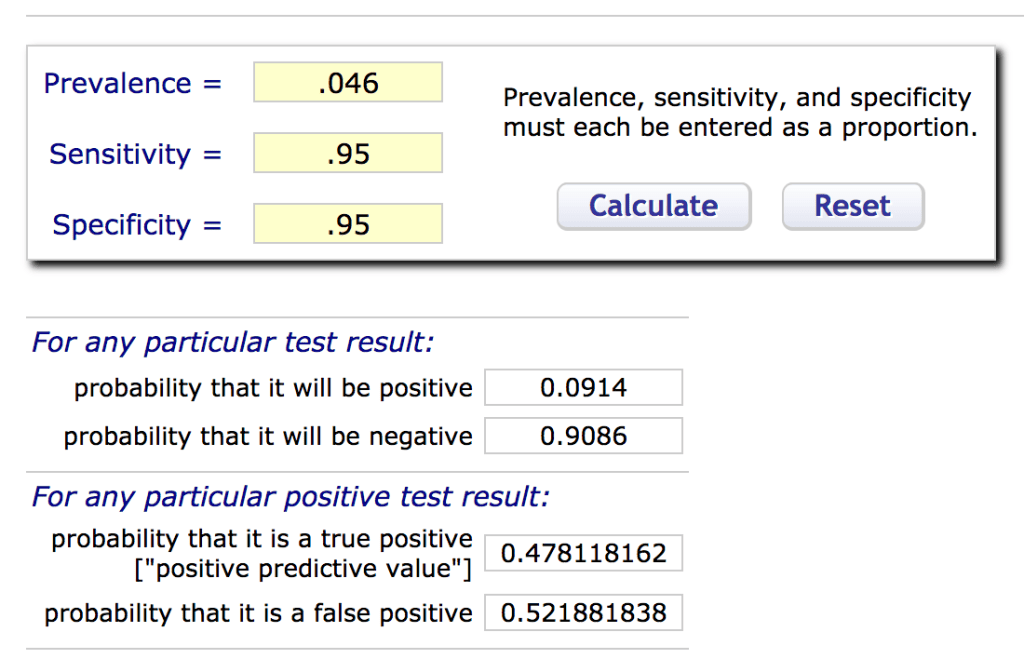
Calculating positive predictive value based on prevalence can be done with just a few numbers (test sensitivity, test specificity, and prevalence) and the simple equation PPV = (sensitivity x prevalence) / [ (sensitivity x prevalence) + ((1 – specificity) x (1 – prevalence)) ] (Um, there’s also an online calculator if you’d rather follow along that way), and it’s always shocking to me how quickly the lab error for even very good tests becomes relevant when the prevalence of a disease is low. Most manufacturers rate their antibody tests in the extremely accurate range of 95-100% for both sensitivity and specificity (because of course they do); some have performed well in independent testing, but others not so much. Let’s use the online calculator (or the equation above, if you just really like that sort of thing) and plug in a few of these numbers.


  • Scenario 1: Post-Surge New York City, excellent quality antibody test.
    • Let’s say you never definitively got diagnosed with COVID-19 during the surge in New York, and wanted to get an antibody test to see if you have already had it and are immune.
      • Sensitivity: 95% (.95)
      • Specificity: 95% (.95)
      • “Prevalence”: 20% (.2)
    • Results: Positive Predictive Value = 82.6%
      • This means if you get a positive results from this very accurate test done after your city has survived a severe surge, there’s still about a 17% chance you don’t actually have the antibodies after all.
I hope you guys are having as much fun with this as I am.

  • Scenario 2: Pre-Surge Texas, excellent quality antibody test.
    • Now let’s say you had the antibody test done a few weeks ago here in Texas, again with a test that has excellent accuracy.
      • Sensitivity: 95% (.95)
      • Specificity: 95% (.95)
      • “Prevalence”: 4.6% (0.046)
    • Results: Positive Predictive Value = 47.8%
      • With a lower prevalence, a positive antibody test on the same machine is now about the same as a coin toss.

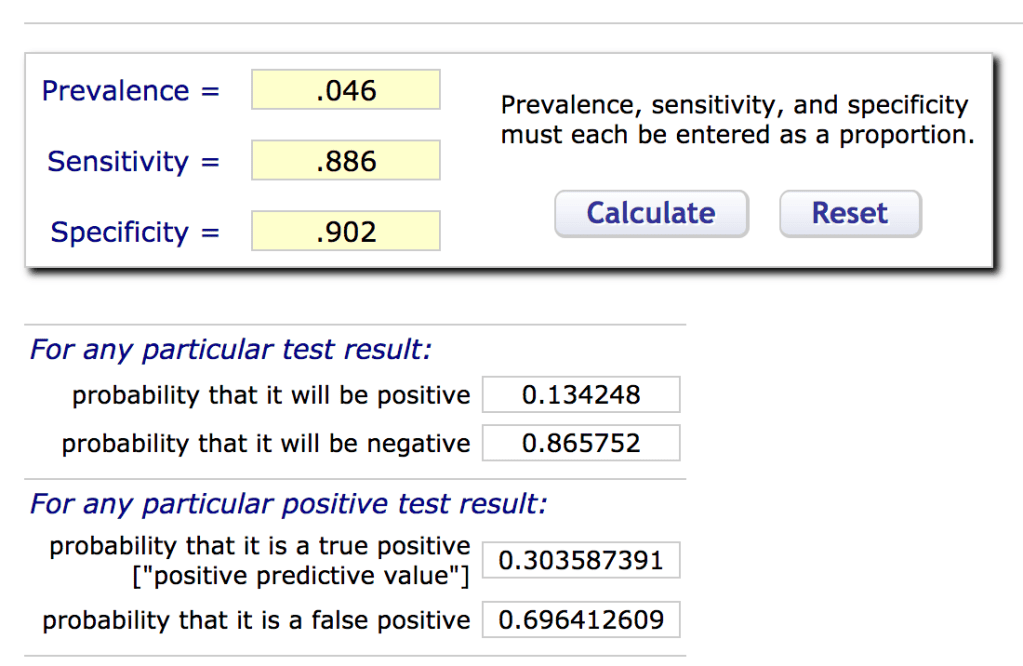
  • Scenario 3: Pre-Surge Texas, sub-par antibody test.
    • Same scenario as the last, but the quality of the test isn’t quite as good as the manufacturer funded studies seemed to promise.
      • Sensitivity: 88.6% (.886)
      • Specificity: 90.2% (.902)
      • “Prevalence”: 4.6% (0.046)
    • Results: Positive Predictive Value = 30.4%
      • At this point you are probably better off just switching the ‘positive’ and ‘negative’ labels on the readout…

Now, savvy statisticians will note three things in looking at the above numbers and playing around with the data. The first is that I’ve used the very antibody testing methods I’m questioning to fill in the prevalence, which is itself part of my calculations. Figuring out the real prevalence is a complex problem epidemiologists are still trying to solve; this is a simplification for illustrative purposes. But more importantly, you will notice that as the prevalence goes down so does the likelihood that a positive test was really positive; in fact, it drops quite precipitously, especially as you get below 5%. However, as the specificity– the likelihood that the test correctly calls a negative result negative– approaches 100%, the number of false positives actually drops to 0. If we want to make sure we never tell someone they are immune when they aren’t, we need a very high specificity; but because no test is truly perfect, this will mean some sacrifices in actually being able to detect the antibodies when they are there, which hurts our ability to accurately estimate the number of asymptomatic cases. To get a perfect specificity, you will lose some sensitivity, and vice versa; the right balance depends on what you intend to use the test for.

So all of that to say, when that antibody test you got comes back positive and the manufacturer says their test is “95% accurate,” you may be tricked into thinking it means there’s a 95% chance you really have already had the virus and now have antibodies against it. But they are only telling you half the story, and you either need access to some more data to make your calculations and determine the real positive predictive value, or at the very least you need to take it with a grain of salt and still exercise caution; especially if your area hasn’t actually had anything like a true surge yet. After all, only a great fool would accept what he was given, and you are not a great fool.

Sorry, I’m not going to say “inconceivable.”

COVID-19 Questions and (attempts at) Answers, Part 1: Is the rise in cases just due to more testing?

I’ve had quite a few questions about COVID-19 put to me by friends and family members recently, and so last week I had intended to begin trying my best to answer them. This plan had to be put on hold when Waco (and various other cities in Texas) issued a requirement to wear a face mask inside of businesses and restaurants, and the whole world sort of lost it’s collective mind. I think things have calmed down now, at least locally, and as I’ve driven to clinic and back and the one or two other places I couldn’t really avoid going, I’ve thankfully seen a noticeable increase in masking, either in compliance with this decision or in response to the efforts of so many to share reliable information on the benefits and safety of wearing a face mask. Thank you all for fighting the crazy amount of misinformation out there. For my take on wearing masks you can read my previous blog post on masking.

Now in 8-bit Color!

Now that we’ve made it through another week without another viral misinformation video, I’m finally taking the time to sit down and write that original post I had planned on. I’ve tried to limit myself to just two paragraphs for each topic (paragraph length unspecified), but given just how many questions


Due to length, I’ve broken this post up into multiple parts.
Warning: These got really ‘mathy’ on me before I realized it was happening.
Part 2: Do antibody testing and asymptomatic cases prove the virus isn’t as dangerous as we thought?
Part 3: Isn’t a surge a good thing? Herd Immunity and the RECOVERY Trial.

Question #1: Isn’t the rise in cases just a reflection of more widespread testing?

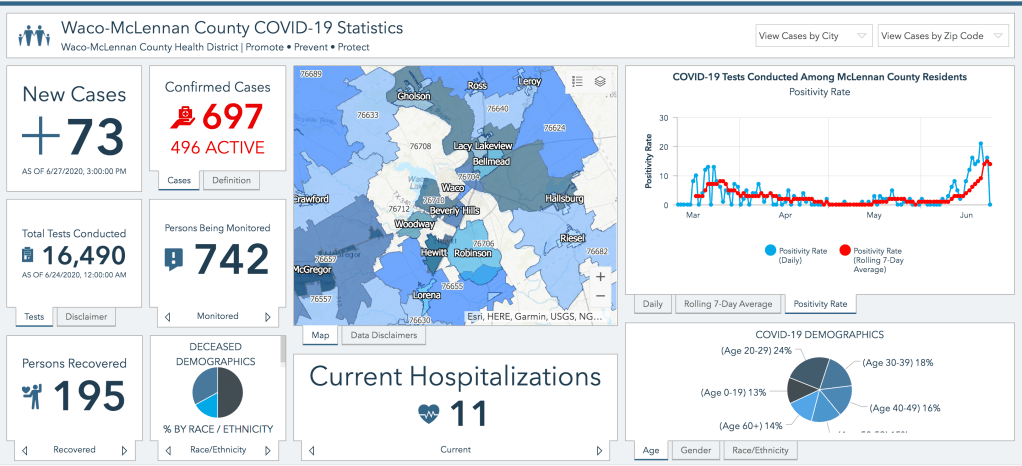
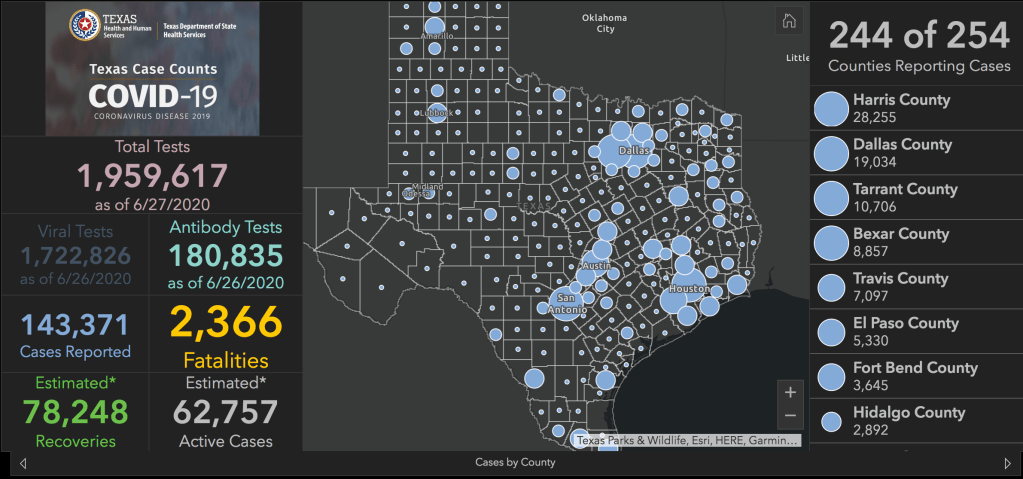
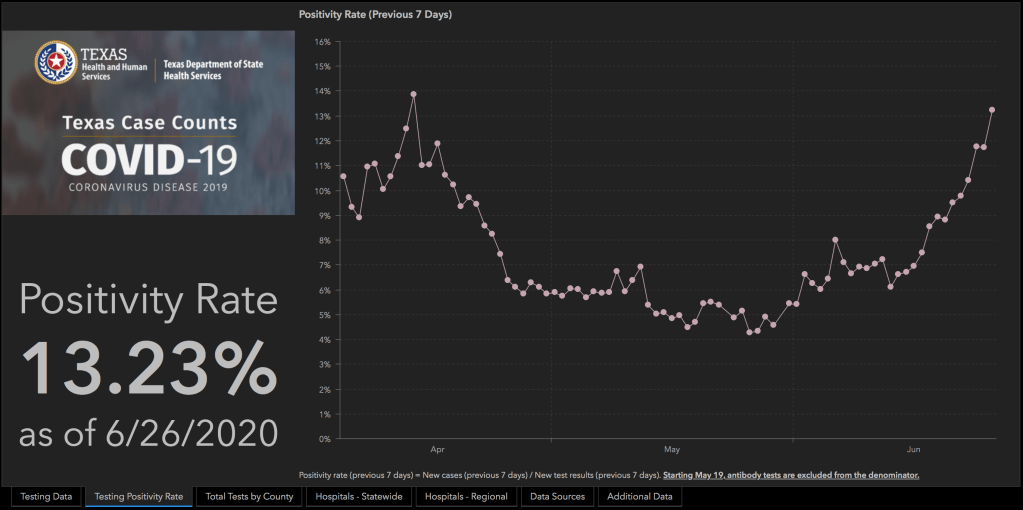
This is a question that has been on everyone’s minds since the very earliest days of our testing woes, back in March when we had barely any testing available. It has ranged from a very fair question to a rhetorical device for spreading misinformation, with at least one prominent political figure even seeming to say that it would be better if we didn’t test so much so that our numbers looked better. I honestly believe most people really are curious about the relationship between our testing numbers and our numbers of cases and are not asking to try to minimize the appearance of the surge we are facing in Texas right now. In one sense, we will always find more cases of a disease when we test for it than when we don’t; that’s a truism. But if we want to determine whether cases are really going up we can look at a few other parameters than the absolute number of positive tests that will inform our understanding of the ’75 new cases’ or ‘5,747 new cases’ we are seeing in the news and on social media each day (To go through these numbers I highly recommend you spend some time navigating the Texas DSHS COVID-19 Dashboard; both their case data and testing and hospital data sections).

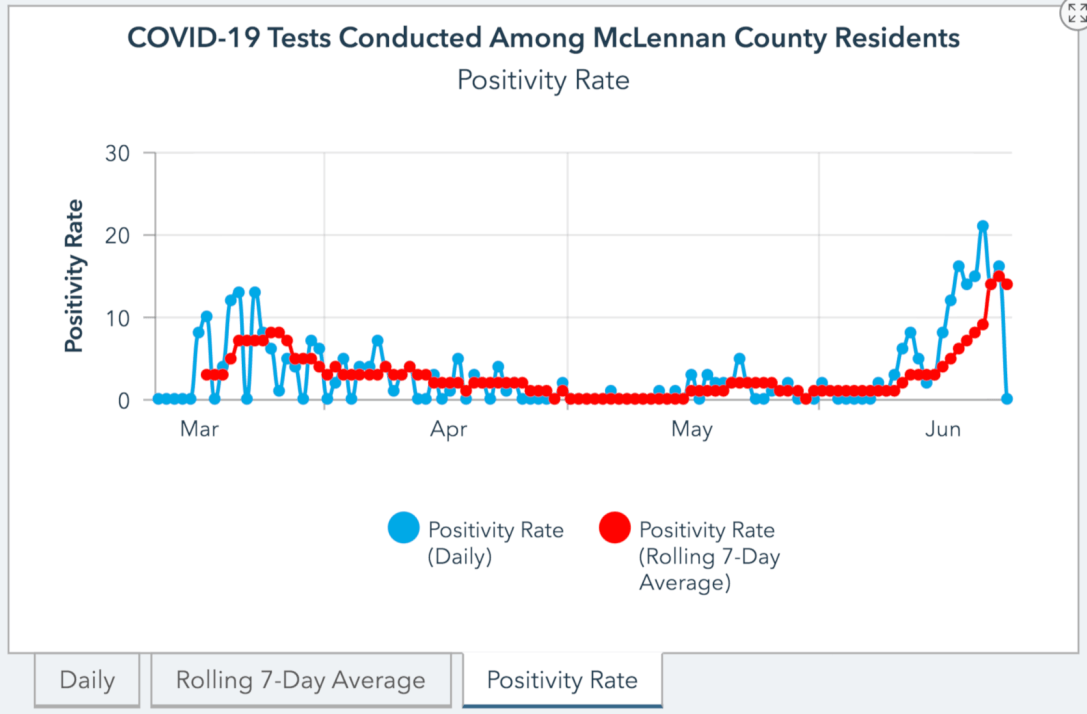
The first number is the percentage of positive tests. Ever since testing became more widely available in April and we were able to shift away from testing only those with a high likelihood of having the disease and/or of developing complications, we have been testing essentially the same types of cases; people with some combination of cough, shortness of breath, fever, loss of taste and smell, etc. and/or known or suspected exposure to the virus. There are many causes of these types of symptoms, from allergies to other respiratory viruses to chronic conditions like asthma and COPD, and in our pre-surge days these explained the symptoms in the vast majority of people we tested. If you look at the Texas testing data from April you will see two things; an overall low number of tests (a very modest 5-10k per day) and a fairly high percentage of tests that are positive, between 10-14%. This reflects our very strict testing criteria at that time; we were only testing the people we already really thought had it. In late April and all through May we see an ever increasing number of daily tests and a falling rate of positive tests, a reflection of liberalizing testing criteria and strong evidence of overall low prevalence in our State. Throughout June, and especially over the last 2 weeks, we continue to see an increasing number of tests each day; but we are now also seeing our percentage of positive cases rising again. This isn’t because we’ve tightened up or restricted our testing criteria again; it’s because more people actually do have the virus.

Percentage of positive tests

This exactly matches my own clinical experiences; back in May I was testing for COVID-19 based on essentially the same criteria and clinical judgement I am using right now, but it was rare to get a positive case; I would know, because being told you have COVID-19 can be a very stressful experience, so I still personally call every patient I’ve tested who has a positive result in order to answer their questions and help them process that information. This past week I have had to make multiple of those phone calls daily and have been feeling the strain on my time that it has created. As a physician I was on the front lines in May just like I am now, and I can tell you that we are definitely feeling this surge in a way we didn’t then; it isn’t a statistical artifact.

The second kind of data that should inform our understanding of that increase in cases is the number of people who are hospitalized with COVID-19; and the number of people who are dying from it. A raw increase in cases without a change in the test positivity rate could certainly be explained by more widespread testing; but it could not explain why more people had severe enough symptoms to be hospitalized, and there is no question that we have seen an increase in hospitalized cases.

Hospitalizations

Many people will quickly point out that we don’t know what percentage of those people were hospitalized for COVID-19 related symptoms and what percentage just happened to have a positive test when they came to the hospital for other reasons. This is a seemingly fair argument on the surface, but it is guilty of two fallacies. First is the idea of COVID-19 infection being a coincidence that doesn’t effect the trajectory of someone’s chronic illnesses. For months now I have heard the argument that the people whom we know have the absolute highest risk of COVID-19 complications, elderly people with chronic heart and lung disease, have not died from COVID-19, just with COVID-19. Yes, they happened to have the virus but actually died, in large numbers, from their chronic illnesses all getting worse at the same time, during a surge in COVID-19 cases in their area. This is the tired conspiracy theory that doctors are misattributing the cause of death to inflate COVID-19 death numbers, and it’s one I’ve had to debunk over and over again on this blog; it willfully ignores the pathophysiology of the virus, the normal course of those illnesses, and the way that doctors understand and report contributing causes of death. The idea that we are suddenly seeing a huge uptick in COVID-19 hospitalizations as an artifact of testing patients when they come in and unrelated to the virus itself is just another version of that same conspiracy theory. It’s also a very hypocritical argument, considering the types of sources it is coming from. One of the criticisms about mitigation efforts from the beginning was that people who needed care might not come in to the clinic or hospital because of fear of the virus; it’s a very real concern and a problem I’ve fought against daily as a physician, and have been writing about since my earliest social media and blog posts during the pandemic.

Their argument has been that telling people that the virus is dangerous and taking mitigation measures would discourage them from seeking care for conditions that were really dangerous, like congestive heart failure or blood clots in the lungs, because they were more afraid of catching COVID-19 at the hospital. Our argument has been that the virus is dangerous, and that it also makes congestive heart failure more dangerous and actually causes blood clots in the lungs, so we have an obligation to keep people safe from the virus and help them navigate when and how to seek care for other health concerns; it’s work we are doing constantly in our clinics and hospitals. Now these same sources are arguing that in the midst of a dramatic increase in cases and our first real surge in Texas, thousands of people with conditions that put them at risk for complications from COVID-19 suddenly aren’t worried about the virus after all and are all seeking hospital care at the same time, and just happen to test positive for the virus while they are there. There may well be some situations where this actually is the case, and people who were overlooked by our healthcare systems really are now getting very sick from their diabetes or coronary artery disease at the same time as our surge (you can only ignore a worsening chronic illness for so long before hitting a crisis point), but the idea that this would happen on a broad scale, all at the same time, and that enough of those patients would be positive for COVID-19 that it would cause a state-wide spike in hospitalized virus cases is a very, very, frustratingly silly argument.

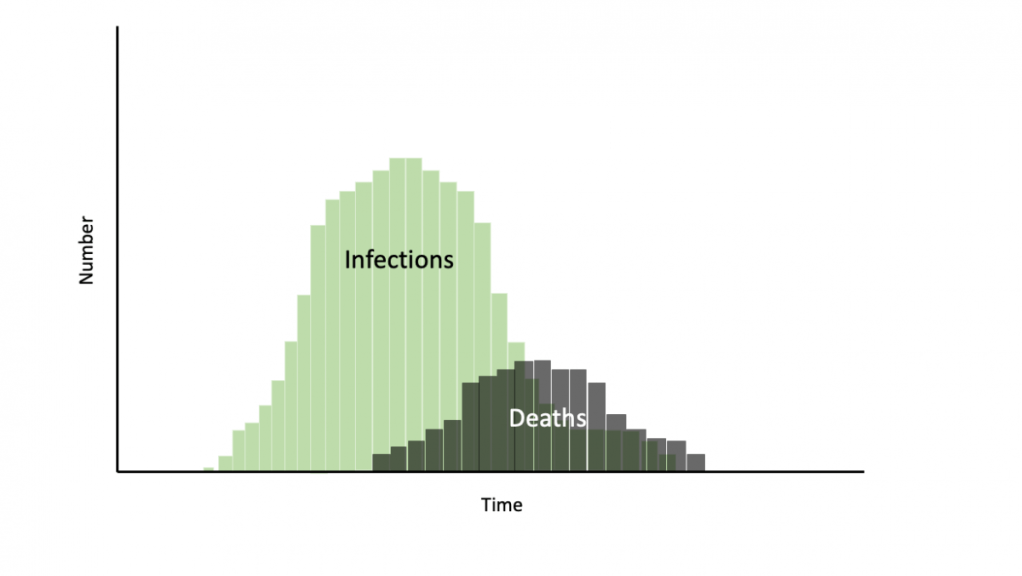
The final number we need to consider is the number of deaths, and here at least there is some good news; we are not seeing a substantial increase in the people in Texas dying from COVID-19, at least not yet. There are two ways to understand this. The optimistic way is to think that something has changed; either the virus has somehow become less deadly than before, or our increased understanding of COVID-19 has led to a better ability to fight the virus; improved disease-specific ventilation strategies, effective drug therapies, and more efficacious supportive care measures. In fact, there is a great deal of evidence that the latter really is true, as we will discuss in another post. But the pessimistic view (and the truth is probably a combination of both) is to realize that most people do not just get admitted to the hospital with severe COVID-19 infection and pass away the same day. There is a significant lag time as those patients are treated and fight against the virus, and our surge in hospitalized cases is only a little more than a week old.

Many of those hospitalized patients are fighting for their lives in the ICU right now, as the hospitals are starting to fill up around them and their nurses and doctors are becoming fatigued. Many of those people will recover, but many will not; and it will take a couple of weeks, and often times much longer, to see how many, and who. As we’ve seen elsewhere, the ratio of those who don’t recover will only increase if resources and the margin for careful attention and heroic efforts on their behalf begin to run short. Yes, our improved understanding of the virus and more effective therapies gives us a better chance to fight the virus than Italy had in March or New York had in April; but doubling down on the difficult work of mitigation now to prevent our healthcare systems from being overwhelmed in a couple of weeks when more and more patients reach their crisis point is every bit as important.

What will next month’s data look like? It’s still partly up to us.

Apparent medical misinformation from an unlikely source: Asymptomatic, Presymptomatic, and Minimally Symptomatic.

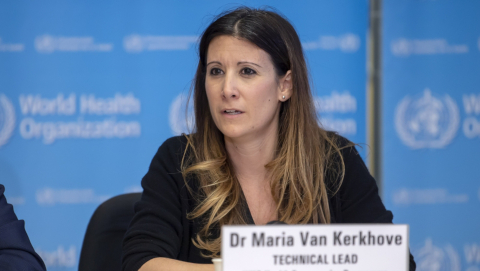
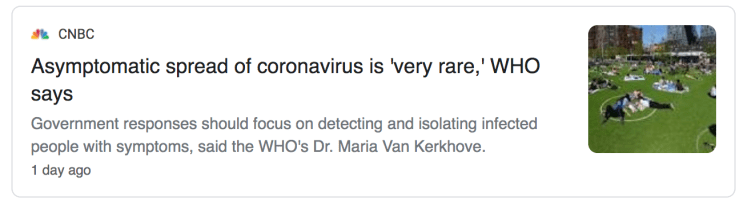
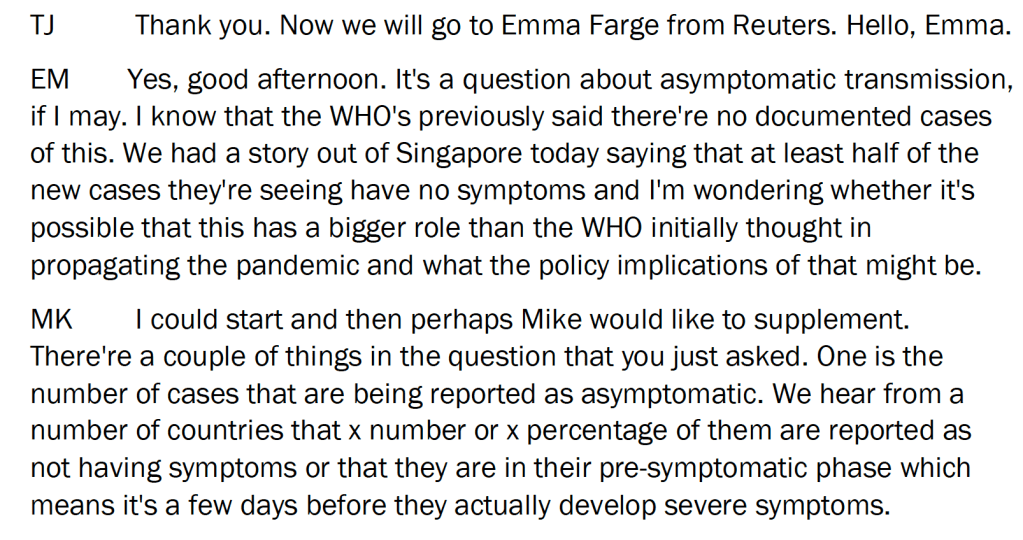
On Monday, during a World Health Organization virtual press briefing, Dr Maria Van Kerkhove issued a statement that seemingly shook our entire understanding of the COVID-19 pandemic. Dr. Van Kerkhove is an Epidemiologist specializing in emerging infectious diseases and has been the technical lead for the WHO COVID-19 response team. The statement, which was immediately picked up by multiple news outlets, was this one:

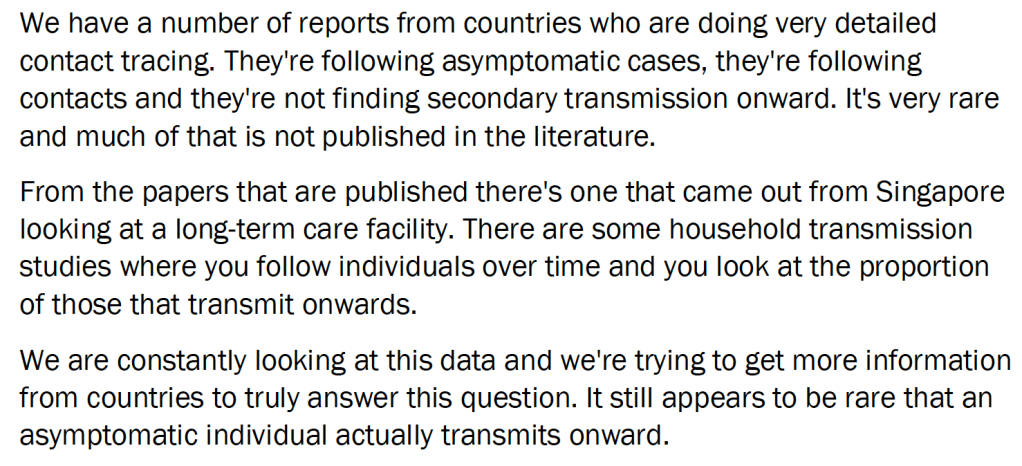
It still appears to be rare that an asymptomatic individual actually transmits onward.

Dr Maria Van Kerkhove, World Health Organization

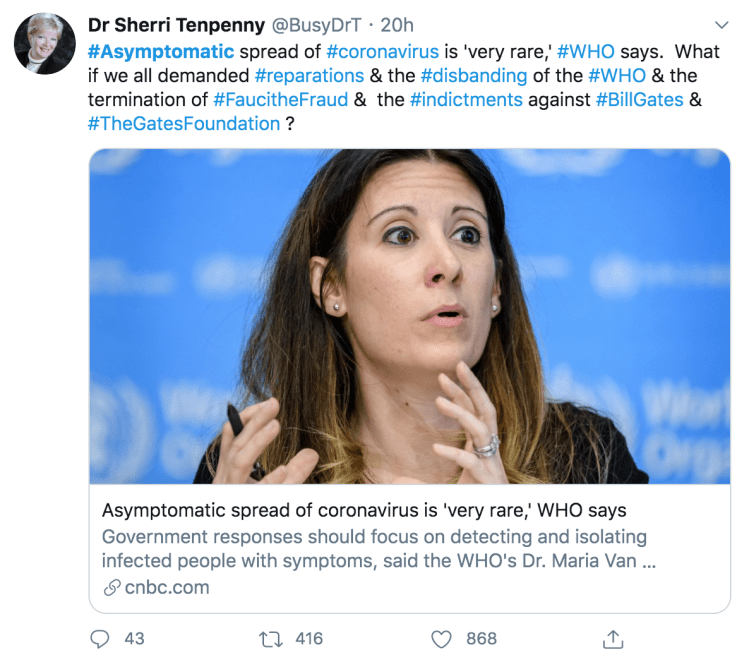
Needless to say, the response was immediate, and massive. For months we have been treating every person we interact with, including and especially ourselves, as though we were potential sources of COVID-19, in order to flatten the curve and prevent both a surge of cases and the possibility of our healthcare systems being overwhelmed. We were told, early and often, and with increasing levels of scientific certainty, that it was not enough to simply stay home if you were coughing or had a fever; that we could spread the virus even before we had developed symptoms, or if our symptoms were only very mild, and that the person we spread it to might not be so fortunate. Suddenly, the WHO seemed to be making an about-face.

For those that are exhausted of the caution made necessary by the pandemic, and the associated anxiety (read: all of us) it was welcome, if somewhat annoying, news. For those who have consistently proclaimed the pandemic to be something between an overblown flu being used for political purposes to an actual hoax or planned conspiracy, it was a triumph; even the WHO was saying it wasn’t anything to worry about. But for many of us who have been following emerging evidence, testing methods, contact tracing techniques, and COVID-19 data from around the world since March, it sounded too good to be true.


What we all wanted it to mean.

The idea of asymptomatic transmission, the virus actually being transmitted from a person who does not feel ill, who may not even know they have been exposed, is pretty terrifying. It means that you could, without ever knowing it, be the agent of delivering a deadly pathogen to a loved one; and that you may not ever know you were the one that gave it to them even after the fact. The idea of someone who has never had the virus losing a family member to it, and then finding out months later that they are antibody positive and have thus been a carrier at some point, is heart breaking. For me, it conjures epidemiology computer simulations of faceless grey figures gradually turning red, as the world slowly but surely is overcome.

This is the stuff of nightmares.

If Dr. Van Kerkhove’s statement meant that only those with symptoms could possibly pass along the virus, it would make all the difference in the world. For one thing, it would drastically change our isolation and transmission control strategies, shifting our focus from social (physical) distancing and treating all contacts as possible COVID-19 contacts, to simply monitoring very well for cough and fever and other viral symptoms, like we already do for influenza and other respiratory illnesses. Although it wouldn’t mean the virus was less dangerous, it would mean that exposure to it was somewhat predictable; if we were careful, our biggest risk would be those few bad actors who had symptoms but denied them, and persisted in exposing others.

And yes, it would also mean that many of the experts, epidemiologists, and physicians (including myself) (that’s an oxford comma folks, and I’m definitely only including myself in that last group) had been wrong about both the degree and the nature of risk to our society. But here’s the thing; we would be fine with that. It would be a big hit to the ego, for sure, and I’d of course have to delete this blog before I applied for my next job, but overall eating crow is an incredibly small price to pay for the assurance of safety for my family and my patients, and for the assurance of a sound strategic path forward in defeating this virus once and for all. As we’ve said all along; every doctor who sounds like an alarmist about COVID-19 also hopes they are wrong. We are the exact people who would be the happiest if it somehow turned out it wasn’t that big of a deal.

It would also mean that somebody had a lot of work to do to figure out how COVID-19 had overwhelmed so many healthcare systems and decimated entire cities and nations. We would need to account for those 404,000 deaths worldwide, a quarter of which have occurred in the United States. If those people were all exposed by individuals with definite and likely identifiable symptoms, we would need to figure out why we had failed so badly at fighting such a straightforward viral disease.


Always go to the source.

When I first read the headlines and articles, I was cautiously optimistic; but very cautiously. This defied what we had believed all along, and it defied most of what we know about the way that respiratory viruses spread. It didn’t make sense with the transmission patterns we have seen and the reported K value of the virus for it to only spread through fully symptomatic patients. It also conflicted with two recent studies from China and Singapore that seemed to indicate that transmission does in fact occur, and at a high rate, from patients without any respiratory or viral symptoms. These studies reached similar conclusions despite very different methodologies, which is always more convincing than reaching the same conclusion with the same method or data set. The Singapore study concluded,

“The evidence of presymptomatic transmission in Singapore, in combination with evidence from other studies, supports the likelihood that viral shedding can occur in the absence of symptoms and before symptom onset. “

https://www.cdc.gov/mmwr/volumes/69/wr/mm6914e1.htm

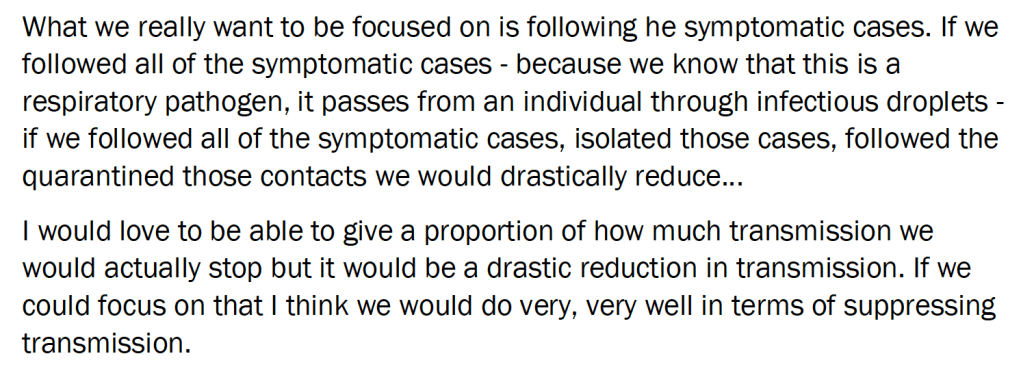
Still, I was hopeful. When I reviewed those studies there had been some assumptions and a few minor (and one major) methodological issues I wasn’t exactly comfortable with, and at any rate those studies were published back in April and we have learned an awful lot about SARS-CoV-2 since that time. I assumed that Dr. Van Kerkhove and the WHO were working from the most up-to-date data, so I did what I always advise people to do when evaluating emerging medical information; I went directly to the source. It’s a bit long but it’s worth reading Dr. Van Kerkhove’s entire answer and not just the excerpts that have been used in the various articles above.

Now, I know what you are asking; if these statements were confusing, why didn’t I ask her to clarify? Well, actually… that was a different TJ altogether.


Asymptomatic vs. Presymptomatic vs. Minimally Symptomatic.

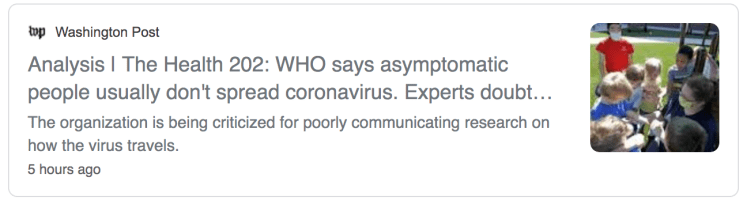
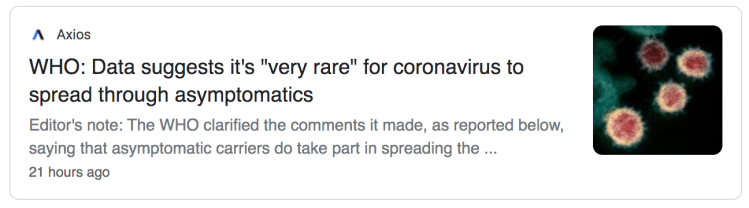
There is one major component of Dr. Van Kerkhove’s answer that has been lost from most of the majors news stories and social media posts. Medicine and public health are subtle and detail heavy sciences, and it is unfortunate but perhaps unsurprising that the nuances of the above statement were lost, and that major news outlets reported “WHO says no asymptomatic spread,” when the real answer is much more restrained.

Dr. Van Kerkhove spends a considerable part of her answer specifically delineating between asymptomatic, presymptomatic, and minimally symptomatic cases, and it’s hard to put too fine a point on this distinction.

  • Asymptomatic cases are people who have been exposed to the virus, and it has reproduced itself within their bodies at a high enough rate that it becomes detectable by our testing methods; either it is present in their blood stream at a detectable rate at some point in time (they have a positive PCR test) or they have developed an immune response that can be detected after the fact (they have a positive antibody test). They have had the virus. However, they have never at any point had any symptoms they can identify; no day of fever, no fatigue, no cough, no ‘I thought I caught something but it got better’; they are fully non-symptomatic.
  • Presymptomatic cases are people who meet all of the above criteria at a certain point in time, but will eventually develop symptoms from the virus. Unless they are followed very closely, it is impossible to distinguish them from asymptomatic cases.
  • Minimally Symptomatic cases are people who have the virus but develop only very mild symptoms, or symptoms not as commonly associated with the COVID-19 syndrome. This is very, very challenging from both a diagnostic and an epidemiological standpoint. Many people have chronic cough, allergy symptoms, or shortness of breath related to chronic medical issues. Figuring out whether these symptoms worsened at a certain time that coincides with their SARS-CoV-2 infection, and that the infection was actually the cause, is nearly impossible, yet the way these cases are treated has huge implications in the way we understand data on asymptomatic transmission.

If you are reading this and thinking that these distinctions seem a little murky and difficult to unravel, you aren’t wrong. I don’t do contact tracing directly, but the idea of clearly delineating, over the phone and after the fact, between these three situations seems like a nightmare. Yet our understanding of the spread of this virus, and thus our risk to one another, hinges strongly on public health workers involved in contact tracing categorizing people into these groups with a high degree of fidelity. It is sound epidemiological work and is necessary and important, but realizing how much subtlety and difficulty is involved should make us wary of any overly optimistic (and yes, overly pessimistic as well) statements about risk based on such data. This is why it is so important that this data is compared to research on modes of transmission, viral shedding, and viral load in asymptomatic patients, and that all of those types of evidence be weighed together very carefully.


When misspeaking and misunderstanding becomes medical misinformation.

So the substance of Dr. Van Kerkhove’s answer is that unpublished data from an unknown number of countries, relying on methodology that is hardly foolproof (but may be the best we have available), seems to show that transmission of SARS-CoV-2, from the subset of people who will never develop even very mild symptoms, is rare. It is good news, but it is an incredibly measured response when properly understood, and the phrasing left it alarmingly ripe for misunderstanding. As soon as media outlets picked up this story it was clear that the original intent had not been understood, and that widespread confusion, vexation, and misinformation would result. On Tuesday, Dr. Van Kerkhove and the WHO attempted to clarify the statement.

“The majority of transmission that we know about is that people who have symptoms transmit the virus to other people through infectious droplets. But there are a subset of people who don’t develop symptoms, and to truly understand how many people don’t have symptoms, we don’t actually have that answer yet.”

Dr. Maria Van Kerkhove

But as you might have suspected, the damage was done. One of the most alarming things about misinformation in general, and medical misinformation in particular, is how those who share it are seemingly impervious to correction. They will choose to continue to believe information that has been demonstrated to be impossible, videos that have been proven to be a hoax, and now even statements that have been immediately retracted and clarified by those who uttered them. When confronted with the retraction, I have seen people essentially say, “well I believe it anyway.” Even today we are seeing people spread the original articles and double-down on the claim that asymptomatic spread (meaning, in their vernacular, ‘anyone without cough and fever’) is not possible, and that the WHO has finally confessed their complicity in this global conspiracy.


So… Is asymptomatic transmission still a thing?

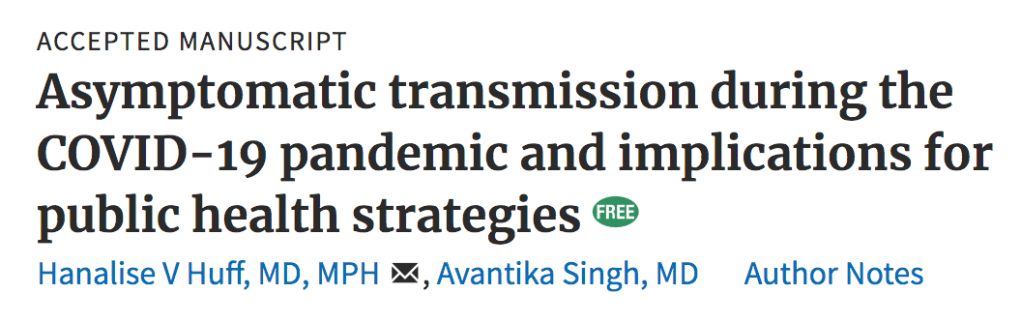
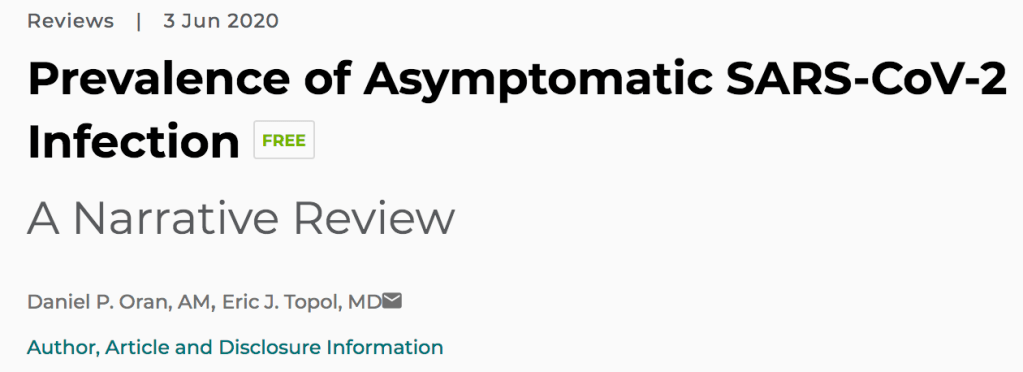
I had hoped that we would be presented with the data Dr. Van Kerkhove had reviewed indicating the rarity of asymptomatic transmission. We have not seen that information yet, but other studies have reviewed available contact tracing data and arrived at a very different conclusion. Two recent studies were published on asymptomatic and minimally symptomatic spread within the last two weeks, one on May 28th in the journal of the Infectious Disease Society of America, and one on June 3rd in Annals of Internal Medicine. They offered similar conclusions:

“This review summarizes evidence that SARS-CoV-2 transmission is not only possible but likely highest during pre-symptomatic and asymptomatic phases.”

https://doi.org/10.1093/cid/ciaa654

“The early data that we have assembled on the prevalence of asymptomatic SARS-CoV-2 infection suggest that this is a significant factor in the rapid progression of the COVID-19 pandemic. Medical practice and public health measures should be modified to address this challenge.”

https://www.acpjournals.org/doi/10.7326/M20-3012

Both studies supported the high viral load and infectivity of presymptomatic individuals who would later go on to develop symptoms, which had been found in the China and Singapore studies in April. Both established, firmly, that transmission from asymptomatic individuals who would not go on to develop symptoms does in fact occur. They both analyzed the limitations of their methodologies and data sets, and explored the difficulties in distinguishing between asymptomatic, presymptomatic, and minimally symptomatic patients. Hence they both appropriately shied away from assigning any firm degree of risk or responsibility for transmission to asymptomatic spread of the virus. Unfortunately, we do not have reliable numbers for how many people are getting the virus from someone who will never know they have it. More studies are needed, but it seems clear that asymptomatic transmission is here to stay, at least as long as COVID-19 is.

COVID-19 as a Mass Casualty Event; my response to a letter signed by 600 doctors.

Over the weekend I had several viral medical misinformation videos sent to me, but I chose not to focus an entire essay on any of them for various reasons. One was a nurse speaking at a re-opening rally in Raleigh, North Carolina about empty hospital rooms and postponed surgeries. We’ve talked about healthcare systems being slower in pre-surge areas due to mitigation efforts a good bit in prior blog posts, and since the actual content of her comments were relatively straightforward and could be as easily interpreted as praise for social distancing measures as criticism, I decided it didn’t necessitate and entire post. Another was an interview with Dr. Jeffrey Barke, a concierge medicine doctor in Orange County, California who had recently spoken at a re-opening rally there. While there were a few medical issues he raised that deserved some response (bringing up hydroxychloroquine again, failing to distinguish between the medical realities in pre-surge areas vs. those more heavily effected), his comments were primarily politically rather than medically oriented. Finally, there was an immediately debunked video of Bill Gates briefing the CIA on his plan to release a respiratory virus, and then give a vaccine for it that would actually modify people’s brains to make them hate religion. Which, I mean, come on America. Really?


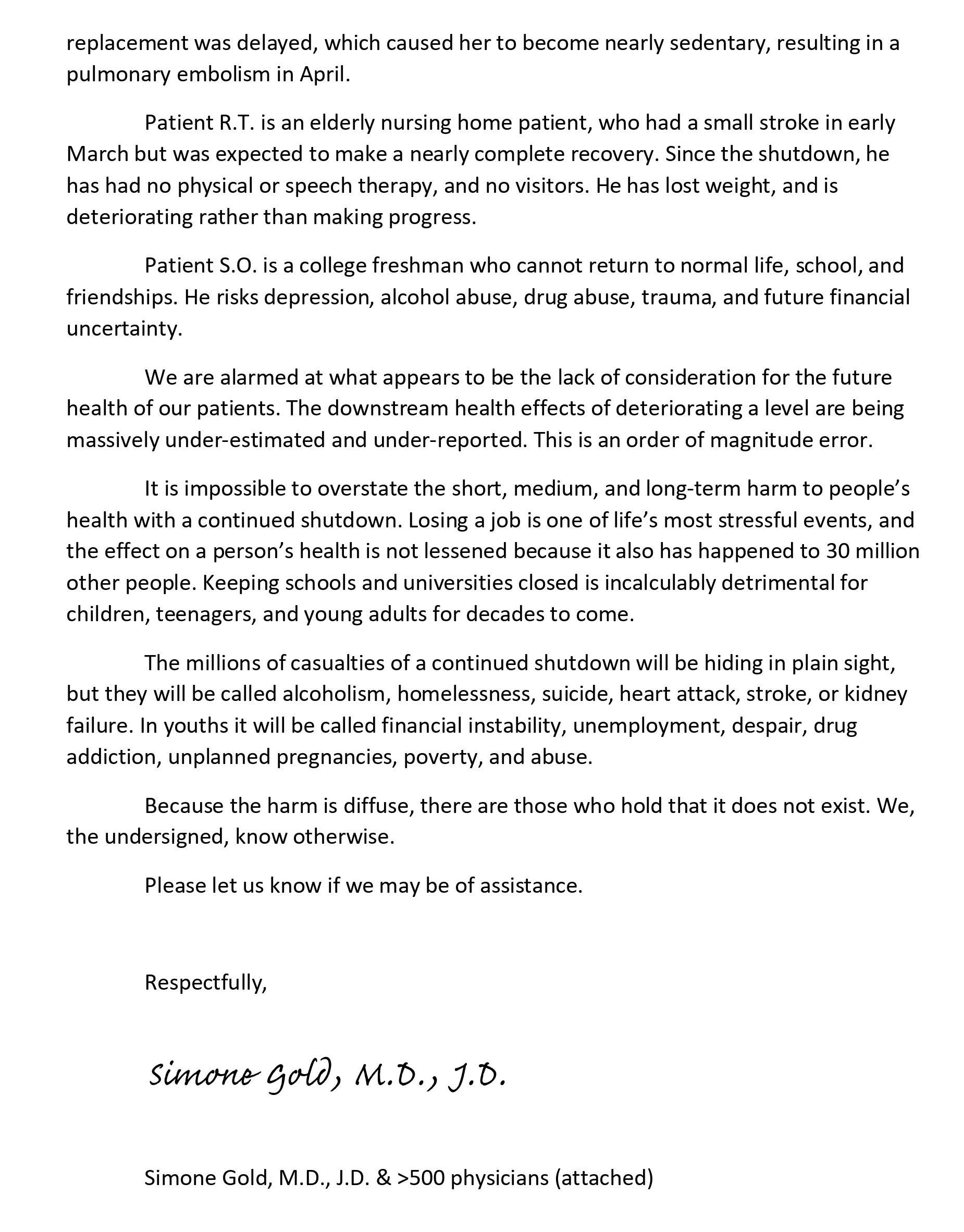
Instead, what caught my interest is the following letter to President Trump, signed by 600 doctors.

Page 1
Page 2

The remaining 8 pages are a collection of signatures from, presumably, over 600 other doctors. The letter itself was written by Dr. Simone Gold, MD, an ER trained Physician in California who now does concierge medicine as well. It is part of her A Doctor A Day campaign and has been featured on Forbes, Fox News, Breitbart, etc. and circulated widely on the internet. Today I would like to focus on the parts of this letter I agree with, for there is much to agree with, and then explain the one great error I believe Dr. Simone is making. But first, we should address a few preliminaries. 


Signed by 600 Doctors

When reading a letter like this, the temptation is to get dragged into those last 8 pages and try to address the motivations, credentials, and biases of the doctors signing. Certainly, with 600 signatures this becomes an investigatory nightmare, but I believe it would be a profitless endeavor even with a more manageable list of names. When a doctor shares blatantly erroneous data, like Dr. Erickson and Dr. Massihi, or a scientist promotes false claims and conspiracy theories like Dr. Mikovits, a closer examination of motives is warranted. But unlike those viral videos, there is as far as I can tell no false medical information contained in this letter. This is a position statement, and while some individual co-signers may have their own political or financial motivations, I earnestly believe it is best to take the stated motivation of advocacy for individual patients and our population as a whole at face value. 

That said, I believe we can make some general observations, and to do so I will bring you thought my own process when confronted with this list of names.

First, I checked to make sure my own name wasn’t listed. I don’t remember signing anything like this and don’t believe I would have, but arguing against the letter and then finding out my name was on it would be the most embarrassing (and funniest) complication to my opposition that I could think of.

Whew, close one.

Second, I googled a few of the names. Now nearly 3 months into fighting against medical misinformation in a more formal and deliberate way, I have learned to be surprised by less. I didn’t think anyone would make up 600 doctors to support their letter, but wanted to make sure. I only chose a handful at random, but they were all real life people. 

Third, I read about a few of them. The first doctor I looked up had his medical license revoked 20 years ago. Oomph, rough start. But the next practices Family Medicine in California, another is an Ophthalmologist who does LASIK eye surgery, and the one after that is an Emergency Medicine doctor in Connecticut. As I googled a dozen or so names I did not find anybody practicing Emergency or Critical Care medicine in New York, and didn’t really expect to (though maybe there are a handful on this list); but that first doctor who isn’t allowed to practice medicine anymore seems to have been a funny coincidence, and overall it seems that these are, by and large, real practicing Physicians in various specialties around the country. I can in no way vouch for or against their personal experiences with COVID-19, their level of experience or skill as clinicians, or their political views.

Finally, I looked over the list itself and reflected on the numbers. A few Dentists and PhD’s, a few people listed without any credentials, but mainly MD’s and DO’s; Doctors of Medicine. I made a quick scan to make sure there wasn’t anybody I knew, which could get awkward. There are over a million doctors in the United States, as Dr. Gold’s website points out, and here we have 600 names. No doubt there are many, many more who would sign such a letter. If you are trying to google individual names or even just scrolling through, it seems overwhelming; but it’s actually a relatively small group. I am part of one COVID-19 Physician and NP/PA group on Facebook with 150 thousand members, and a Critical Care COVID-19 group with 33 thousand members. The discussions there are focused on treating and preventing the illness, the most recent studies, transmission control strategies, and review of treatment protocols. While many of us are also very concerned about the secondary effects of the virus, such as the complications of isolation and distancing, I have seen no posts and very few comments saying that the whole thing has been overblown. I could not say how many in those groups would or would not sign the letter above, but the idea I am trying to get across is that 600 doctors in a country the size of the US is a fairly small sample. When taken as a whole this letter really does seem to represent a minority opinion, as the website itself alludes to.


A Doctor A Day

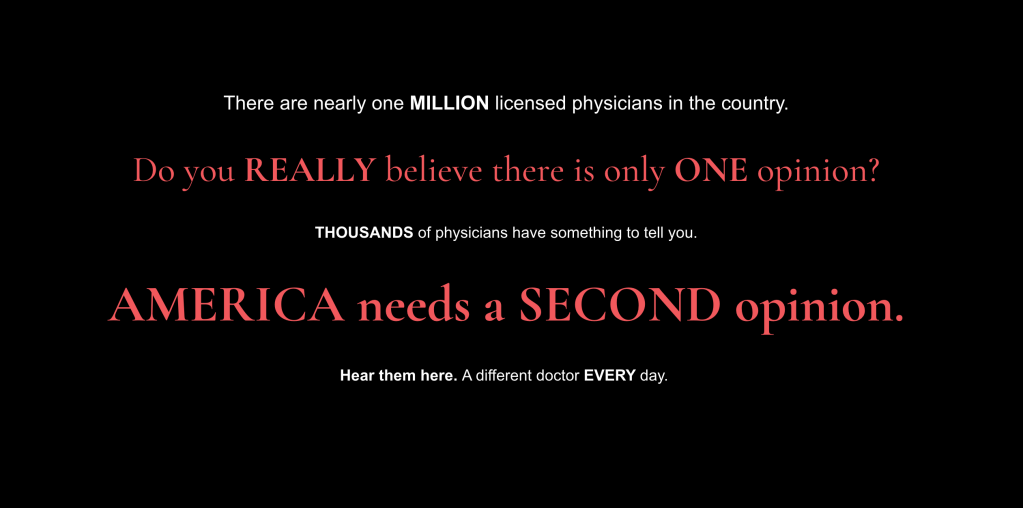
Dr. Gold’s personal website, drsimonegold.com (can you believe she used her name as her website url? The arrogance), currently redirects to A Doctor A Day, which almost -but not quite- admits to it’s goal of offering a minority, dissenting opinion of the importance of mitigation strategies in fighting COVID-19. It begins with the following text:

The numbers here send a bit of a mixed message, don’t they? On the one hand, they clearly would like to contrast “ONE opinion” with both the million licensed physicians and the thousands of physicians who have something to tell you. But a straightforward reading is maybe too honest by half; there are nearly a million physicians who seem to be expressing one opinion, that COVID-19 is very dangerous (that’s called a consensus); but thousands of doctors want to give a second opinion, that it isn’t dangerous enough to justify the steps we’ve taken. I’m being quite facetious here, of course, but I do think that they are trying to have their cake and eat it to by implying both that the views of doctors are varied and nuanced, and that the doctors who agree with them are thinking independently while the rest of us are towing the party line and sharing “just one opinion.”

That’s why the second opinion part is what really gets to me, because it so clearly implies that the views expressed by A Doctor A Day are not also being expressed by other physicians who nonetheless support mitigation measures. And that simply isn’t the case. I’ve yet to meet a doctor who isn’t aware of, concerned about, and talking about the potential for secondary harms due to social distancing and quarantine strategies, and the ones I know are working very hard to mitigate those harms. I’ve personally been talking and writing about it since early March. In fact, recognizing how much more vulnerable our patients are in the midst of a pandemic has been a core reason for the mitigation and social distancing measures since day one, because an overwhelmed healthcare system has even less ability to care for patients with chronic illnesses and mental health conditions than a reduced capacity healthcare system.

March 16th
March 14th

The A Doctor A Day campaign is promoting a narrative that says the many, many physicians and other healthcare workers encouraging ongoing social distancing and quarantine measures and extreme caution with reopening have simply not thought of, or have refused to acknowledge, the difficulties that those measures create for our patients and our communities. But their second opinion is already contained in the first; it has been weighed carefully, it has been felt deeply, and in the face of a hundred thousand lives lost and who knows how many million in the balance, most of us have found the danger still too great to abandon our fight against the virus. The opposite cannot be said; the doctors vocally forwarding this alternative perspective have been strangely reticent to acknowledge how bad the virus really is, sometimes even leaning on ‘inflated death numbers’ and other misinformation to lessen the reality of what we are facing.


The Videos

Dr. Scott Barbour M.D. you have GOT to turn your camera to landscape…

Besides the homepage and the letter, the main content is a series of videos featuring interviews with Physicians who talk about the damage and potential damage being done by shelter-in-place orders and social distancing. They run about 5-10 minutes long each and so far there are four, though the link for one seems to be broken. Interestingly, some of the interviews are conducted by Dr. Jeff Barke, who seems to be a partner on the project. There are some problematic moments, mostly in the form of leading questions such as when Dr. Gold asks one Physician how he kept his office open when ‘we have heard from around the country that most patients can’t come see their doctor’, without offering any evidence that this is the case, or when Dr. Barke asks a Cardiologist about caring for Congestive Heart Failure patients when ‘they can’t get Echocardiograms’, which also doesn’t seem to be the case. But these doctors being interviewed sort of hedge on those questions, and mostly they spend their time expressing their concern about the potential negative health effects of mitigation strategies on their patients, like most of us would, and the things their clinics are doing to compensate. I think a video series like this invites comparison. Consider this video from Dr. Mike, who does a handsomer and more successful YouTube version of what I am trying to do on this blog.

The most striking thing to me about these videos is that the doctors from both sides of this discussion seem to be genuinely and primarily concerned about the well-being of their patients. Which shouldn’t be a surprise if you know many physicians. The second thing I notice is that it doesn’t seem hard to get doctors to tell you about their experiences during the COVID-19 pandemic; a contest of who can make the most videos or recruit the most signatures isn’t likely to be helpful, which is why it’s important we look closely at the arguments themselves.


The Letter: What I Agree With

I wrote about treating COVID-19 like a nation-wide mass casualty event back in March, and in many ways I agree with Dr. Gold’s concerns. Faced with such an overwhelming medical reality, one of our first goals has to be to ensure that our vulnerable patients “do not deteriorate a level.” As a primary care physician caring for patients who often have limited access to specialists and treatments at baseline, I and my patients have had to be especially deliberate and strategic about caring for their conditions during COVID-19 while the medical system is even more challenging to navigate. Many of my patients lived pre-COVID-19 in what Dr. Gold describes as ‘triage level red’; poor or no access to cancer screening, unable to afford dental care, not having access to Psychiatry for ongoing and often overwhelming mental health issues. The list could go on; patients with seizures who can’t see a neurologist, those with CHF who can’t get an Echo, not because they aren’t being scheduled right now, but because they cost $2,000. Diabetics whose control has worsened because their insulin prices suddenly skyrocketed in the name of profits. If these doctors are going to advocate for patients who could normally have these services done but might not now because of COVID-19, they should also be advocating for the patients who have never had access to these services and thus live and die in triage level red. Maybe some of them are advocating for those patients; but they all should be, and if they are willing to sign this letter to the president out of that concern then all 600 of their signatures should be on the next petition to improve healthcare access for all.

But COVID-19 is the reality right now, and regardless of the individual examples (it is a hard sell to prove, for instance, that a hip surgery would have reduced someone’s risk of a pulmonary embolism), I have seen many situations similar to the ones they mention in the letter, and some have indeed been made worse by COVID-19; both by fear of the very dangerous virus itself and by the disruptions to ‘normal’ life rhythms and support structures, financial difficulties, and loss of community. I do not have to imagine those stories from the initials and brief vignettes in their letter; I have the names and faces of all of my own.

We all do. Every physician and clinic I know is involved in combatting this, not to mention ministers and priests, social workers, mental health workers, and teachers. I feel like a broken record when over and over again I have to share the changes my own clinic has made to create safe access for patients; seeing patients outside in their vehicles to decrease transmission risk, rapidly building and implementing telephone and video visits without any precedent or prior infrastructure for using those tools, designating COVID-19 testing and treatment sites to keep sick patients and vulnerable patients from putting one another at risk, and all of the individual and corporate work and stress that goes into examining and upending every single protocol and procedure you have used for years. We do all of this because as hard as we worked to ‘flatten the curve’ in March and April, and as loud as are being about preventing a second surge now, we are also worried about that third surge, and are working hard now to flatten that curve, too. The balance of each of those threats has to be weighed in deciding when and how to return to our ‘normal’ routines, if such a thing can even exist again.


Mass Casualty Event

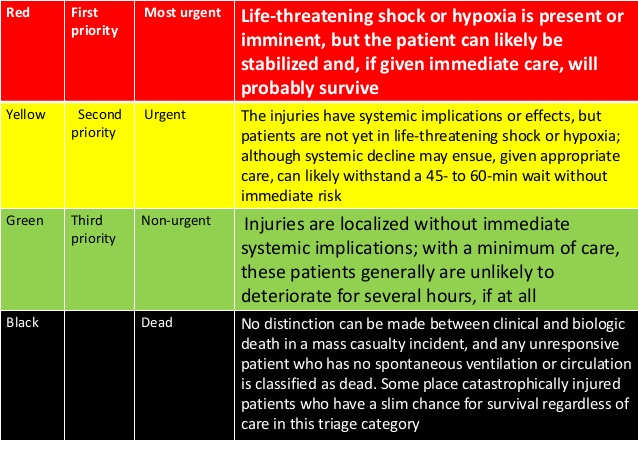
Finally, I want to return to Dr. Gold’s central analogy of COVID-19 as a Mass Casualty Event. A mass casualty event is a situation where so many are injured that the available resources could not possibly care for everyone who needs care. This is the Oklahoma City Bombing, or 9/11. Dr. Gold is right, that in a ‘mass cas’ the most important first step in caring for the injured (besides safety, of course), is an effective triage system. She talks about the color-coding system we use for these types of events, and I think it’s worth studying for a few moments. I’ve provided a couple of different representations, because I want you to understand just how different a mass casualty event is from the normal way we practice medicine.

To the untrained eye, it looks like these diagrams are used to train doctors and other medical professionals to triage patients. But they aren’t. Triaging patients is not a difficult concept, but it does take some time to master. Sorting out those that need immediate attention from those who can safely wait is a skill that is taught early and honed daily. You do this in every context of medicine almost all day long. It is most obvious in the hospital and the ER, when your visit with a sweet older lady recovering from pneumonia is suddenly cut short by sudden shouts from down the hall or a Code Blue over the speaker. But it also happens in clinic, when you hear the crash of a walker in the waiting room or notice that your 2:45 PM “Arthritis recheck” is now listed as having a chief complaint of “Chest Pain,” or your 9:15 didn’t come to clinic even though you know he’s been severely depressed. We triage in our minds constantly, and Mass Casualty is a specialized enough field that our training in it typically comes after we have already been triaging in our minds constantly for years.

These tables are not for training us how to Triage. They are for re-training us how to Triage in a way we are very, very uncomfortable with. They are, in a way, un-training us.

Think about those categories, and what they mean. Green means that person gets none of my time or attention; even with injuries, even having suffered trauma. People I might otherwise spend an hour with talking through their experience and tending their wounds, I deliberately re-route and ignore to get to sicker patients. Yellow is someone who has urgent needs, who probably needs care within the hour. In the ED this would be considered a very ill patient, and someone who is going to get immediate attention; in a mass cas event, they are set to the side because the sicker, red patients need attention now, and the resources are simply too limited. Finally, think about my examples from the hospital, and look back at those tables one more time. Notice black: “Obvious death,” “Non-survivable injury,” “Cardiac Arrest.” Normally if you are running through your continuous mental triage and suddenly find a patient in cardiac arrest, requiring chest compressions, intubation, and defibrillation, that patient becomes your highest priority. Your time and resources are devoted to that individual for as long as it takes, as long as there is a chance. In a Mass Casualty Event, those patients are left for dead.

This is why we do specialized training in mass casualty; this is why we have to study and internalize and accept a triage system that is alien and even repulsive to our oath as physicians and every carefully fine-tuned impulse of our professional judgement. Because the idea of allowing an untimely death that might have been prevented is so terrible to us that it requires a drastic shift, on some level, away from how we’ve trained and even who we are as physicians.

The physicians who wrote this letter are advocating that life return to normal. They are advocating for this from a noble enough sentiment; concern for the well-being of those who they consider to be at Red, Yellow, and Green levels of risk right now. But just as in every mass casualty, their call to shift our standard of care and give our full attention to those groups by abandoning transmission reduction strategies necessitates allowing some to die who might otherwise have lived. This ‘black’ group that should be forsaken, who in the letter’s own words “require too many resources to save”, are the excess dead from COVID-19, who might have been spared by “reopening” with more caution, more national sacrifice, more people-centered policies, and more patience.

Nowhere in their letter do they mention the 100,000 we have already lost, or the thousands more still fighting for their lives. Nowhere in their letter do they mention the suffering of those families, the sacrifices and risk of their caregivers, or the fear of those exposed. Nowhere do they mention the mental health burden inflicted by the virus itself on all those who come in contact with it. All of these should be crucial factors in our decisions about when and how to decrease mitigation efforts. But if you are going to lead a mass casualty response, I guess you have to be willing to walk past some who are dying and force yourself to live with the fact that you had the skills and the tools to save them, but didn’t. The majority of physicians, myself among them, seem to think that we haven’t reached that point yet; that as a society we can continue to protect one another and the vulnerable among us from COVID-19 and still devote time and energy to keeping others from ‘deteriorating a level’ while we fight it, by rethinking the ways we deliver care and support our patients and communities. Maybe that’s typical physician hubris, and maybe the second opinion offered by Dr. Gold and her colleagues is the only real option; to shift our focus to the ‘survivors’ even if it means giving this virus another 100,000 lives, or more. But I don’t believe that’s where we are, and I know it isn’t a decision we can make without counting the unimaginable costs very, very carefully.

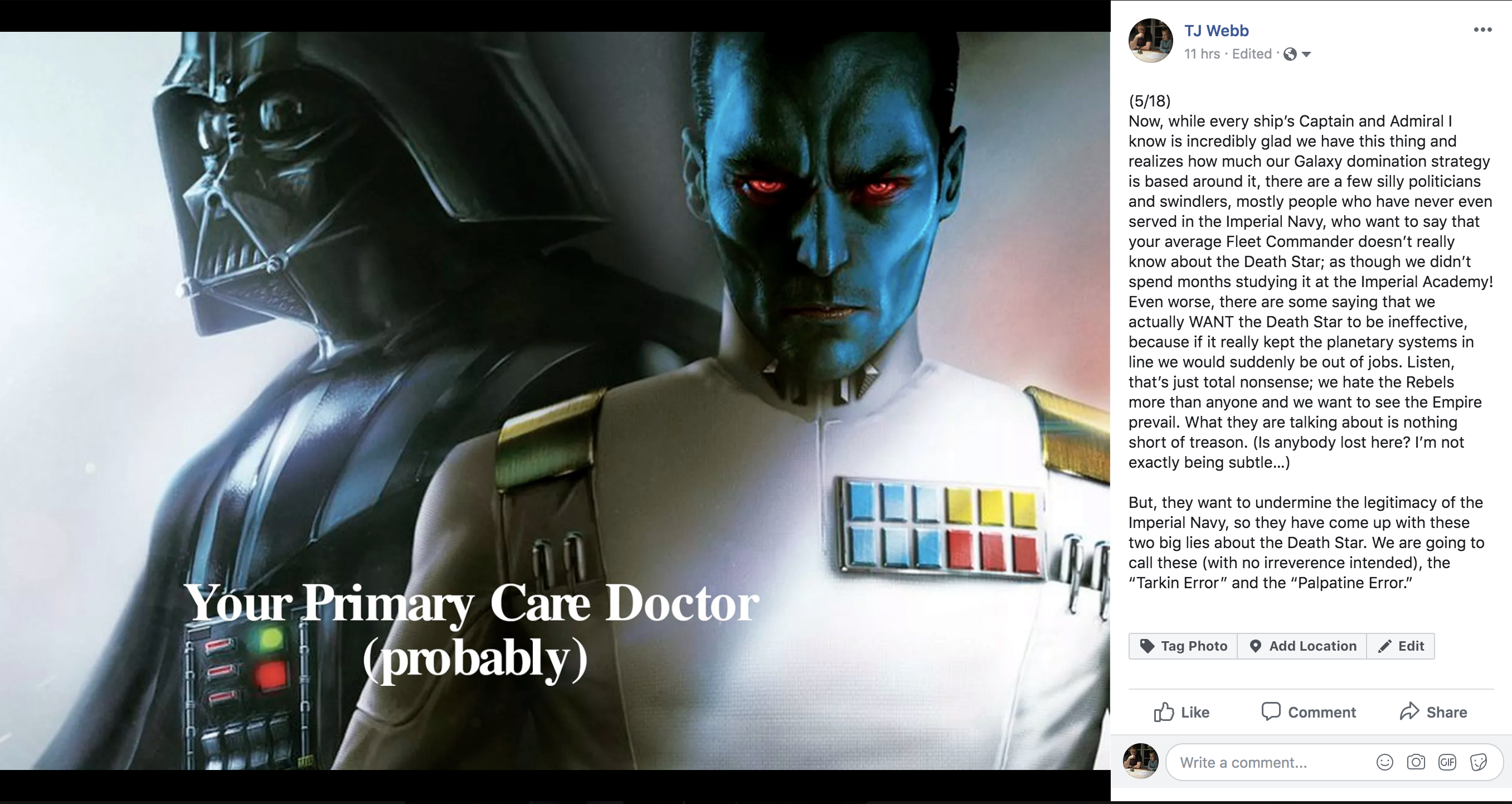
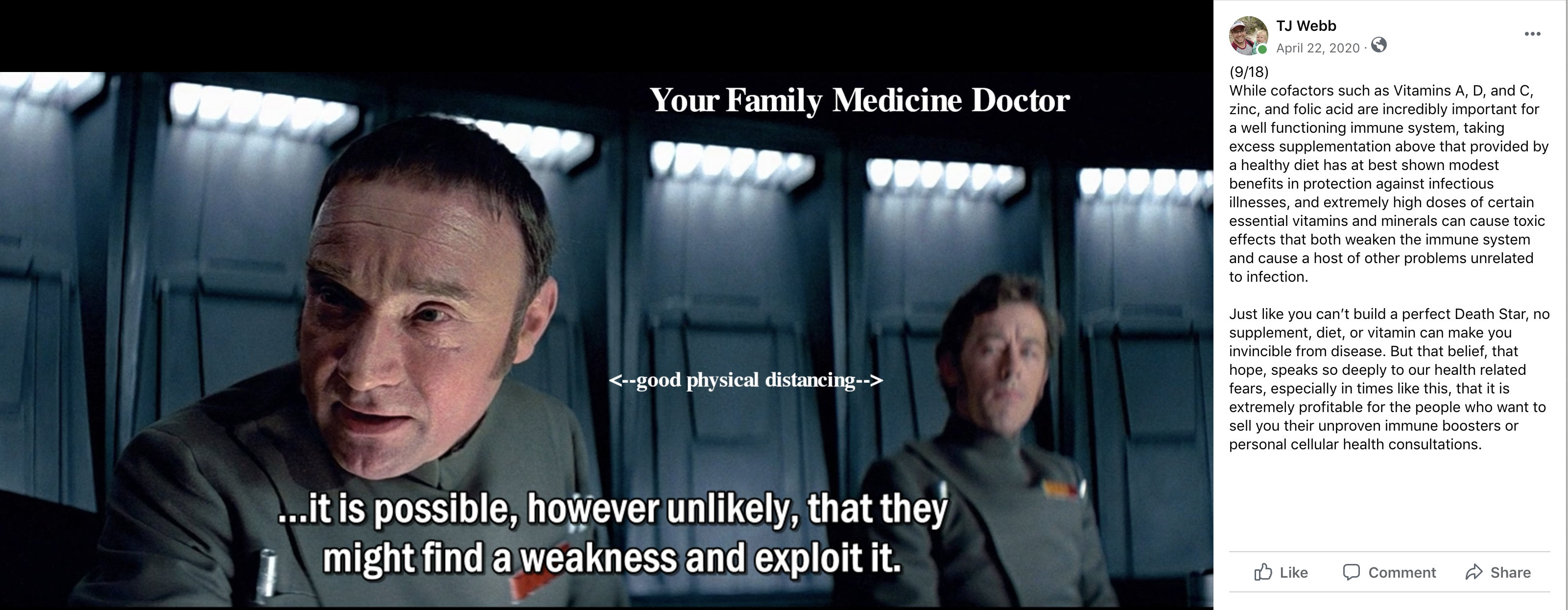
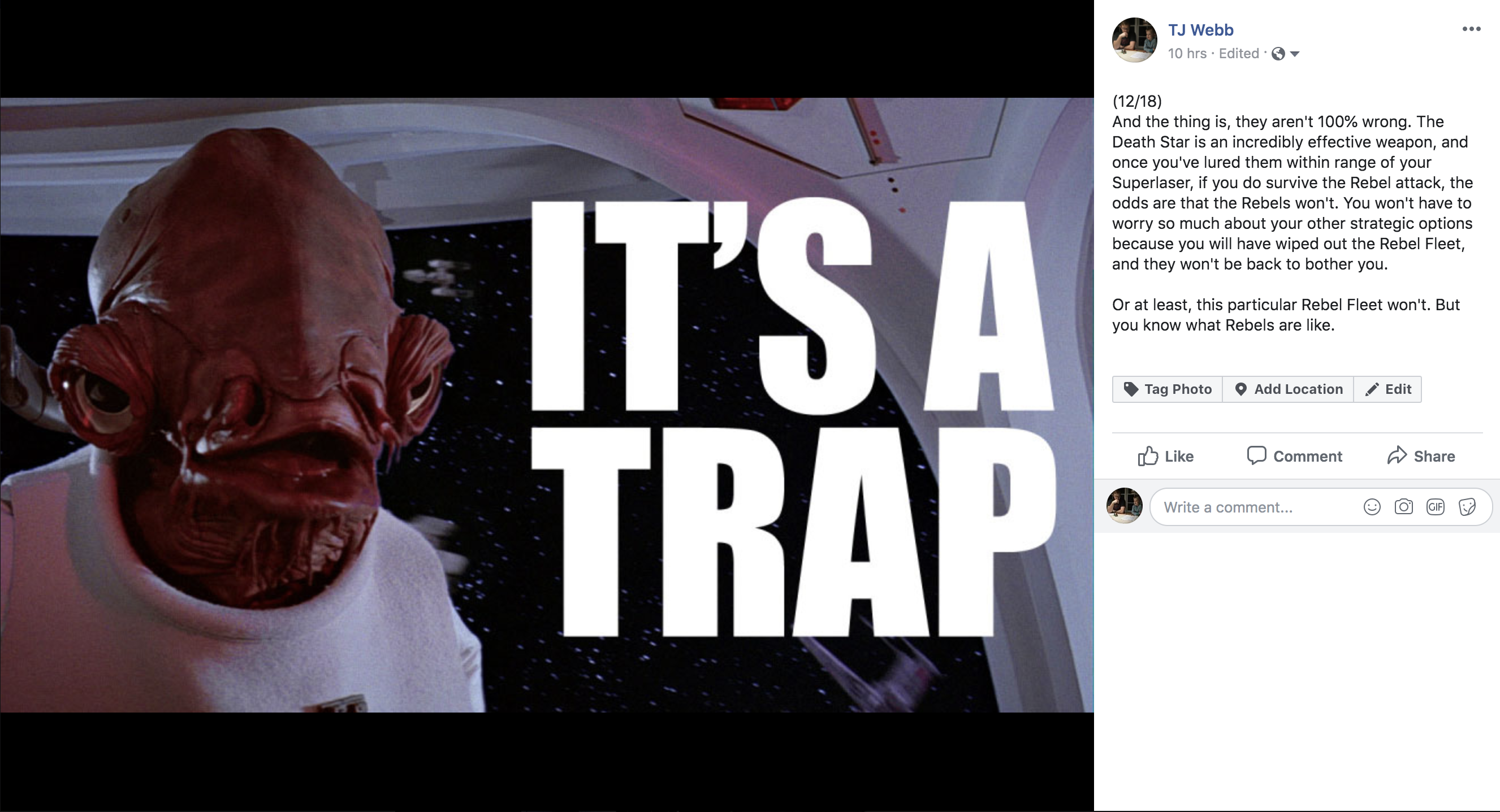
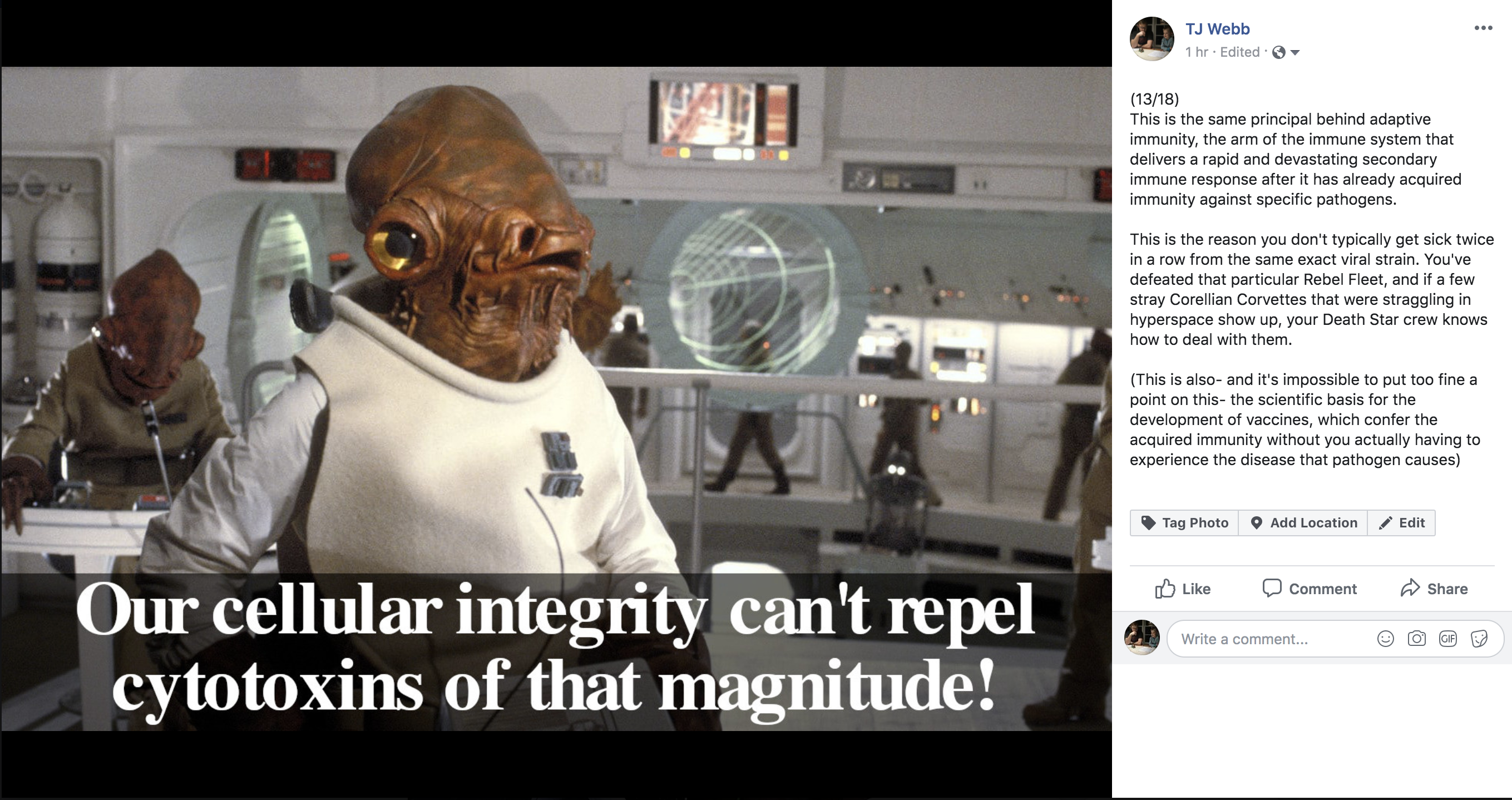
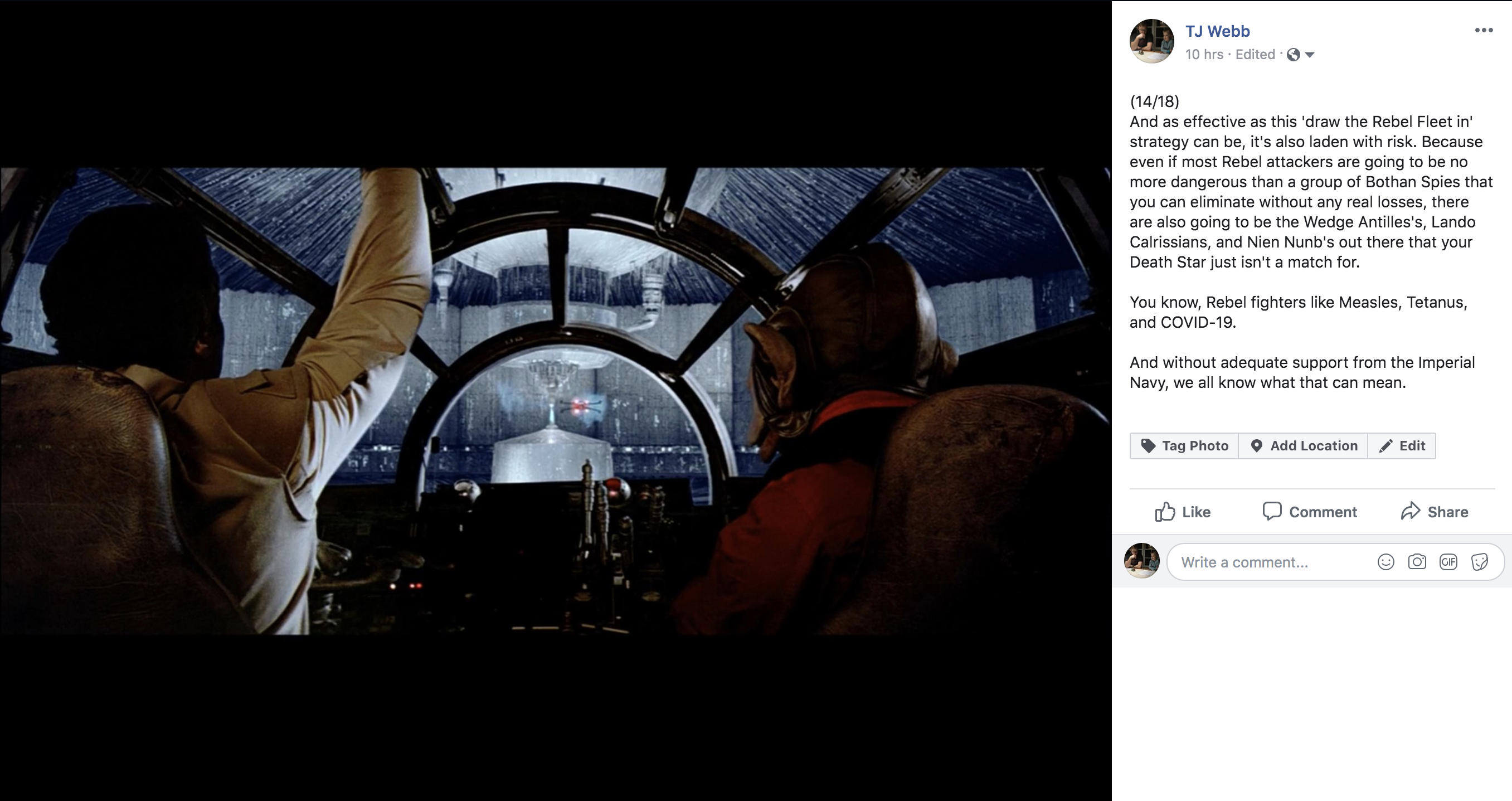
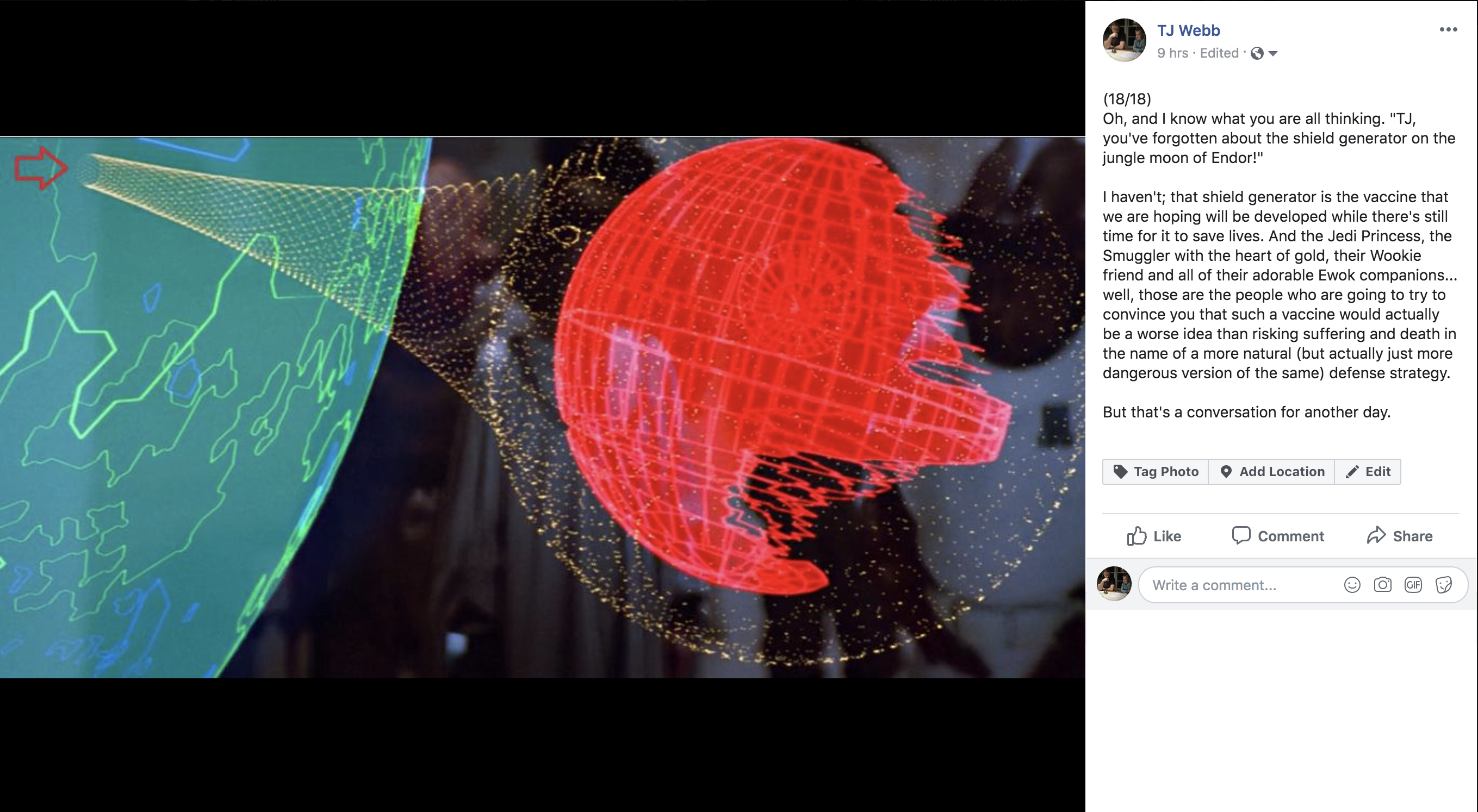
Treat Your Immune System Like The Death Star (A Slideshow)

The amount of medical misinformation out there right now is staggering. Would-be alternative health celebrities see the COVID-19 pandemic as their opportunity to make a name for themselves and increase their fame and fortune, and their videos seem to range from 5 minutes of mostly benign half truths, to one I saw today that was 48 minutes of crazed rantings. As a Physician, I despair of being able to address even a fraction of the misinformation my friends and family are being exposed to right now.

But you have to start somewhere. One of the biggest areas around which falsehood and distortion crops up consistently is the role of your immune system in fighting disease in general, and in protecting you against COVID-19 in particular. And in this area there are two dangerous distortions that seem to crop up again and again. But to address those, I think it’s important that we think of the immune system as a Death Star.


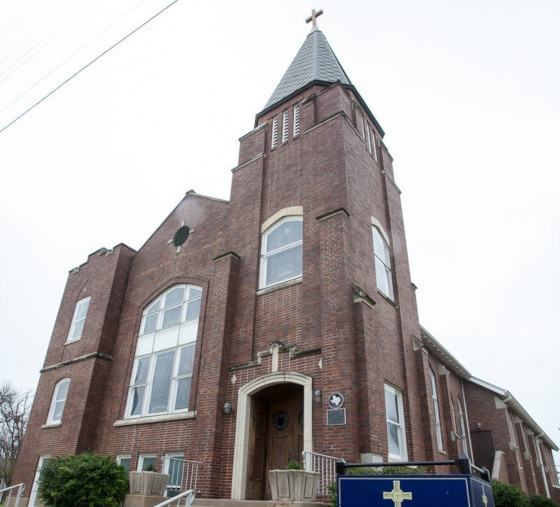
The Church and Medical Misinformation During COVID-19

Preamble 1: This is written to Christians, and intended as a call to my fellow believers in Christ to hold to very high standards of truth telling, particularly as it relates to the COVID-19 pandemic we are currently facing. I do think that the general principles I am espousing here apply to others as well, and all our welcome to read and comment.

Preamble 2: In this post I do talk quite a bit about holistic healing/alternative medicine. This is an area of complexity and nuance, but here I am primarily talking about self-proclaimed alternative health “experts”: modern day snake-oil salesmen who are seeking to use the COVID-19 crisis to create a name for themselves and garner greater fame and fortune. I know many of my friends lean towards ‘holistic’ alternatives or adjuncts to modern evidence-based medicine (modern medicine IS holistic but that’s another soap box entirely). I have FB and real life friends who are into essential oils, I have family that swear by their chiropractor, and I myself have received acupuncture in the past (it was kind of fun, to be honest). Most of them, thankfully, also choose to bring their children to the doctor when they are ill and to vaccinate them to prevent communicable diseases. Most of them have been very, very supportive of healthcare professionals in general and of me personally during this pandemic, and I have seen them both seek out and share good, reliable medical information. In short, I have been quite proud of these crunchy, oily friends of mine. If you are reading this as someone who identifies strongly with holistic or alternative medicine, I would ask you to please consider carefully whether the conspiracy theorists and COVID-19 deniers who are so prolific on the internet right now really represent your movement well and are espousing the same values that you find important in your area of wellness. My hope is that you wouldn’t be deceived by them easily just because they are comfortable using the same terminology that you hold close to your heart; an error we in the Church have all too often made with false teachers of all stripes.


“Finally, brothers and sisters, whatever is true, whatever is noble, whatever is right, whatever is pure, whatever is lovely, whatever is admirable—if anything is excellent or praiseworthy—think about such things.”

“Keep your tongue from evil, and your lips from telling lies.”

When the initial wave of concern over COVID-19 began for our clinic system a few short weeks ago, there seemed no end to the things that needed to be done. We had to rapidly prepare to protect our staff and patients by minimizing transmission risk and eliminating fomites, go through all of our processes with a fine toothed comb and revise or rewrite a fair number, and innovate and implement novel ways to deliver high quality primary care under circumstances where it was no longer safe for our patients to sit in a crowded waiting room as they wait to see their primary care Physician, or even pass each other in the hallways on the way to the lab or radiology. This all in addition to learning how to work-up and treat the virus itself. During those first few weeks many of us worked until the wee hours of the morning each night and through the weekends, all the while continuing to see patients, return phone calls, and refill medications. But as these systems have been put into place and fine-tuned, and as the physical distancing and other epidemiology measures on a community level have effectively limited the spread of the virus in our area, life has thankfully slowed somewhat again.  Many of us that do hospital work are waiting to see whether more doctors will be needed to cover shifts, or if the shelter-in-place orders and distancing measures will be enough to avoid a true, overwhelming surge. In the meantime we read and stay up to date, we see our patients via telemedicine or in outdoor COVID-19 clinics and work hard to make sure they don’t fall through the cracks, and we prepare, personally and professionally, for worst-case scenarios. Throughout all of this we have each continued to ask ourselves what our next responsibility is as Physicians in the midst of this pandemic.

In answer to that last question, I have found myself more and more called on to provide an answer to misinformation around COVID-19, as friends and family have attempted to sort out the unprecedented amount of misunderstanding and abject falsehood that has been circulated over the past month. To be clear, even in the best of times there is already an overwhelming amount of misinformation around health and healthcare. The nuances of human health and disease and the means available to protect the former and fight the latter are unbelievably complex, and because of this it is easy for an individual who hasn’t spent a lifetime studying this area to feel overwhelmed and disempowered. The temptation of easy answers and quick fixes is very real. More to the point, Physicians have historically done a fairly poor job, in my opinion, of helping our patients to feel empowered and knowledgeable to the greatest degree that is possible without them actually entering the medical field themselves. In this context, it is no surprise that during this time of increased health anxiety and uncertainty, and with a myriad of political and economic motivations to obscure the realities around the virus, the amount of misinformation has increased dramatically. Between my day job, extra duties related to the virus, and this small matter of having a wife and four children, I consider it a real privilege when I have the margin to address a video or article that a friend has ‘tagged’ me in asking for my input.

But though there are plenty of unaddressed articles, videos, and memes spreading medical misinformation on my facebook feed this very day, I am writing this afternoon with a slightly different, though related, purpose. I am writing to call the Church to participate in this work with me.

We are called to be a people of the truth; we are not called to be a people of truth and falsehood mingled. When discussing his conversion to Christianity, G.K. Chesterton wrote, “My reason for accepting the religion and not merely the scattered and secular truths out of the religion… I do it because the thing has not merely told this truth or that truth, but has revealed itself as a truth-telling thing.” As followers of Christ, Christians ought also to have a reputation of truth-telling. Truth-telling in love, when the truths are difficult. Truth-telling in courage, when the the truths are spoken to those in places of power. Truth-telling in humility and repentance when those truths reflect poorly on ourselves or our conduct. We cannot afford the damage done to the witness of the Church by our gaining a reputation as unreliable sources of truth. Yes, physical health in general and the COVID-19 pandemic in particular, as devastating as it is, are still ultimately minor issues compared to the eternal importance of the Gospel; but how can the world around us look to us for the Truth of the latter when we have only provided them falsehood about the former? “Whoever can be trusted with very little can also be trusted with much, and whoever is dishonest with very little will also be dishonest with much.”

For this reason, I believe that our willingness as a people of Faith to perpetuate misinformation, particularly when it may truly injure our neighbors, is not a political issue or even an integrity issue, but a spiritual issue. There is no truth, whether philosophical, metaphysical, or scientific, that does not belong to our Creator; there is no Truth that we as Christians should fear, and there is no falsehood, no matter how convenient to our preferred narratives, that does not originate from our Enemy.


What follows is my take, as a Physician, on what a lay person can do when trying to weigh truth and falsehood and judge the reliability of medical information during the COVID-19 pandemic. I want you to know that I realize it is often very, very difficult. As a Physician I have the privilege of years of education and training in thinking about real and reliable truths about our bodies and the diseases that affect us; it is never my place to judge someone for sharing information they find convincing because they do not have those same experiences and have spent their time in other important work. It is my job, I think, to help my fellow believers supplement their God-given discernment with reliable data and professional insight; we are all one Body, but made up of many parts.

1. Understand your source.

Returning to Chesterton, I think it is reasonable to ask whether the author of the article or the self-purported expert we are listening to has a track record of providing reliable medical information; have they proven themselves to be a ‘truth-telling thing (er, person)’. Many of the people generating widely shared false information are political partisans who have no medical or other scientific background; are they sharing the perspective of actual experts, or are they merely creating false narratives and opinions out of thin air? If the source is not a politician but instead claims to be an expert, what is their education and background? So often we give our trust to people whose primary credentials are an attractive and disarming physical presence and a high verbal IQ but who do not have even the basic science background to understand the frameworks they are tearing down. I have seen youtube videos captioned ‘so and so DESTROYS the COVID-19 pandemic myth’ or ‘Dr. X crushes the CDC and WHO conspiracy’, etc., only to find that not a single intelligible sentence of valid scientific information was uttered during the entire 15 minute video. These are the ‘used car salesmen’ (no offense to actual used car salesmen; I am very pleased with my 2012 Honda Odyssey) of medical information, and their true area of expertise is in pretending to be experts.

Please understand what I am not saying; I am not saying that you must have a certain degree or a certain prerequisite combination of education or work experience in order to have a valid take on the pandemic. But often these videos are made by people putting themselves forward as experts without the credentials to support that claim; the first piece of misinformation is imbedded in their own self presentation. An example is a video a friend recently asked for input on, from a doctor putting himself forward as an expert on the immune system. It turns out that he was not an immunologist or a microbiologist, but a disgraced chiropractor turned “cellular detox diet” specialist. Again, this does not negate what he has to say; but it is a vital piece of context for weighing the claims he goes on to make.

This research is sometimes hard. These people are often incredible at building legitimate sounding resumes for themselves and at using terminology on their websites and bios that smacks of authenticity and scientific rigor. Moreover, there are also those who do have impressive credentials yet have strayed from any integrity in their work and have become deeply unreliable sources of healthcare information in their pursuit of fame or fortune (a fellow MD friend and I often joke, darkly, how easy it would be to make tons of money as a Physician, if it weren’t for these pesky morals). But even if you cannot establish someone’s reliability with a few minutes on google alone, conducting such research will help to answer a few basic questions that should set the tone for the information itself. Is there a direct link between the reach of this person’s social media influence and their opportunities for attainment of power and profit, such as a political office being at stake or a website that sells services or goods directly? Such a relationship would be fairly rare in medicine or academic science. Are the claims this person makes the types of things that would fall within their area of knowledge based on their education and work experience? Are they setting themselves up as experts in areas, such as clinical medicine, immunology, or epidemiology, where they seem to have had little to no experience? Finally, do they have a history of fraudulent claims, moral turpitude, or failed (or successful) scams in the past?

This step is sometimes a bit tedious, but I believe vitally important, especially when some of these videos are made by people who have spent a lifetime mastering the art of convincing others with their looks, manners, and likability. When it comes to medical misinformation, these are the wolves in sheep’s’ clothing of the moment.

2. Do your research.

This second point is so similar to the first that I won’t spent much time on it. Though understanding whether the source is reliable is important, I firmly believe that the content of the argument is more important still. When considering any degree of medical information shared on social media, or even mainstream media, pause to reflect on the main themes and content of the article or video. What was the driving point? What information contradicts that which is already widely available? What data seems shocking or seems to rely heavily on the existence of widespread conspiracies? For that matter, do those conspiracies depend on the sudden cooperation of diverse and often opposed sectors of society, such as the sudden cooperation of politically unaligned nations or the widespread collusion of large groups of healthcare professionals? What part of the information is benign and widely accepted already, and is it being presented as such? Or is there a claim that commonly accepted facts are denied by or unknown to ‘the powers that be’ (the CDC, the medical establishment, etc), and does that seem very likely? What would the major implications be if this video were true, and who would stand to profit by its widespread acceptance if it were false?

This list could go on, and in another time we would have only these important critical thinking questions to guide us to the informational content itself. But we live in a technological age and the odds are that if we are seeing a video, or at least a popular video, it has been critiqued or fact checked already. Read these critiques; seek them out. This alternative perspective, even if it comes from a source you normally don’t subscribe to personally (I know people who despise certain fact checking websites), may be enough to give you the ‘aha!’ moment you need to reach conclusions on the information for yourself. And if you believe the information and think it is worth sharing, then understanding the arguments against it will only strengthen your position.

3. Be honest with yourself about your political leanings.

I’ll keep this one brief because I don’t particularly want to be dragged into a specific political debate, at least at this time. As people of faith who are committed to the truth, we will find ourselves politically homeless a fair amount of the time, and holding onto important caveats and a sense of tension even in our areas of agreement with political movements. When the truth conflicts with the narratives of the political groups with which we most closely align, our choice is clear. Before sharing information from questionable sources, that our research tells us is not reliable, we have to check our politics; we have to be very honest with ourselves regarding whether our impulse to perpetuate the information stems from a real belief in its veracity or from a mere desire for it to be true. I have heard fellow Christians tell me “all politicians lie” (generally to excuse untruths from one group or individual), and then have seen them blindly re-post the lies that come from their own side. I may very well have been guilty of this myself. If we believe that politicians are not reliable sources of information in general (and we can debate later if some are worse than others to an almost unprecedented degree), it means that we will sometimes choose for reasons of discernment not to pass along information that, were it true, would be extremely convenient to our party or candidate. In contrast, if we find ourselves always repeating the party line and reinforcing the narratives of those in positions of power, I fear that we are in danger of rendering unto Caesar something that never belonged to him.

4. Beware of easy answers.

“Reality, in fact, is usually something you could not have guessed. That is one of the reasons I believe Christianity. It is a religion you could not have guessed. If it offered us just the kind of universe we had always expected, I should feel we were making it up. But, in fact, it is not the sort of thing anyone would have made up. It has just that queer twist about it that real things have. So let us leave behind all these boys’ philosophies–these over simple answers. The problem is not simple and the answer is not going to be simple either.”
C.S. Lewis wrote this when discussing the reality of Christianity and the complaint heard so often that ‘religion ought to be simple.’ But I think this quote is informative for us in this discussion of medical misinformation. Alternative health popularizers like the ones we are seeing in video after video right now have long mastered the art of combining oversimplified ‘common sense’ arguments with the right kind of complex medical vocabulary (some real, some fake), to appeal at once to both our desire that healthcare should be fully comprehensible and explicable to us and our desire to know we are hearing form an expert. They are experts in tickling the ears, in confirming our biases and ingratiating themselves to a public that is anxious over health and disease. For someone who has actually studied both the real concepts they are distorting and the real vocabulary they are misusing, these arguments are as transparent as they are ridiculous; but they are not trying to convince me, they are specifically trying to convince people who don’t have medical training.

That said, you don’t have to spend your life studying pathophysiology and be intimately familiar with medical terminology to spot these patterns for yourself and know when to be wary. These false arguments tend to fall along a few common themes, and once you learn to spot them you will be a big step closer to at least being able to ask the right questions.

  • The real solution is easy but they don’t want you to know that.

This one has come up a lot recently as people advocating against social/physical distancing measures (for political or financial purposes) are pushing the idea that other simple measures would actually prevent getting sick from COVID-19. Typically these are oriented around the immune system, and the idea that having a healthy immune system would actually prevent the disease entirely. Aside from being untrue, this is extremely problematic for two big reasons. First, I think we should recognize the degree of victim blaming involved in this line of reasoning; if these 41,000 people who have died from COVID-19 in the US had just taken enough Vitamin C or eaten a healthier diet they wouldn’t have died. Certainly the interaction between health and lifestyle, including limitations in choices and socio-economic vulnerabilities, is complex. But there is not a set of choices that can make someone immune to illness in general, and in the case of infectious diseases specifically there is not a combination of lifestyle and nutrition that can make a person invincible (even Chris Trager got the Flu on Parks and Rec). Second, just consider the sheer number of people who would have to be in on such a conspiracy. Millions of doctors, nurses, and public health experts, many of whom have themselves become ill or lost friends and loved ones. The idea that all of these people are interested in covering up that a certain number of milligrams of Vitamin C or a certain number of hours of sunlight exposure could have alleviated all of this suffering is not only incredibly naive, but also unbelievably calloused.

  • Germs are good for you.

This is an argument that crops up when discussing any infectious disease, but it is particularly popular now. Many alternative health and particularly detox and microbiome style wellness salesmen are all too quick to tell you that viruses, bacteria, and fungi are important for us; that without them we wouldn’t have functioning immune systems. And they are right. But like so many of their arguments, they have taken just one piece of the incredibly complex story of human health and disease and have extrapolated it to illogical and harmful proportions. I have written about this more extensively recently, but they are essentially failing to make two important points. First, the difference between a microbe (any bacteria, virus, or fungi, etc) and a pathogen, which is a microbe known to cause human disease; it is absolutely not true that because ‘germs are good for us’, therefore infectious diseases are good for us. This virus can definitely kill you. And second, the role of an acute infection in establishing a secondary immune response. Yes, exposure to a pathogen does generally cause some degree of enhanced natural immunity against that same pathogen later (this is the entire principal upon which vaccines are based); but it is not necessary to allow yourself to get ill or indeed become as sick as possible in order to build that robust secondary immune response, and sometimes the risk is much greater than the reward. “Whatever doesn’t kill you makes you stronger” still implies that dying is at least on the table.

I won’t rehash all the points I wrote about last week, but instead will share a quick story. When we lived in Denver we were visiting with a friend after church who showed us a fairly deep cut to his finger, near the joint, which he had received that morning. My wife, an RN, asked what he had used to clean the wound. He explained that he had NOT cleaned the wound because his body needed the germs to build an immune response, and that soap and water would prevent his body from fighting off the infection ‘naturally’. Katie attempted to persuade him otherwise and explain the roll of his immune system and ways he could help his body prevent an infection, but he wasn’t convinced. Two weeks later we saw him again, this time with a large bandage over his finger. We asked about this and he explained how his finger had become infected and he had to go to the emergency room, undergo and incision and drainage procedure to remove the pus, and then take antibiotics. He went into glorious detail about the procedure and the appearance of the infection and even showed us pictures. He did all of this without any sign of chagrin, and to this day neither of us is sure whether he had forgotten the first conversation entirely or if he is just the world’s most humble man.

And while what happened to my friend is funny in retrospect, because his finger fully recovered, it is certainly not funny when someone contracts a deadly illness because they are misled into thinking it’s actually better for their health.

  • The doctors don’t understand (or indeed know about) the immune system.

I’m always amazed when this one makes the rounds because it’s just such an incredibly goofy thing to say. We could spend paragraphs discussing the thousands of hours spent in medical school understanding every aspect of the human body and the huge swaths of microbiology, biochemistry, pathophysiology, infectious disease, anatomy, and pharmacology coursework that were devoted to understanding our fearfully and wonderfully made defenses against infection. I promise you we spent so much time studying the immune system that we dreamed of angry macrophages and inflammatory cytokines. So why such a silly and nonsensical lie? They are setting up a false dichotomy between your own immune system (which they would like to sell you products and services to augment) and the “big-pharma model of medicine”, a red herring of their own invention, which only believes in harsh chemicals. They have to reduce modern medicine and the scientific discoveries of the human body to just this one aspect in people’s minds so that they can claim for themselves the parts of it which seem to sell best. Whether the hucksters making such claims have actually studied the immune system in an intellectually honest and scientifically rigorous way themselves, however, is a question that perfectly justifies speculation.

I explore the rest further in the next section, but a few more, briefly:

  • The doctors want you to stay sick.

This is 100% a lie. Don’t be fooled by ‘common sense’ arguments that suddenly call for millions of well-meaning people to act nefariously.

  • The doctors are being controlled by big pharma.

Don’t be fooled by arguments that require passionate, notoriously difficult to control, and (let’s face it) often egoistic people to suddenly be submissive. Physicians are one of the primary reasons that pharmaceutical and insurance companies don’t yet control all of healthcare.

  • The doctors mean well but have been tricked.

Don’t be fooled by arguments that require very smart people to suddenly be easy to dupe.

5. Ask your brothers and sisters in Christ.

One of the many false narratives that Christians seem to believe at an alarming rate is that the medical field is somehow opposed to the Church. It is easy to point to controversial areas of medicine, or even the general principles of understanding illness and health as primarily physical phenomenon, to say that modern medicine is at it’s core agnostic or secular, and thus antagonistic to the Faith. This is an incredibly profitable narrative for televangelists and healing charlatans who would like you to believe that pursuing any means of healing aside from the overtly miraculous is a sign of lack of faith, and who exploit our fears and insecurities around health to sew mistrust in Physicians and other health professionals for their own profit. Perhaps a step down from the overt chicanery of these false prophets, we also see a strange marriage between Evangelical Christianity and unproven and sometimes even dangerous alternative health measures, which are marketed, sometimes, with a heavy mix of pseudo-Christian spirituality.

But if this is true, what then do we do with the millions of doctors, nurses, scientists, epidemiologists, and others within the healthcare sector that are faithful followers of Jesus Christ? I think the first temptation, too often, is to treat them like they are ‘one of the good ones’; as though a Christian Physician you know personally may be a reliable source of health information, but the medical field, in general, is not. I think this is incredibly problematic. As someone whose 20’s and 30’s were devoted to medical training, I have known hundreds (maybe thousands) of doctors personally. My older children who grew up during my residency thought that “Dr.” was just a gender-neutral way to say “Mr.” or “Mrs.”.  Because of where I have trained, many of these have been believers; but just as many that I have trusted and respected have not. Yes, I have certainly met doctors I would not trust with my own care or that of my family, but these have been remarkably, surprisingly few compared to the number of doctors I have known and worked with. In general I can say that Physicians as a group have self-selected for (and certainly this has been reinforced by training) both their desire to see people well and their commitment to scientific accuracy. To be clear, some of these doctors I disagree with vehemently on issues within medicine and the associated underlying moral and societal values. Nevertheless, and regardless of the cultural misrepresentations, your doctor wants you to be healthy and is, in general, a good and reliable source of information about health and disease. If they aren’t, you should get a new doctor immediately.

As we touched on earlier, a second and similar way to treat Christian Physicians and healthcare workers is as well-meaning but ultimately misled pseudo-experts with only a narrow scope of understanding regarding the human body. This is the view pushed by many in alternative health businesses; doctors are generally altruistic or noble, but they have had the wool pulled over their eyes, their education is controlled by Big Pharma and hospital administrators, and really all they are learning is essentially spreadsheet after spreadsheet of ‘if the patient has this, give them one of these drugs (and here are the prices; pick the most expensive one)’. Medical schools and residencies exist to train doctors to create profits for drug companies. Now, this is an incredibly silly idea and we could devote as much time as we wanted to this. I could explain that I never met a drug rep until after residency, because they generally aren’t allowed to interact with medical students or residents, and have never made a medical decision based on the advice of a drug rep in my life (except for Burton “Gus” Guster, of course). I could (and should, at some point) explain the very complex and often antagonistic relationship between systems within medicine that prioritize profits over people, including pharmaceutical companies, and the physicians, nurses, and clinical staff who exhaust themselves to help their patients find something like justice and equity in their healthcare. But these are areas I am passionate about, and I’m afraid this one section would eclipse the rest of the essay entirely.

Instead, I’m willing to bet that if took a step back and consulted even your own experiences with doctors you know personally, you would realize that their knowledge, education, and personal characteristics does not seem to match this narrative. If you have physicians in your family,, or in your church or Sunday school class, or have attended high school or college with them, or have friends who are doctors- in short, if you do know believing medical experts that you would ask for input on these videos and articles being circulated- ask yourself if they are a reliable source of information even aside from their medical background. Are they the type of people who are easily duped? Do they hold to questionable morals or a low view of the truth? Do they seem to possess discernment? Essentially, are they the type of people you would trust outside of a pandemic to answer questions unrelated to viruses and immunology and epidemiological data? If they are not, I would humbly suggest that you do not turn to them now, regardless of how closely the information you need clarified matches their field of work. But if they are, I would recommend showing them the courtesy to believe that they have applied at least that same degree of critical and independent thinking and that same spiritual discernment to the endeavor that has taken up the majority of their adult lives; namely the study of human health and disease.

Finally, my advice when framing these questions: be specific. When I am asked by a friend or acquaintance to address a viral video or a healthcare related article or meme, I try to be as thorough and complete as possible (I do find that after a few thousand words of my ramblings, they usually don’t ask a second time…). This can be time consuming, but I believe it is important work, and I personally have no problem being asked a general “would you give your input on this.” Not all healthcare professionals have the inclination to be quite so verbose, and of course many of us want for the time to do so now more than ever. If you ask for an opinion on a 20 minute video or a 2000 word article, let them know what your specific question is, or what about the content you found either particularly compelling, surprising, or questionable. If you are only looking for a ‘yes this is trustworthy’ or ‘no this isn’t trustworthy’ and are willing to take their word for it without a long explanation, let them know that as well.

6. Repent (or at least, redact).

I hesitate to make this last point because there is no way to express this without sounding somewhat judgmental. I hope it is clear that I intend to hold myself to this same standard as well, and hope that when (not if) I also fall into the ‘fake news’ trap and share misleading or unreliable information, I have the courage to follow my own advice.

What do you do when you have found information available on the internet and outside of your own area of expertise to be convincing and have passed it along, and through the (hopefully) kind input of friends have later discovered it to be untrue? I think there are a few good options. The simplest is to take it down; to delete the post so that others will not either follow you into believing the false information, or else in disbelieving it themselves begin to associate you with it. I think this is the minimum standard we should expect regarding our interactions with falsehood. However, I think an even better idea is what I have seen a family member do consistently in recent years; whenever she has shared a fake article or untrue information, she has then edited her post to clarify that the information is not reliable and why. Rather than distancing herself from those mistakes she embraces them, and in doing so helps protect others against the same errors. I believe that even better than Christians being known for never spreading false information (which is surely not the case now) would be us being known for the integrity and humility to publicly repent of error and embrace truth; in fact I can think of no more Christian way to deal with such a situation.

There is one thing we cannot do. Once we are aware of the falsehoods in something we have shared or promoted, we cannot choose to cling to it because we like the way it sounds or want people to believe that it is true. I have seen this done far too often; when it has been shown clearly that a source is unreliable or has even told outright lies, I have seen friends choose to continue to endorse and share it. There are myriad reasons, from liking a few of the points that weren’t exactly dishonest to wanting people to accept the overall message even if the content isn’t reliable. As people who believe that truth is authored by our Father and that we have an enemy who is only the father of lies, we cannot be comfortable with the mingling of the two. We cannot say, “yes, 7 of his 12 points were deliberately dishonest, and maybe or 3 or 4 were fairly dangers, but I really liked the other 5 and he’s just such an engaging speaker.” We must hold to higher standards of veracity than this. If we really want to promote those other ideas we should be incredibly, unmistakably clear that the rest of the content is not trustworthy… But better still, we should do the difficult work of finding a more consistently reliable source, and say of the first only that “he is a liar and the truth is not in him.”


I will conclude with the words of our Lord from Matthew 10:16: “Behold, I send you out as sheep in the midst of wolves. Therefore be wise as serpents and harmless as doves.” This pandemic is unlike anything we have seen in our lifetimes, and it is already the number one cause of death in the United States. We are living in an era of human history when reliable, true information is really capable of saving lives and when false information endangers our friends, loved ones, and neighbors. As we seek to obey the command of our Savior, let us reflect that we may never again in our lifetimes see such a moment as this, when these two concepts are so closely linked and refusal to be as wise as serpents can lead so directly to a failure to be as harmless as doves.